🗺️ The Component Breakdown: Analyzing Product Types for Media Storage
Building a robust Media Storage system requires addressing two core needs: high-capacity local access for a single PC and network-wide availability for an entire smart home ecosystem.
Centralized, Network-Attached Storage: The Home Data Center
This is the preferred solution for a modern smart home, offering redundancy and accessibility to multiple users and devices simultaneously.
-
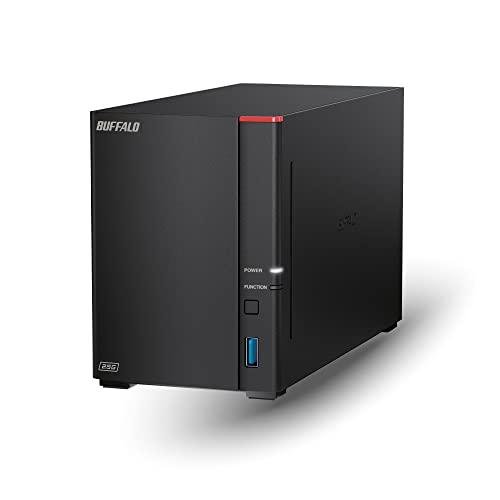
NAS Drives for Media (Network Attached Storage): This is the core component for a modern Media Storage solution. A Network Attached Storage (NAS) drive is a dedicated file server connected directly to your home network. It is typically configured with multiple hard drives to utilize RAID redundancy, meaning your data is mirrored across disks so that if one fails, no data is lost. NAS Drives for Media centralize your entire library, enabling high-speed streaming to smart TVs, phones, and PCs throughout the house, delivering continuous Seamless Control over access.
Direct and Portable Storage: Local Access
These devices are typically used for local backups, content creation, or simple connection to a single media player.
-
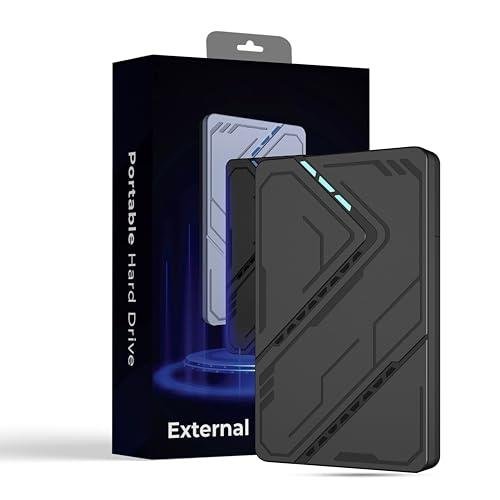
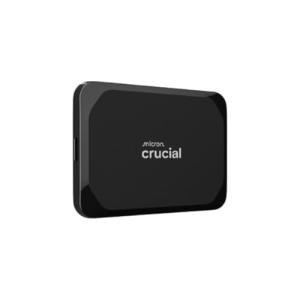
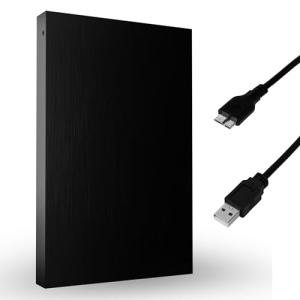
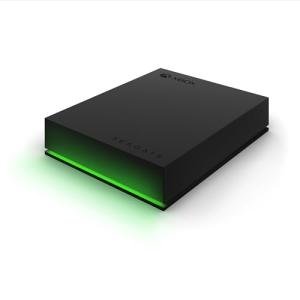
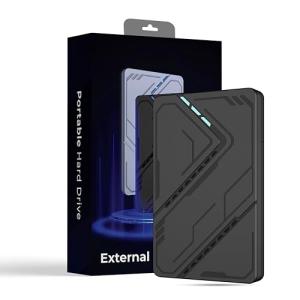
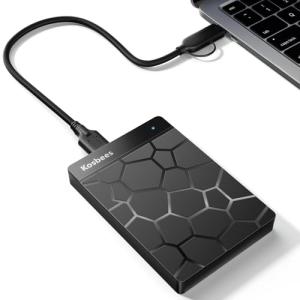
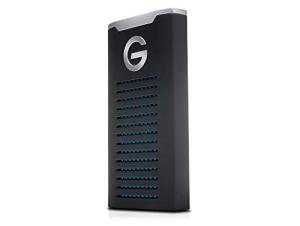
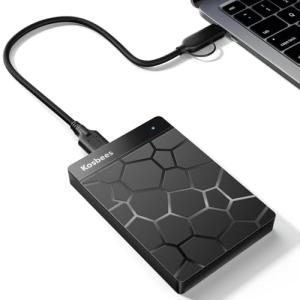
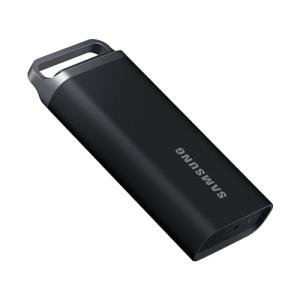
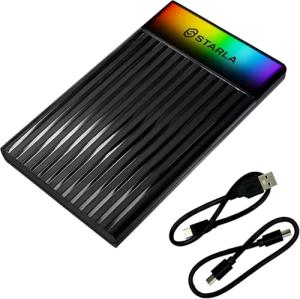
Media Library Hard Drives (External/USB): These external hard drives are typically connected directly to a computer, gaming console, or streaming box via USB. They are an affordable, simple solution for storing a large volume of media files for local playback or quick backups. While they lack the redundancy of a NAS, Media Library Hard Drives are excellent for budget-conscious users or for transferring large files quickly, offering a practical entry point into organizing your Media Storage .
Layering & Integration: The Data Flow
An optimal Media Storage system uses both components for security and access:
-
Anchor the System: The NAS Drive for Media serves as the central, protected vault for all your master files (family photos, archival videos). This is the key component for data Secure Monitoring .
-
Access and Transfer: Use Media Library Hard Drives as temporary, external storage for backing up individual computers or quickly importing large video files before they are transferred to the centralized NAS.
-
Performance: Connect the NAS directly to your router via Ethernet for high-speed access, ensuring flawless 4K/8K streaming performance to your home theater, providing consistent Enhanced Comfort .
This structured approach ensures that your primary media library is protected by professional redundancy while remaining instantly accessible across all smart devices in your home.
3. 🧪 Key Technical Standards and Advanced Use Cases
The integrity and speed of Media Storage systems are defined by protocols that govern data transmission and protection. The key technical standard is RAID (Redundant Array of Independent Disks) . RAID configurations (like RAID 1 or RAID 5) automatically create duplicate copies of your data across multiple hard disks, ensuring that the failure of any single drive does not result in the loss of your family photo collection or movie library. This is the cornerstone of data Secure Monitoring .
Another essential standard is Plex/Emby Compatibility . These are server software platforms that run directly on many NAS Drives for Media . They organize your video and music files into a Netflix-like interface, complete with posters and metadata, which is critical for Seamless Control and media library navigation.
Consider an advanced use case: Optimizing the Home Office Environment for Creative Archiving.
A content creator or video editor requires continuous, high-speed access to project files, which can quickly consume terabytes of space. They can use a local Media Library Hard Drive connected to their computer for active projects (for maximum speed) and then program an automated daily synchronization job to backup these projects to the redundant NAS Drive for Media . This provides Secure Monitoring for their professional work by automatically creating an off-computer backup copy every night, ensuring data integrity and long-term Enhanced Comfort .
A related scenario involves Secure Monitoring of security footage. Modern NAS Drives are often capable of running surveillance software, serving as a dedicated, private video recorder for home security cameras. This keeps your video footage stored securely on your local network, under your complete Seamless Control , rather than relying on a third-party cloud service.
4. Lifestyle Guide
Your volume of media, access needs, and emphasis on data security should guide your selection of Media Storage solutions. Here are three distinct archetypes and the perfect storage system tailored for each.
🧘 The Simplicity-Seeking User (The "Backup Automator")
You primarily worry about losing precious family photos and videos stored on a single computer. You need a simple, reliable solution for automatic backup that is easy to set up and manage, without worrying about network streaming complexity. You seek worry-free Enhanced Comfort .
-
The Fit: You need an easy-to-use drive dedicated solely to local file replication and backup, emphasizing simplicity and fire-and-forget operation.
-
Recommendation: A large-capacity Media Library Hard Drive (external, dedicated USB) paired with simple backup software. Set it to automatically run backups weekly. This provides an essential, affordable layer of Secure Monitoring for your most critical files, delivering reliable data preservation.
🚀 The Performance-Focused User (The "4K Stream Master")
You maintain a vast, high-resolution media library, requiring flawless 4K/8K streaming to multiple TVs simultaneously. You demand data redundancy (RAID) and the highest possible network access speed for viewing. You demand total Seamless Control and performance.
-
The Fit: You need a high-performance, multi-bay, network-attached device with advanced streaming software and high-speed networking ports.
-
Recommendation: A multi-bay NAS Drive for Media (configured for RAID redundancy) loaded with enterprise-grade hard drives. Install media server software (Plex/Emby) for centralized organization. This system guarantees performance and data Secure Monitoring , providing the ultimate Media Storage solution for multi-user, high-fidelity Enhanced Comfort .
💼 The Budget-Expansion User (The "Security Video Archivist")
Your primary need is to store and archive a large volume of recorded video footage from home security cameras, requiring high uptime and easy network access to the files. Your budget prioritizes continuous recording and data access. You need affordable Secure Monitoring capability.
-
The Fit: You need a device that is always on, accessible via the network, and offers a private, high-capacity destination for surveillance video.
-
Recommendation: An entry-level, two-bay NAS Drive for Media (set up for RAID 1 mirroring). Dedicate this device entirely to continuous security video recording and archiving. This provides centralized, private Secure Monitoring of your footage and easy network access for review, offering a high-impact, focused Media Storage solution.
5. COMPLEMENTARY CATEGORY RECOMMENDATIONS
| Recommended Categories |
Why This Category Is Useful Specifically for This Product |
Short Usage Scenario |
| Power Storage |
UPS devices are essential for protecting Media Storage (especially NAS Drives) from sudden power loss, which can cause severe data corruption, safeguarding Secure Monitoring efforts. |
Plugging your NAS Drive for Media into a UPS to ensure a safe shutdown during a power outage, preserving data integrity. |
| Networking Gear |
High-end routers and wired Ethernet switches are necessary for maintaining the high-speed bandwidth required for the Media Storage system to stream 4K content flawlessly. |
Connecting your NAS Drive for Media directly to a Gigabit Ethernet port for optimal data throughput to the home theater. |
| Streaming Devices |
Streaming Devices (e.g., Apple TV, Fire Sticks) are the clients that access and play the content stored on your NAS Drive for Media , enabling high-quality entertainment. |
Using your premium streaming box to navigate and play a high-bitrate 4K movie directly from the Media Server . |
| Home Theater |
The Media Storage system is the source of content for a dedicated Home Theater , providing a cinematic library experience and Enhanced Comfort . |
The Home Theater receiver accessing the NAS Drive for Media to browse and stream a movie with Dolby Atmos audio. |
| Smart Home Control |
Voice assistants and control panels can be used to control the media server software (e.g., pause, play, select library) for seamless interaction with your stored content. |
Using a voice command to tell the media server to "Pause the movie in the living room" for Seamless Control . |
| Smart Visuals |
Smart TVs and projectors rely on Media Storage systems for local, high-definition content that offers superior visual quality compared to compressed streaming services. |
The 4K Laser Projector accessing a stored high-fidelity video file from the Media Server for local playback. |
| Automation Tools |
Automated backup routines can be programmed to ensure that external Media Library Hard Drives synchronize with the central NAS on a set schedule. |
Programming an automation tool to wake up the Media Library Hard Drive and initiate a full backup to the NAS every Sunday at 3 AM. |
| Peripherals |
External Media Library Hard Drives often connect directly to computers via USB-C or Thunderbolt for rapid file transfer before archiving on the NAS, optimizing workflow. |
Copying a large video project from your desktop to an external hard drive before transferring it to the long-term NAS Drive for Media . |
Committing to high-end Media Storage is the ultimate form of digital ownership and preservation. By utilizing redundant NAS Drives for Media , you gain the high-performance necessary for Enhanced Comfort when streaming 4K content and the critical data Secure Monitoring needed to protect irreplaceable memories. This dedication to quality Media Storage provides the confidence of complete Seamless Control over your entire digital life.