
PRODUCT REVIEW
In-Depth U.S. Market Review
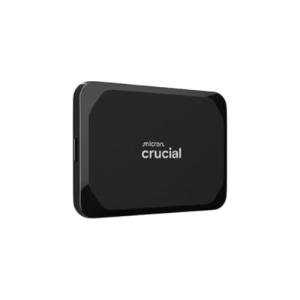
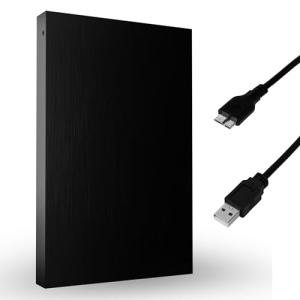
The 500GB Portable USB 3.0 External Hard Drive occupies the budget end of the U.S. external storage market, serving consumers who need reliable, basic capacity for file backup or simple media transport. This device is the quintessential no-frills storage solution, focusing on utility and affordability rather than blazing-fast performance. Its niche is the everyday user who simply wants a safe place to dump their photos, documents, and non-4K videos.
For users seeking an inexpensive solution to keep their primary computer's drive from maxing out, this 500GB portable external hard drive is a compelling budget monitor choice. The value proposition is straightforward: you are getting reliable, spinning-disk technology (HDD) with universal USB 3.0 compatibility. Compared to flash drives, you get significantly more capacity for your dollar, making it a better value for bulk cold storage. Compared to alternatives like premium 1TB or 2TB SSDs, you sacrifice significant speed but save a substantial amount of money, making it ideal for the student or home office user with less demanding needs.
Technical Analysis
| Specification | Detail & U.S. Context | Analysis |
| Storage Technology | Traditional Hard Disk Drive (HDD) with spinning platters. Capacity is 500GB. | Reliable for long-term storage, but prone to mechanical failure if dropped. 500GB is suitable for documents, thousands of photos, or light video backups. |
| Interface | USB 3.0 (also known as USB 3.1 Gen 1 or 3.2 Gen 1) via a Micro-B or USB-C connector. | Delivers theoretical speeds up to 5 Gbps, but real-world HDD transfer speeds are typically around 80–120 MB/s. Still fast enough for large file backups. |
| Power Source | Bus-powered, meaning it draws all necessary power directly from the connected computer's USB port. | High convenience as no external power adapter is needed. Highly portable, perfect for on-the-go use with laptops in coffee shops or classrooms. |
| Compatibility | Pre-formatted for Windows (often NTFS) but easily re-formatted for macOS (APFS/ExFAT) or game consoles. | Broad compatibility is a key selling point in the U.S. market. It's truly plug-and-play across major operating systems, catering to diverse household tech ecosystems. |
| Physical Dimensions | Compact, pocket-sized plastic or light metal enclosure. Weighs only a few ounces. | Designed for maximum portability and fitting easily into a laptop bag or backpack. However, the light build makes physical protection a primary concern. |
| Rotational Speed | Typically operates at 5400 RPM (Revolutions Per Minute). | This is the standard speed for portable HDDs, offering a balance between decent speed and lower power consumption from the USB bus. |
| Security/Software | Generally includes basic or no proprietary backup/security software. Requires manual file management. | Simple plug-and-play operation is favored by many budget users. Any advanced security (like encryption) would need to be managed by the host computer's OS. |
1. Data Transfer Speeds and USB Protocol
The 500GB Portable USB 3.0 External Hard Drive utilizes the USB 3.0 standard, which is the current minimum expectation for fast transfers. While USB 3.0 has a theoretical maximum throughput of 5 Gbps, the mechanical nature of the spinning hard drive is the bottleneck. You can realistically expect sequential read/write speeds in the range of 80 to 120 MB/s.
This speed is more than adequate for moving large blocks of files like video projects or entire photo libraries. You will notice a distinct speed difference when transferring thousands of small files, as the drive head has to physically seek each one. This speed is perfectly acceptable for backup but is not fast enough for running high-demand applications or editing 4K video directly from the drive.
2. Portability and Physical Durability
The drive's design emphasizes extreme portability, coming in a small, lightweight enclosure that slips easily into a pocket. Its bus-powered nature means you only ever need the single USB cable to operate it—no bulky power brick required. This simplicity is crucial for students or commuters who travel between home and the office frequently.
However, because this is an HDD, it contains moving parts. Unlike solid-state drives (SSDs), this device is sensitive to physical shock, especially when it is powered on and spinning. You must be diligent about not dropping or jarring the 500GB Portable USB 3.0 External Hard Drive, or you risk damaging the read/write heads and losing your data.
3. Power Requirements and System Integration
Drawing all its power from the USB port, this drive offers maximum flexibility. It will function reliably with most modern laptops and desktop computers. You should, however, ensure you are plugging the drive into a high-power USB 3.0 port (or better) on your machine.
Older or underpowered USB 2.0 ports may not provide enough power, resulting in connection drops or errors. This external hard drive is widely compatible with Windows, macOS, and Linux out of the box. For immediate use, it’s a simple plug-and-play process, often requiring no driver installation on current U.S. market operating systems.
User Profiles
1. The Home Office Backup User
You have a desktop computer at home and need an easy, inexpensive way to perform daily or weekly backups of your important work and personal documents. Your needs are for simple archiving, not high-speed data access or running virtual machines. Reliability and low cost are your main concerns.
-
Use Case: You are running your daily automated backup of your 200GB document and photo library to ensure you have a copy off-site.
-
The Fit: This 500GB Portable External Hard Drive is the ideal budget solution. The capacity is more than enough for cold storage, and the USB 3.0 interface ensures the backup process is completed quickly enough without requiring you to pay the premium for an SSD. It’s a set-it-and-forget-it device that offers peace of mind.
2. The College Student on a Budget
You are a college student who frequently moves between the dorm, library, and home, and you need a portable drive to transfer large class files and media. You often carry your drive in a backpack and must prioritize the lowest possible cost for your gear.
-
Use Case: You need to take a massive 20GB video file from the school's editing suite back to your laptop in the dorm to finish an assignment.
-
The Fit: The low cost and small physical size make this 500GB drive perfect for your student budget and lifestyle. Since you are moving files between locations, the speed is acceptable. Just be sure to handle it gently, as it’s more fragile than the SSDs your classmates might be using.
3. The Digital Media Archiver
You have a growing collection of older digital media, such as standard definition videos and music files, that you want to move off your primary computer to free up space. You will only need to access this archive occasionally, so speed is secondary to pure, reliable storage capacity at a low price.
-
Use Case: You are organizing and archiving 15 years of family vacation photos and old videos, consolidating them into one safe, external location.
-
The Fit: The 500GB capacity is perfectly sized to create a dedicated volume for a non-professional-grade media archive. Its simple plug-and-play nature means you can access the files years from now easily. The drive functions as a perfect digital attic for all your memories.
"Complementary HomeTechCorner Category Recommendations"
| Recommended Products | Why This Category Is Useful Specifically for This Product | Short Usage Scenario |
| Uninterruptible Power Supplies Ups | HDDs are sensitive to sudden power loss during read/write operations, making a UPS essential for protection. | You are midway through a critical backup when a sudden storm causes a brief power flicker, but your UPS keeps your desktop powered so the drive can safely finish the transfer. |
| Usb C Hubs | Many modern thin-and-light laptops only feature USB-C, requiring a hub for the drive's USB-A or Micro-B connector. | You plug the hub into your slim laptop's single USB-C port, and it gives you the necessary USB-A port to connect your 500GB drive and start the data transfer. |
| Laptop Stands | Using a laptop stand improves air circulation, which helps prevent thermal throttling on your host device, maintaining optimal transfer speeds. | Your laptop is elevated on a stand, keeping it cool while you transfer hundreds of gigabytes, ensuring the USB port maintains full power and performance for the drive. |
| High Capacity Nas Drives | For the next step in data safety, you'll want to eventually upgrade to network storage, but this 500GB drive makes a great initial seed drive for a NAS. | You use the portable drive to quickly move your media collection to a new NAS server without saturating your home network for days. |
| Ergonomic Mice Keyboards | Comfort and focus are key during long file transfers, making your desk setup important. | While the transfer is running, you enjoy a more comfortable browsing experience with your ergonomic keyboard, letting you focus on other tasks while the drive works. |