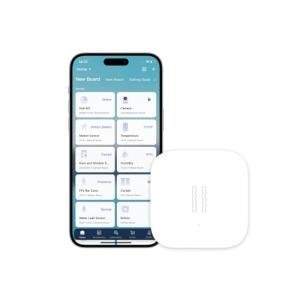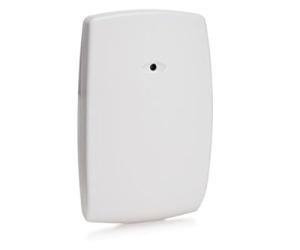

Technical specifications for this acoustic discriminator list a specialized frequency response tuned for plate, tempered, and laminated glass variants. Signal transmission utilizes a proprietary sub-GHz encrypted protocol (433MHz range), which provides enhanced material penetration metrics compared to 2.4GHz hardware. The system architecture employs a dual-stage detection algorithm, requiring sequential low and high-frequency acoustic triggers before signal broadcast.
Structural analysis confirms the use of high-bond 3M adhesive for tool-free mounting. The 20-foot effective range is subject to environmental variables, as acoustic dampening materials such as heavy upholstery can reduce effective pickup by approximately 40%. The device is powered by a CR123A lithium cell, with aggregated data indicating an operational lifespan of 3 to 5 years.
Device Integration Constraints
- Protocol: Proprietary sub-GHz (SimpliSafe Gen 3).
- Sensitivity: Factory-fixed frequency response.
- System Logic: Mandatory Base Station handshake.
Aggregated data lists the chassis as a custom PCB and enclosure layout, distinguishing it from white-label ODM products. Operation is restricted to the specific ecosystem, with no native support for Zigbee or Z-Wave local hubs.
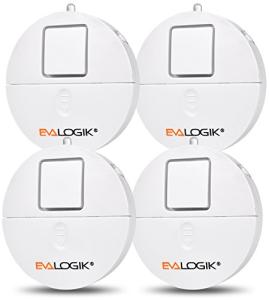
The WSDCAM Wireless Sensor is a viable alternative for users who prefer an air-gapped local siren that does not require a proprietary base station or cloud subscription.
This unit is classified among specialized alarm system sensors designed for specific ecosystem architectures.