Securing the perimeter of a home often starts with the windows, and selecting the right monitoring hardware is the first line of defense. Glass break sensors differ significantly from standard motion detectors, utilizing either precise acoustic listening technology or direct vibration sensing to trigger an alert before an intruder even enters the property. This guide navigates the technical differences between professional-grade acoustic discriminators, modern smart home vibration sensors, and simple standalone alarms to help identify the most reliable solution for specific security needs.
Glass Break Sensors
Keep your home safe and sound with smart glass break sensors that alert you to any potential intrusions
Product List

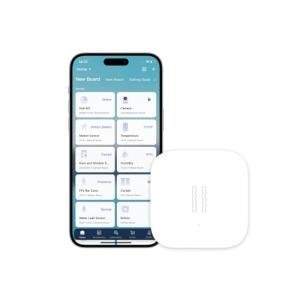
Aqara Zigbee Vibration Sensor
Aqara
Product Review Score
4.55 out of 5 stars
83 reviews$19.99 $15.99
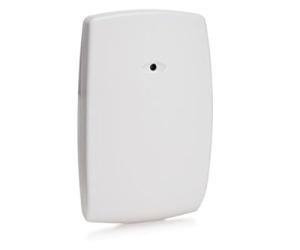
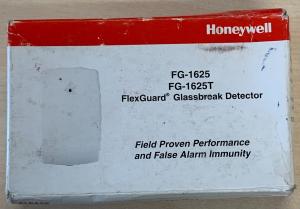
Honeywell Wireless Glass Break Alert
Honeywell
Product Review Score
4.88 out of 5 stars
211 reviews$73.00
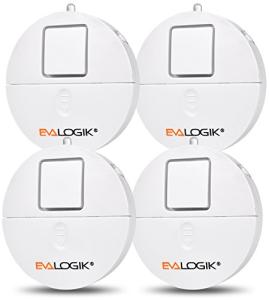
EVA LOGIK Slim Window Alarms - 4 Pack
Eva Logik
Product Review Score
4.55 out of 5 stars
35 reviews$36.99 $29.49

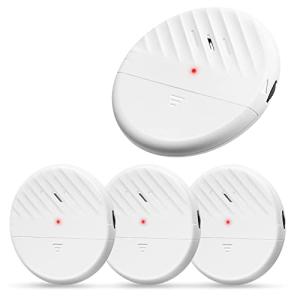
WSDCAM Wireless Glass Break Sensors 4-Pack
Wsdcam
Product Review Score
4.81 out of 5 stars
125 reviews$27.99
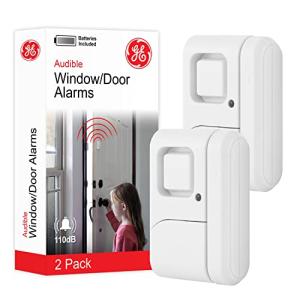
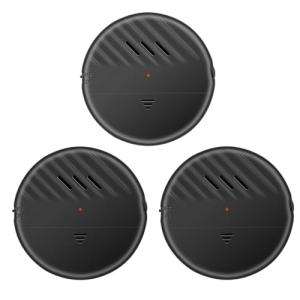
EverNary Slim Window Alarm 3-Pack
Evernary
Product Review Score
4.52 out of 5 stars
215 reviews$24.99

💡 Practical Usage Tips
- Acoustic sensors rely on line-of-sight to the window, so heavy curtains or blinds can dampen the sound and reduce the effective DETECTION RADIUS.
- Vibration sensors work best when placed near the corner of the glass pane, as this is where the kinetic energy transfers most effectively from the frame.
- Battery-powered WiFi units often consume power rapidly due to constant network polling, so checking the VOLTAGE REPORTING monthly is recommended to ensure the device is not dead.
- For acoustic units, testing requires a specific frequency simulator rather than just clapping hands, as the sensor looks for a "thud" followed by a "shatter."
✅ What to Look For & ⚠️ What to Avoid
Must-Haves
- Reliable acoustic sensors should utilize DUAL-THRESHOLD LOGIC, which requires both a low-frequency impact and a high-frequency shatter sound to trigger the alarm.
- Look for devices with adjustable sensitivity levels to filter out false positives from environmental noise like thunderstorms or passing trucks.
- Professional-grade options like the Honeywell 5853 Wireless Alarm use FlexCore DSP technology to ensure high accuracy over a wide 25-foot range.
- For smart home setups, low-power protocols like Zigbee or Sub-GHz are superior to WiFi for battery life and signal reliability.
Red Flags
- Avoid generic WiFi sensors that lack a local hub connection, as cloud latency can delay the notification by 15 seconds or more.
- Single-stage acoustic microphones often suffer from false alarms because they cannot distinguish between broken glass and other loud household noises.
- Sensors with weak adhesive backing may detach in high-humidity environments, rendering the PIEZO SENSOR useless if it loses contact with the glass.
🛡️ Build Quality & Performance
The physical construction of a glass break sensor dictates its longevity and application. Legacy security hardware is typically housed in bulky, UV-resistant ABS plastic designed to last for a decade or more. These units prioritize function over form, often requiring wall or ceiling mounts to achieve optimal acoustic coverage. In contrast, modern vibration sensors have adopted ultra-compact designs. Devices like the EVA LOGIK Ultra-Thin Alarm feature a slim 7mm profile, allowing them to slide seamlessly between passing window panes without obstructing the mechanism.
Performance varies significantly based on the underlying technology. Acoustic sensors generally offer superior coverage for large rooms with multiple windows, as a single unit can monitor a 25-foot radius. However, they require sophisticated DIGITAL SIGNAL PROCESSING to avoid false triggers. Vibration sensors are simpler and immune to room noise, but they require a one-to-one ratio with window panes, which can become costly and visually cluttered in sunrooms or spaces with extensive glazing.
🏆 Top Recommendations
| Best For | Model Name | Key Feature | Why It Wins |
|---|---|---|---|
| Professional Security | Honeywell 5853 | FlexCore DSP | It uses dual-stage detection to filter out false alarms efficiently. |
| Smart Home Users | Aqara Zigbee Sensor | 6-Axis Accelerometer | The low-power Zigbee protocol ensures a 2-year battery life. |
| Sliding Windows | Eva Logik Ultra-Thin | 7mm Profile | Its slim design fits into tight window tracks without jamming. |
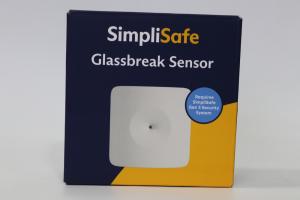
| SimpliSafe Systems | SimpliSafe Sensor | Encrypted Sub-GHz | It integrates natively with the base station for professional monitoring. |
❓ Frequently Asked Questions
What is the difference between acoustic and vibration sensors?
Acoustic sensors use a microphone to "listen" for the specific frequency of shattering glass and can cover an entire room. Vibration sensors attach directly to the glass and measure KINETIC IMPACT, protecting only the specific pane they are attached to.
Do I need a hub for these sensors?
It depends on the model. Zigbee and Z-Wave devices (like the Aqara) require a compatible hub or bridge to function. Standalone WiFi units connect directly to the router, while analog alarms (like the Eva Logik) work independently with no internet connection required.
Will pets trigger a glass break alarm?
High-quality acoustic sensors use filters to ignore sounds like barking dogs or dropped dishes. However, vibration sensors might trigger if a large dog jumps against the window or hits the glass with significant force.
Can I use rechargeable batteries?
Most manufacturers recommend non-rechargeable Lithium or Alkaline batteries. Rechargeable cells often have a lower voltage output (1.2V vs 1.5V) which can cause the device to report a low battery signal prematurely or reduce the effective range of the sensor.