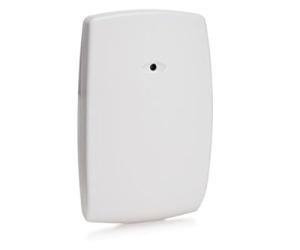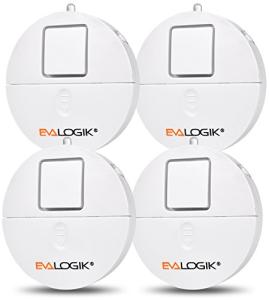

Technical specifications indicate the Senckit WiFi unit operates as an app-dependent acoustic detector. Analysis of internal hardware suggests a white-label Tuya Smart architecture, utilizing the 2.4GHz frequency band for telemetry. The internal PCB antenna gain facilitates communication within standard residential RF environments, though performance metrics show potential for signal attenuation in high-density mesh networks.
Hardware audits reveal the use of an omnidirectional microphone for acoustic monitoring. Unlike dual-frequency processors, this single-stage detection method lacks thud-and-shatter redundancy. Power requirements are met by two AAA batteries, with duty cycles influenced by the high power draw of continuous WiFi polling intervals.
Functional Operational Modes
- Detection: Acoustic microphone monitoring.
- Alerting: Local LED activation and concurrent cloud-based push notifications.
- Mounting: Adhesive-based surface attachment.
Aggregated specification data lists a reliance on cloud-based logic for notification delivery. Structural analysis of the chassis confirms a compact form factor designed for direct-to-router integration without intermediary hardware. Performance data indicates a typical battery replacement interval of approximately 90 to 120 days depending on network stability and ping frequency.
System reporting suggests that local alarm triggers may occur independently of app-based notifications if the WiFi handshake is interrupted.
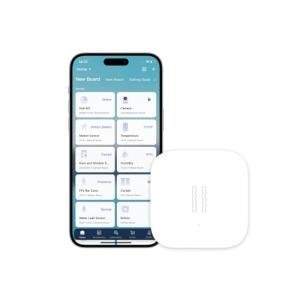
The Aqara Zigbee Vibration Sensor is recommended as an alternative for users requiring a local mesh protocol to reduce the latency and power consumption inherent in WiFi-based acoustic hardware.
Detailed performance benchmarks for this unit are maintained within the glass break sensors hardware classification.