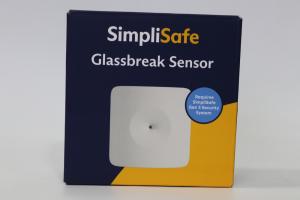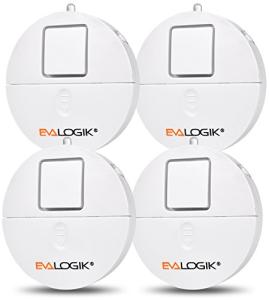


Material analysis confirms the use of ultrasonically welded UV-resistant polycarbonate for the sensor housing. Technical specifications identify an integrated LSM6DS3 6-axis accelerometer and gyroscope, which facilitates high-precision frequency processing to distinguish between standard kinetic impacts and glass resonance signatures. The unit functions as a Zigbee 1.2 endpoint, utilizing a CR2032 lithium cell for a projected operational lifecycle of 24 months under standard polling parameters.
Performance metrics demonstrate multi-modal detection capabilities, including vibration, tilt, and vertical drop sensing. Aggregated data indicates that the device utilizes proprietary firmware clusters, necessitating specific coordinator configurations in non-native environments to maintain mesh stability. Signal routing is established during the initial pairing process, creating a fixed parent-child relationship within the Zigbee network architecture.
Configurable Parameters
- Sensitivity Levels: Software-adjustable High, Medium, and Low thresholds.
- Monitoring Vectors: 6-axis spatial analysis (X, Y, Z planes).
- Reporting: Automated voltage and event telemetry.
Standardized testing protocols show that battery voltage reporting follows a non-linear curve. The compact physical dimensions facilitate installation on narrow window frames or specialized glass surfaces where larger acoustic modules are restricted by spatial clearance.
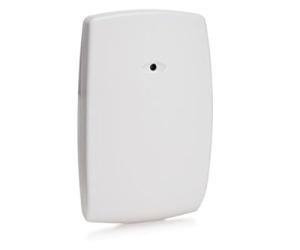
For installations requiring a broad-spectrum acoustic range rather than surface-contact vibration sensing, the Honeywell 5853 Alarm provides a 25-foot radial detection field suitable for multi-pane coverage.
This high-precision instrument is cataloged under the broader alarm system sensors architectural standards.