
PRODUCT REVIEW
In-Depth U.S. Market Review
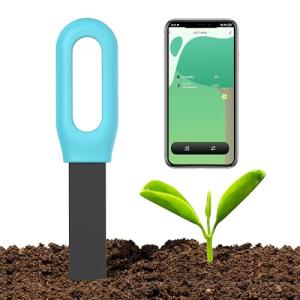
The Zigbee Soil Moisture and Temperature Meter is a highly specific, low-power accessory aimed directly at the advanced smart home user in the U.S. market. By explicitly featuring the Zigbee protocol, this product bypasses the complexity of Wi-Fi pairing and the limitations of Bluetooth range, integrating instead into a robust, mesh-networking system. Its niche is providing dual-metric environmental data—both soil moisture and temperature—to a central smart home hub, a feature often needed for complex garden plant monitoring and climate-sensitive plants.
This sensor is not for the casual user; it is designed for those who already own or plan to purchase a Zigbee-compatible hub (e.g., Samsung SmartThings, Hubitat, or certain Echo devices). Compared to standalone Wi-Fi sensors, you get superior battery life, a much longer and more reliable signal range via the Zigbee mesh, and the crucial benefit of integrated temperature data for frost warnings or heat stress monitoring. This makes it an ideal, budget monitor choice for advanced gardening and customized home office use routines.
Technical Analysis
| Specification | Detail & U.S. Context | Analysis |
| Protocol | Zigbee Wireless (Low-Power, Mesh Network) | Essential for long-range, reliable communication and excellent battery life, but requires a compatible Zigbee hub (gateway). |
| Measurement | Soil Moisture (VWC %) and Temperature (°F/°C) | The dual data points are key: Moisture for watering and Temperature for monitoring plant health and frost warnings. |
| Temperature Range | Specific Soil Temperature Range (e.g., 14°F to 140°F) | Allows for monitoring soil conditions necessary for seed germination and warning against root-damaging freezes in colder climates. |
| Probe Material | Corrosion-Resistant Sensing Rods | Ensures longevity in the ground, preventing degradation from minerals, fertilizers, and acidic/alkaline soil conditions. |
| Power Source | Low-Draw Battery (e.g., 2xAA or 3xAAA) | Utilizes the efficiency of Zigbee to deliver significantly longer battery life than equivalent Wi-Fi sensors. |
| Durability | IP-Rated, All-Weather Housing | Mandatory for outdoor smart garden accessories, protecting against water, dirt, and UV degradation. |
| Integration | Opens to Custom Automation Rules | The Zigbee standard allows for easy integration into platforms like Home Assistant, enabling complex 'If This, Then That' garden routines. |
1. Zigbee Protocol and Mesh Connectivity
The choice of the Zigbee protocol is the most important technical feature of this sensor. Zigbee is a low-power wireless standard designed for devices that need to run for a very long time on batteries. Unlike Wi-Fi devices that constantly talk to your router, Zigbee devices can create a mesh network by talking to each other or to nearby powered devices (like smart plugs).
This mesh architecture is critical for garden use. If your garden is far from your router, the sensor can route its data through a closer Zigbee smart plug on your deck, ensuring the data always reaches your central hub. This dramatically increases the range and reliability compared to a straight Wi-Fi connection.
2. Dual-Metric Data: Moisture and Temperature
The ability to measure both soil moisture and temperature provides a comprehensive view of the growing environment. Moisture is for watering decisions, but soil temperature is often overlooked yet vital. For U.S. gardeners, the soil temperature reading is essential for knowing the right time to plant spring seeds (when the soil is warm enough) or for setting frost alerts in the fall.
You can set up automation based on both parameters. For example, "If moisture is below 40% AND soil temperature is above 80°F, water the area for 10 minutes." This level of data-driven intelligence moves you beyond guesswork and into precision gardening.
3. Hub-Centric Automation Potential
Since this is a Zigbee device, it pairs with a compatible smart home hub. This hub is the gateway to advanced automation. The data (both moisture and temperature) is exposed to the hub's ecosystem, allowing you to create customized, cross-protocol routines.
For instance, you could link the temperature reading to your smart lighting system. If the soil temperature drops below 35°F, your hub could flash a smart light in your living room as a visual frost alert while also sending a notification. This deep integration is why the sensor appeals to the dedicated smart home hobbyist.
User Profiles
1. The Home Assistant Automation Expert
You are a power user who runs a self-hosted smart home platform like Home Assistant or Hubitat. You need reliable, low-power data points to build complex, multi-protocol automations for your entire home and garden.
-
Use Case: You need the sensor’s data to trigger a Zigbee-controlled smart wall outlet that powers a pump, while also sending an alert to your phone via your Wi-Fi network’s notification system.
-
The Fit: The native Zigbee protocol is exactly what you need for seamless, local integration with your chosen hub, ensuring fast, reliable responses without cloud dependence. The dual-metric data provides the versatility required for creating advanced, customized garden plant monitoring routines.
2. The Remote-Area Gardener
You have a large, deep backyard or a detached shed/greenhouse where your Wi-Fi signal is notoriously weak. You need a sensor that can reliably transmit data over a long distance without draining its battery in weeks.
-
Use Case: You place the sensor 100 feet from your main house, relying on a Zigbee smart plug repeater in the shed to carry the signal back to your indoor hub. You need this system to work flawlessly, even in adverse weather.
-
The Fit: The mesh networking capability of Zigbee is the solution to your range problem. You can strategically place a few repeater devices (like cheap smart plugs) to guarantee signal strength, making this the best choice for a large, remote garden setup.
3. The Seed-Starting Enthusiast
You are focused on starting a wide variety of seeds early indoors and eventually transplanting them outdoors. Precise soil temperature is just as important as moisture for successful seed germination.
-
Use Case: You place the sensor in a raised bed and wait for the soil temperature to consistently hit 55°F before you risk transplanting your delicate tomato and pepper seedlings outside.
-
The Fit: The inclusion of soil temperature provides the crucial scientific data point needed for successful seed starting and transplant timing. You eliminate the guesswork of guessing soil temperature by air temperature, leading to much better growing results.
"Complementary HomeTechCorner Category Recommendations"
| Recommended Products | Why This Category Is Useful Specifically for This Product | Short Usage Scenario |
| Multi Protocol Hubs Matter Thread | Absolutely mandatory for this specific sensor to function and connect its data to your smartphone and automation routines. | You successfully pair the sensor to your SmartThings hub, and instantly, its moisture and temperature data populates your favorite dashboard for monitoring. |
| Wireless Programmable Buttons | A physical button can be set to manually run an emergency water cycle if the temperature reading indicates extreme heat stress. | The app alerts you to high soil temperatures; you press a button near the kitchen to manually activate the drip line for a quick cooling soak before heading outside. |
| Smart Power | Used to control the actual water delivery (a pump or valve) based on the conditions reported by the sensor. | You connect a small 24V solenoid valve to a Zigbee smart relay, which is then automatically triggered when the sensor reports soil moisture drops below 30%. |
| Environmental Sensors Temp Humidity | To gain a complete picture of the growing environment, you need both soil and ambient air data. | You compare the air temperature and humidity from your dedicated sensor to the soil temperature to calculate the true water evaporation rate of your garden bed. |
| Smart Displays | Provides a visual dashboard to easily check both the moisture and temperature data without searching for the app on your phone. | While passing by your smart display, you quickly notice the soil temperature has dropped significantly overnight, reminding you to cover the more sensitive plants before a predicted frost. |