
PRODUCT REVIEW
In-Depth U.S. Market Review
The Wireless WiFi Soil Moisture Meter for Plants is positioned as a great budget monitor choice for smart gardening, specifically catering to the consumer who dislikes clutter and proprietary hubs. This device bypasses the need for an expensive, brand-specific central hub by connecting directly or near-directly to your existing 2.4 GHz home Wi-Fi network, providing instant remote access to your plant data. It’s an ideal solution for those running their smart home primarily on platforms like Tuya, Smart Life, or Google Home.
In the highly competitive U.S. market, this direct Wi-Fi approach is a powerful differentiator. Compared to competing hub-based systems like RainPoint or dedicated Zigbee sensors, you save money immediately and simplify your setup. You trade off slightly longer battery life for the convenience of one less device plugged into your router, making it the superior choice for home office use or simple indoor/outdoor setups where plug-and-play simplicity is the top priority.
Technical Analysis
| Specification | Detail & U.S. Context | Analysis |
| Connectivity Protocol | 2.4 GHz Wi-Fi (often Bluetooth-assisted setup) | Connects directly to your home network, removing the cost and complexity of a proprietary bridge. The 2.4 GHz band ensures better range for reaching distant garden beds or large homes. |
| Durability Rating | IP67 Water and Dustproof Certification | Crucial for the U.S. outdoor market. IP67 means it is protected from dust and can withstand temporary submersion (up to 1 meter), making it safe to leave in the soil through heavy rain and irrigation cycles. |
| Sensing Parameters | Soil Moisture (0–100% range) and Soil Temperature (°C/°F) | Provides the two most critical data points for plant health. Temperature monitoring is key for outdoor gardeners checking for spring frost or high summer heat stress. |
| Power Source | 3 x AA/AAA Batteries (not usually included) | The direct Wi-Fi connection uses more power than Zigbee/Bluetooth, potentially requiring battery changes more often. However, the IP67 housing makes battery access easy for maintenance. |
| Smart App Integration | Usually compatible with Tuya/Smart Life platforms. | This broad compatibility is essential, allowing the sensor to integrate into millions of existing U.S. smart homes and set up custom automation routines with third-party smart plugs and lighting. |
| Data Reporting Frequency | Event-triggered reporting (e.g., moisture change >8% or temperature change >2°C) | This dynamic reporting method optimizes battery life. It avoids unnecessary data transfers when conditions are stable but instantly updates the app when critical changes occur. |
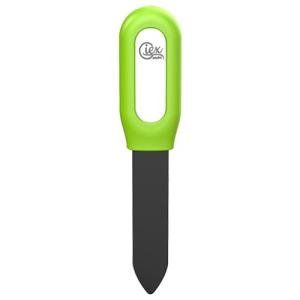
| Installation Design | Sleek, single-probe design with no wires or separate modules. | Easy to insert directly into large pots or garden beds with minimal disturbance to roots. Its simplicity makes large-scale deployment easier than wired or multi-part systems. |
1. Direct Wi-Fi Connectivity and Ecosystem Freedom
The defining feature of this Wireless WiFi Soil Moisture Meter is its ability to communicate directly with your existing Wi-Fi router. For consumers who already have a robust 2.4 GHz network spanning their home and yard, this eliminates the initial investment and physical clutter of a dedicated gateway device. You simply pair it via an app, and the sensor is immediately visible on your phone.
This direct connection usually means the device operates within the vast and versatile Tuya or Smart Life ecosystem. If you are already running smart bulbs, plugs, or security cameras on these platforms, integrating the soil meter for automation—such as triggering a smart water valve—becomes seamless and intuitive, maximizing your smart home investment.
2. IP67 Durability for Outdoor U.S. Gardens
The rugged IP67 rating is a major selling point, especially for U.S. consumers who want a reliable sensor for outdoor use. This level of protection means the sensor is fully sealed against dust ingress and can handle serious weather, from downpours to sprinkler spray. You can bury it in a vegetable patch or leave it in a large container planter without fear of rain damage or ingress from fine soil particles.
This high level of weatherproofing ensures the sensor provides consistent and reliable readings through all seasons (excluding freezing temperatures, when most sensors must be removed). Its durability makes it suitable for anything from a sunny balcony garden in Florida to a suburban lawn in the Northeast, offering peace of mind that your data won't be interrupted by the elements.
3. Real-Time Moisture and Critical Alert Customization
Beyond simply reading the data, the sensor’s app integration allows for sophisticated monitoring and alerting. You can customize precise high and low moisture thresholds in percentage terms, receiving a push notification only when your soil enters a critical zone. This prevents alert fatigue while ensuring you never miss a moment when your favorite plant is genuinely struggling.
The device also tracks soil temperature, which is often an overlooked factor in plant care. You can use this data to set up critical alerts for freezing temperatures in the early spring or dangerously high temperatures during a summer heat wave, allowing you to take action before root stress occurs. This combination of remote control and proactive alerting is what makes this a powerful smart gardening tool.
User Profiles
1. The Tuya/Smart Life Enthusiast
You have already built a substantial smart home using the Tuya/Smart Life platform, controlling everything from your living room lights to your garage door. You need a soil meter that integrates instantly into your existing ecosystem without forcing you to introduce a new, brand-specific application or hardware hub.
-
Use Case: You set up an automation routine in the app: If the soil moisture in your outdoor flower bed drops below 35% and the temperature is above 55°F, activate the smart outdoor water valve for 5 minutes.
-
The Fit: The direct Wi-Fi connectivity and underlying Tuya compatibility are exactly what you need. It leverages your existing network infrastructure and allows you to create complex, cross-product automation scenarios easily, streamlining your entire home control system.
2. The Traveler with a Small Garden
You have a small but cherished garden or collection of patio plants. You travel frequently for pleasure or extended family visits. You need constant remote monitoring but hate the idea of relying on a neighbor to physically check the soil every day.
-
Use Case: You are on vacation across the country. You receive an alert on your phone that the soil temperature in your container garden has hit 95°F. You check the moisture and realize it’s fine, but the temperature is critical, so you instruct a house sitter to deploy a temporary shade cloth immediately.
-
The Fit: The remote connectivity provided by the Wi-Fi link is non-negotiable for you. The IP67 rating allows you to confidently leave it outside while you are away, knowing the internal components are protected from summer storms and the high-value temperature data is reliable.
3. The Lawn Care Perfectionist
You are obsessed with maintaining a pristine, green lawn and are looking for ways to optimize watering efficiency and reduce your utility bills. You need specific data on ground moisture before deciding whether to run your sprinkler system.
-
Use Case: Instead of running the sprinklers on a fixed schedule, you check the meter's reading deep in the soil profile. You see the surface is dry but the root zone is still 50% moist. You manually delay the watering cycle, saving hundreds of gallons of water over the course of the summer.
-
The Fit: Placing the sensor in your lawn gives you a precise, sub-surface moisture reading that a simple rain sensor cannot. The app's data logging helps you understand your lawn's water retention characteristics, leading to smarter, more efficient irrigation practices.
"Complementary HomeTechCorner Category Recommendations"
| Recommended Products | Why This Category Is Useful Specifically for This Product | Short Usage Scenario |
| Smart Sprinkler Controllers | This meter's moisture data can be used to set highly accurate, data-driven parameters for your smart irrigation system. | Your smart irrigation system receives a low moisture reading from the meter and delays the scheduled watering until after the sun sets for maximum water absorption. |
| Outdoor Smart Plugs | These plugs can power solenoid valves or small water pumps, which can be automatically triggered by a low moisture alert from the sensor. | The moisture alert drops to 30% on a Sunday afternoon, and the app automatically turns on the outdoor smart plug connected to your drip irrigation pump for 15 minutes. |
| Wi Fi 7 Mesh Systems | Essential for providing the reliable 2.4 GHz signal needed to reach a sensor buried deep in the backyard or far-flung planter boxes. | You install a mesh node near the fence line, ensuring the meter maintains a strong, continuous Wi-Fi connection even 100 feet from your home router. |
| Outdoor Lighting | You can automate outdoor lighting to visually signal a critical plant care status based on the sensor data. | The sensor detects near-freezing soil temperatures; your smart outdoor spotlights immediately flash red to remind you to cover your sensitive plants. |
| Energy Monitoring Smart Plugs | Use these to monitor the power consumption of auxiliary devices that are triggered based on the soil meter's data (like pumps or heaters). | You review the plug data to see exactly how much electricity was used by the water pump in the last month when it was triggered by the soil sensor, tracking your energy spend. |