💡 Practical Usage Tips
- Users planning to monitor heavy appliances like space heaters must ensure the device supports a resistive load of 15A to avoid overheating the internal relay.
- For accurate historical data, the plug should maintain a stable connection to a 2.4GHz network, as signal interruptions can cause gaps in the telemetry logs.
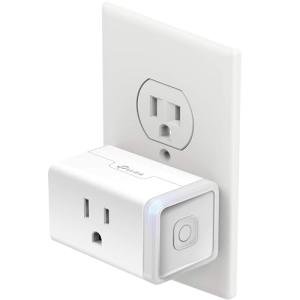
- It is advisable to check if the device dimensions allow for vertical stacking, ensuring the unit does not block the second socket in a standard duplex outlet.
- Advanced users can reduce cloud dependency by selecting hardware that supports local API polling for faster integration with home automation servers.
Shutterstock Explore
✅ What to Look For & ⚠️ What to Avoid
Must-Haves
- Integrated Shunt Resistor: To track actual power usage, the hardware must possess specific metering circuitry like the shunt resistor found in the Kasa Smart Plug Mini.
- High Amperage Rating: A 15A rating is critical for safety when monitoring appliances that draw significant power, such as air conditioners or dehumidifiers.
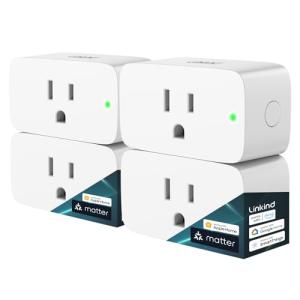
- Local Protocol Support: Devices offering local control via protocols like Matter or local polling ensure that automation rules execute even during internet outages.
Red Flags
- No Energy Chipset: Many "smart plugs" are simple switches and lack the energy metering chipset required to report voltage, amperage, or wattage.
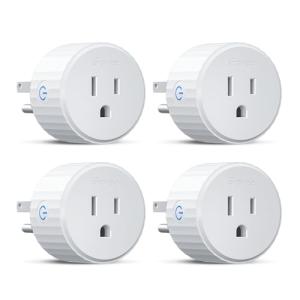
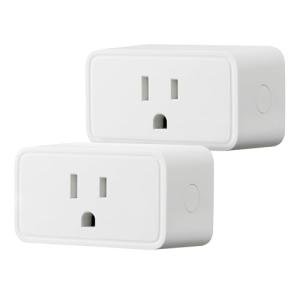
- Bulky Enclosures: Horizontal designs often obstruct adjacent outlets, forcing users to sacrifice one power source to accommodate the smart device.
- Cloud-Only Storage: Systems that rely entirely on external servers for data history can result in the loss of consumption records if the vendor discontinues support.
🛡️ Build Quality & Performance
The internal architecture of a smart plug determines its longevity and safety. Higher-quality units utilize flame-retardant polycarbonate shells (rated UL-94 V0) to contain potential electrical faults. Inside, the mechanical relay serves as the primary switching component. While standard relays are sufficient for lighting, robust 15A relays are necessary for managing the inrush current of motors and compressors without welding the contacts shut.
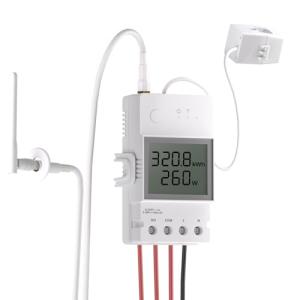
For whole-home or circuit-level monitoring, standard plug-in forms are insufficient. Industrial-style units like the SONOFF POWCT utilize a Split Core Current Transformer mechanism. This design allows for non-invasive measurement of high-amperage lines up to 100A, making it suitable for distribution panels where inline switching is not feasible. The inclusion of an ESP32 chipset in modern units further enhances performance by providing faster processing for complex automation logic compared to legacy microcontrollers.
🏆 Top Recommendations
| Best For |
Model Name |
Key Feature |
Why It Wins |
| Panel Monitoring |
SONOFF POWCT |
100A Non-Invasive CT |
Measures high-load circuits at the breaker box without cutting wires. |
| Local Precision |
Kasa KP115 |
+/- 1% Accuracy |
Offers highly accurate polling via local API for home automation users. |
| Cloud Analytics |
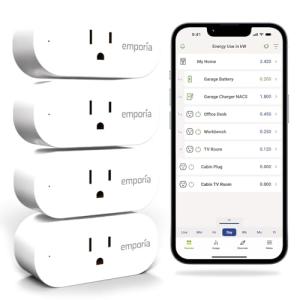
Emporia Smart Plug |
Vue Ecosystem |
Best for users who want detailed graphs and data visualization out of the box. |
| General Control |
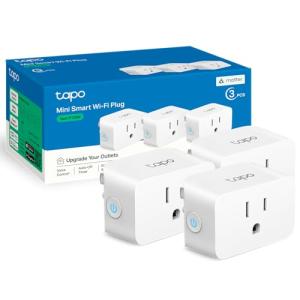
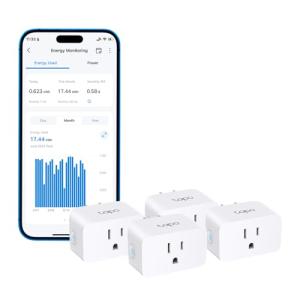
Tapo P125M |
Matter Protocol |
Future-proof interoperability, though it lacks active energy monitoring sensors. |
❓ Frequently Asked Questions
Can smart plugs monitor a whole house?
Standard smart plugs only monitor the specific appliance plugged into them. To monitor a whole home, a device like the SONOFF POWCT installed at the electrical panel, or a dedicated whole-home energy monitor, is required to measure the total current entering the property.
What is the difference between Matter and WiFi?
Matter is an application layer protocol that allows devices from different brands to talk to each other locally, while Wi-Fi is the network method they use to connect. A device can be both Wi-Fi connected and Matter-compatible, ensuring better local control and less reliance on the manufacturer's cloud.
Do these plugs work with 5GHz Wi-Fi?
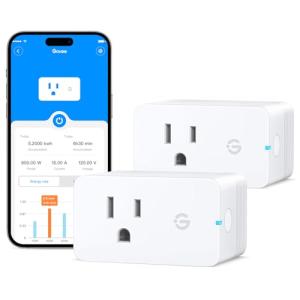
Most smart plugs, including the Kasa and Govee models, strictly utilize 2.4GHz Wi-Fi radios. This frequency offers better range and penetration through walls compared to 5GHz, which is crucial for devices often placed behind furniture or near floors.