
PRODUCT REVIEW
In-Depth U.S. Market Review
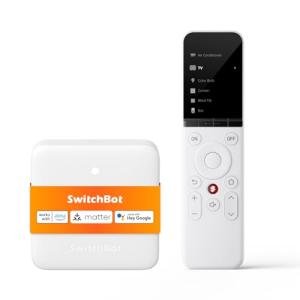
The Wi-Fi Universal Remote Hub with Smart App Control represents the next generation of home control, firmly establishing itself in the U.S. smart home ecosystem as an essential IR blaster for home automation . Unlike traditional universal remotes that you physically hold, this is a fixed, central hub designed to consolidate and control all your legacy Infrared (IR) devices—think TVs, AC units, fans, and stereos—using a smartphone app. Its niche is clear: bridging the gap between non-smart IR devices and modern Wi-Fi-based smart home platforms like Alexa and Google Assistant.
Compared to a traditional universal remote control, this Wi-Fi hub offers a distinct advantage: you no longer need line-of-sight control or even to be home to operate your devices. This introduces powerful automation possibilities. For instance, you can use the hub to pre-cool your living room AC ten minutes before you arrive home, a feature impossible with a handheld remote.
While it is strictly an IR blaster (it does not control RF devices), its competitive edge is the seamless integration with major U.S. voice assistants and its low cost relative to multi-protocol hubs. If your goal is to add voice control and app automation to your existing, non-smart entertainment and climate control gear, this hub offers one of the most cost-effective entry points into true home automation.
Technical Analysis
| Specification | Detail & U.S. Context | Analysis |
| Control Type | Infrared (IR) only, 360° coverage. | Controls legacy IR devices (TVs, AC, fans), ensuring wide-ranging utility across many U.S. households. |
| Connectivity | 2.4 GHz Wi-Fi (Required). | Standard Wi-Fi connectivity for seamless integration with modern home networks and remote app access. |
| Voice Control | Compatibility with Amazon Alexa and Google Assistant. | Core feature for the U.S. market, allowing users to use voice commands to control non-smart devices. |
| Learning Function | Ability to "learn" codes from existing IR remotes. | Essential for controlling non-standard or older devices not found in the pre-set code library. |
| App Control | Comprehensive control via a dedicated mobile application. | Enables remote access and advanced features like scene creation and timers, moving beyond simple on/off control. |
| Power | Standard Micro-USB (cable and adapter usually included). | Easy power requirement, often allowing it to be powered by a TV’s USB port for a clean, hidden setup. |
| Range | Effective IR range typically up to 30-50 feet line-of-sight. | Sufficient for controlling devices within a standard-sized American living room or bedroom. |
1. Smart Integration and Voice Control
The key functionality of this hub lies in its network connectivity, transforming your non-smart IR devices into smart, voice-activated appliances. By connecting the hub to your 2.4 GHz home Wi-Fi network, you link it directly to the manufacturer's cloud service, which in turn integrates with Alexa and Google Assistant.
Once set up, you can simply say, "Alexa, turn on the TV" or "Hey Google, set the AC to 72 degrees." This ability to control multiple functions of a legacy device via voice is powerful and vastly improves the quality of life for users. This makes it an ideal central remote hub for smart home control .
2. IR Learning and Device Setup
Initial device setup relies heavily on the hub’s internal code library, which covers thousands of devices from global and domestic brands. However, for a niche fan or an older stereo system, the hub includes a crucial "learning" function.
To use the learning function, you point your original remote at the hub and press the desired button (e.g., "Power"). The hub captures and saves that specific IR signal, allowing you to assign it a command in the app. This feature ensures that even if a device is not in the built-in library, you can still automate and control it, giving the hub maximum compatibility.
3. Automation and Scene Creation
The control app unlocks the true power of this universal remote hub by enabling advanced automation features. You can create "Scenes" or "Routines" that combine multiple actions across different devices. For example, a "Movie Night" scene could be programmed to turn on the TV, switch the input to the streaming box, turn on the soundbar, and lower the AC temperature—all with a single tap or voice command.
Furthermore, the scheduling feature allows you to set timers for your IR devices, such as having a fan turn off automatically after you've fallen asleep or having your TV power on to a specific news channel at a certain time. This level of dynamic scheduling is a massive upgrade from a basic handheld remote.
User Profiles
1. The Voice Control Enthusiast
You rely heavily on Alexa or Google Assistant for daily tasks and want to expand your voice control to devices that weren't built with smart technology. You find yourself frequently misplacing physical remotes.
-
Use Case: You need to integrate your older home theater equipment and window air conditioner into your existing smart ecosystem using simple voice commands.
-
The Fit: This hub is your essential Wi-Fi remote hub with voice control . Its compatibility with major voice platforms allows you to ditch the physical remotes and use your voice to control everything in the room, from turning on the fan to changing the TV channel.
2. The Climate Control Optimizer
You live in a climate where you constantly use window AC units or simple space heaters, and you want the ability to adjust the temperature and power status remotely. You are tired of manually setting the unit's timer.
-
Use Case: You need to pre-cool your bedroom on the way home from work during the hot summer months, or ensure the living room AC is off if you accidentally leave it running.
-
The Fit: Since the hub can learn virtually any AC or fan remote's IR signals, you gain full app and remote control over your climate devices. This remote access ability offers superior comfort and energy management.
3. The Clutter-Free Minimalist
You hate the sight of multiple remotes cluttering your coffee table and prefer a clean, streamlined living space. You appreciate technology that is hidden and works in the background.
-
Use Case: You want to hide the universal remote hub out of sight—perhaps mounted discreetly near the ceiling or behind a TV—while maintaining full control of all your devices.
-
The Fit: Its compact, dome-like design is easy to conceal, and the 360° IR coverage ensures that even when hidden, the hub can still communicate with all the devices in the room. This delivers a single, invisible point of control, minimizing clutter.
"Complementary HomeTechCorner Category Recommendations"
| Recommended Products | Why This Category Is Useful Specifically for This Product | Short Usage Scenario |
| Dedicated Control Panels | A dedicated control panel serves as an excellent touch-screen interface for the Scenes and Automations you create with this hub. | You walk into the kitchen and tap the 'Morning' scene on your wall-mounted control panel, which simultaneously starts the coffee maker (via a smart plug) and turns on the living room TV (via the IR hub). |
| Voice Assistants | This hub relies on a voice assistant to execute commands, translating your speech into IR signals. | You tell your smart speaker, "Goodnight," and the voice assistant tells the hub to turn off the TV, the light strip (if IR controlled), and lower the fan speed. |
| Energy Monitoring Smart Plugs | You can plug your climate devices into a smart plug to track energy usage and enhance on/off control, while the hub controls the modes and temperature. | After you use the hub to turn off the AC, you notice on your smart plug app that the phantom power draw has dropped to zero, confirming your automation works perfectly. |
| Wireless Programmable Buttons | A programmable button gives you a physical, tactile way to trigger the complex scenes you've set up on your hub. | You press a simple button mounted on your nightstand to trigger the 'Movie Time' scene—the TV, soundbar, and lights all adjust instantly without needing to talk or open an app. |
| Smart Thermostats | While the hub controls IR-based AC units, a smart thermostat manages your central HVAC, creating a comprehensive climate automation system. | Your smart thermostat sets the whole house temperature, and you use the IR hub to fine-tune the window AC unit in the sunroom for immediate, personalized cooling. |