
PRODUCT REVIEW
In-Depth U.S. Market Review
The Rockville 8-Channel Multi-Room Bluetooth Amplifier is staking its claim in a unique niche within the U.S. home audio market: affordable, decentralized whole-house audio . This unit is essentially an all-in-one distribution hub and power source designed to drive multiple pairs of passive speakers across different rooms. It caters directly to the homeowner or installer who wants a truly hard-wired, multi-zone system without the complexity and cost of a high-end, centralized matrix switch.
Its main appeal is its simplicity and high-channel count at a budget multi-room audio price point. You get eight channels of amplification, which translates to four stereo zones, and all you need to add are your chosen in-ceiling or wall speakers. The inclusion of Bluetooth is a key modern convenience, letting you stream music from your phone directly to the entire system or a selected zone.
Compared to more established multi-room audio solutions, like expensive Sonos or HEOS-based systems, you are trading sophisticated network control and app-based granular zone management for raw, reliable, hard-wired power. Alternatives often cost significantly more per zone. This Rockville amplifier is less about smart home integration and more about providing a simple, powerful, and durable backbone for delivering background audio throughout a large home or even a small office space.
Technical Analysis
| Specification | Detail & U.S. Context | Analysis |
| Channels | 8 Channels (4 Stereo Zones) | Crucial for four distinct listening areas (e.g., kitchen, deck, living room, basement). Simplifies wiring compared to daisy-chaining. |
| Power Output | 600W Peak / 150W RMS Total | This power rating is sufficient for driving standard 8-ohm in-wall speakers at comfortable listening volumes in typical U.S. residential rooms. |
| Connectivity | Bluetooth 5.0 (Receiver) | Allows direct, high-quality wireless streaming from any smartphone or tablet to the amplifier without needing an external receiver. |
| Zone Control | Independent Volume/Input per Zone | Essential for multi-room functionality, allowing different volumes in the kitchen versus the porch. Physical knobs offer simple, reliable control. |
| Input Options | RCA Line Input, 3.5mm Aux | Provides flexibility for connecting older sources like a CD player or TV, making it versatile for traditional home entertainment setups. |
| Impedance | Stable at 8 Ohms (Typical) | Designed to work seamlessly with the vast majority of standard U.S. in-wall and in-ceiling speakers, minimizing compatibility concerns. |
1. Amplification and Zone Distribution
This amplifier uses a traditional Class-D architecture, which is highly efficient for running continuously in a rack or closet—a common scenario for hard-wired multi-room audio setups. The 150W RMS total power, distributed across eight channels, gives each channel enough juice to drive a standard speaker pair without needing to crank the volume to distortion levels. It's designed for ambient and background listening, not for powering a high-fidelity home theater.
The beauty of the 8-channel design is the dedicated output for each speaker, ensuring a stable signal and consistent volume, unlike simple speaker selector switches that share a single amplifier. You can wire your speakers directly back to this central unit, providing a reliable backbone. The dedicated power makes sure your speakers get the clean signal they need, avoiding the drop-offs you might see in underpowered setups.
2. Physical Design and Installer-Friendly Features
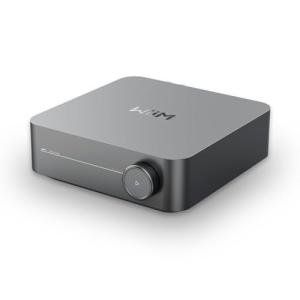
The Rockville unit sports a clean, rack-mountable form factor, which is the standard expectation for central U.S. home audio installations. Its compact size is suitable for placement in a utility closet, AV cabinet, or basement rack. All speaker terminals and inputs are logically placed on the back, streamlining the wiring process for installers.
The key feature is the individual physical volume and input selection knobs on the front panel for each of the four zones. While this is less "smart" than app control, it provides immediate, tactile control that doesn't rely on Wi-Fi or a smartphone—a huge benefit for guests or family members who prefer simplicity. This physical control is often a more reliable solution for day-to-day use than a complex network setup.
3. Source Connectivity and Wireless Behavior
The built-in Bluetooth 5.0 receiver is the primary draw for modern use, allowing you to quickly stream content from services like Spotify or Apple Music directly to the system. Once paired, your entire home audio system essentially becomes one large Bluetooth speaker, which is perfect for house parties or whole-home background music. The range is robust enough for a typical home installation where the amplifier is centrally located.
For alternative sources, the RCA inputs and 3.5mm aux input offer valuable legacy connections. You can easily hook up a smart TV's audio output or an existing network streaming device, allowing the Rockville amplifier to drive the audio for all four zones using a centralized source. This versatility means you can build a system that relies solely on this one piece of equipment, minimizing the need for external components.
User Profiles
1. The Budget-Conscious Home Builder
You are a homeowner finishing a new build or a major renovation, and you want high-quality whole-house audio pre-wired but don't want to spend five figures on a system. You value reliability and simple, physical controls over complex smart home app integration.
-
Use Case: You plan to install four pairs of in-ceiling speakers throughout the main living areas (kitchen, living room, patio, master bedroom). You primarily want to play a single, synchronized playlist for entertaining but appreciate the ability to adjust the patio volume independently without touching a smartphone.
-
The Fit: The Rockville 8-Channel Multi-Room Bluetooth Amplifier provides the exact infrastructure you need: four independent stereo zones, ample power for those passive speakers, and simple front-panel controls. The Bluetooth input makes it effortless to get music playing right away, saving you hundreds or thousands of dollars you might otherwise spend on a proprietary, networked streamer for each zone.
2. The Small Business Owner
You run a small coffee shop, dentist's office, or retail space in the U.S. and need reliable, consistent, commercial background music that meets public performance license requirements. Downtime due to network issues is not an option.
-
Use Case: You need three distinct zones (e.g., lobby, waiting area, back office) to play the same streaming service or a local audio source. The volume must be easily adjusted by employees throughout the day without having to search for a password or an app.
-
The Fit: This unit offers the robust, set-it-and-forget-it reliability that a business requires. The physical knobs mean any employee can quickly turn down the lobby music or adjust the source without technical training. The powerful 8-channel output ensures the music is clear and fills the space consistently, making it a professional, high-value choice for commercial applications.
3. The Multi-Source Entertainment Hub
You are an enthusiast who has multiple audio sources—perhaps a classic turntable setup, a media center PC, and a modern streaming stick—and you want the flexibility to listen to any of them in any area of your home.
-
Use Case: You want to listen to your vintage vinyl in the living room while your spouse streams a podcast via Bluetooth in the kitchen, but later you want both zones to listen to a movie soundtrack playing from the TV connected via RCA.
-
The Fit: The Rockville unit’s per-zone input selection is its killer feature for you. Unlike many budget systems that only allow a single source for all zones, this amplifier’s design gives you true, independent zone management. You can switch the kitchen to Bluetooth and the living room to the RCA input without needing any complex matrix switching, making it incredibly versatile for a multi-source household.
"Complementary HomeTechCorner Category Recommendations"
| Recommended Products | Why This Category Is Useful Specifically for This Product | Short Usage Scenario |
| Smart Bridge Devices | This amplifier is "dumb" in terms of network control, so a bridge can add app control and scheduling to your four zones. | You want to wake up to your favorite playlist, so you schedule the system to turn on and set the volume using a bridge integrated with your smart assistant. |
| High Fidelity Smart Speakers | While the amplifier powers passive speakers, you might want a high-fidelity smart speaker in a fifth room (e.g., office) for voice control and streaming features. | You are in your home office, and instead of powering on the whole system, you use a high-fidelity smart speaker for a quick, private listening session. |
| Dedicated Home Automation Controllers | To fully automate the source switching or power state of the amplifier based on time or room occupancy. | When you open your back door contact sensor, the controller automatically powers on the outdoor speaker zone and sets the volume to a low, welcoming level. |
| Smart Power Strips | Allows you to remotely power cycle the amplifier or turn the entire system on/off using a smart home command. | You just finished your evening workout in the basement, and you simply tell your voice assistant to turn off the "Whole House Audio" smart power strip. |
| Smart Wall Switches | You can integrate smart switches in rooms to control the power to the in-wall volume controls for convenience. | As you leave the kitchen, you flip the smart switch to cut the power to that zone's volume control, ensuring it’s not left playing unnecessarily. |
| Speaker Stands 290 | If you're not using in-wall/in-ceiling, high-quality speaker stands are essential for maximizing the sound dispersion and quality of your passive speakers. | You place your bookshelf speakers on these stands in the living room, ensuring the audio is positioned at ear level for a better listening experience. |