Building a truly responsive smart home often requires more than just smart bulbs; it relies on dedicated controllers to bridge the gap between digital software and physical hardware. These devices act as the nervous system of an automated environment, translating wireless signals into actionable commands for lighting, climate control, and legacy entertainment systems. Selecting the right controller ensures that everything from an old air conditioner to a high-tech LED strip operates reliably and responds instantly to user inputs.
Dedicated Home Automation Controllers
Control your entire smart home from one easy-to-use hub
Product List
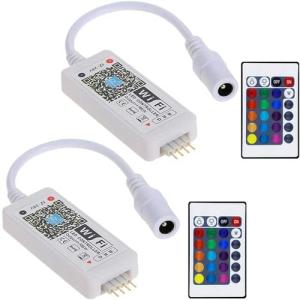

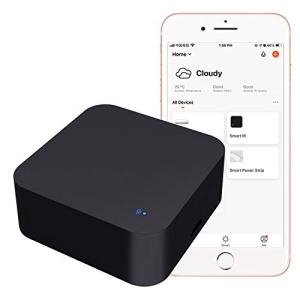
Universal Smart WiFi Remote
Senckit
Product Review Score
4.92 out of 5 stars
224 reviews$16.99 $15.95
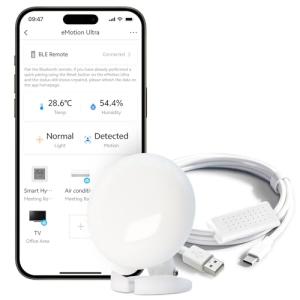

Eco Smart AC WiFi Controller
Cielo Breez
Product Review Score
4.09 out of 5 stars
213 reviews$126.44
💡 Practical Usage Tips
- It is crucial to install wireless controllers outside of metal enclosures because metal shields block the 2.4GHz Wi-Fi signal and prevent consistent connectivity.
- For lighting setups, utilizing a device with a secondary RF Protocol ensures that lights can still be manually operated even if the main internet connection goes down.
- When setting up infrared blasters, the unit must have a direct line of sight to the TV or air conditioner since IR beams cannot penetrate walls or cabinet doors.
- Advanced presence sensors using 60GHz FMCW radar should be positioned away from moving fans or curtains to avoid false triggers caused by their high sensitivity to micro-movements.
✅ What to Look For & ⚠️ What to Avoid
Must-Haves:
- A reliable controller should support a Dual-Path Bridge architecture, combining Wi-Fi for remote access and RF for local manual control.
- Look for devices that integrate with local execution platforms like Tuya Local to reduce command latency and dependency on external clouds.
- For environmental control, an external probe with a high-quality NTC Thermistor is essential for accurate temperature readings at the source.
- The LinknLink eMotion 60GHz Smart Presence Sensor is an excellent example of hardware that uses modern radar tech to detect static presence, which is a major upgrade over old motion sensors.
Red Flags:
- Avoid high-load relays that lack proper ventilation slots, as trapped heat can degrade internal MOSFETs and capacitors over time.
- Be wary of infrared hubs that claim universal compatibility but lack a comprehensive, updateable code database for legacy appliances.
- Skip devices that rely solely on battery power for critical always-on sensors, as voltage drops can cause erratic signal behavior.
- Do not purchase temperature probes for chemical tanks unless the manufacturer explicitly rates the material for corrosive resistance.
🛡️ Build Quality & Performance
The physical construction of home automation controllers often dictates their longevity, especially when they are tucked away in walls or utility closets. Most consumer-grade units utilize a compact Thermoplastic Housing which is lightweight and cost-effective, but it does not dissipate heat as efficiently as metal. This makes it vital to ensure that devices handling high power loads, such as relay switches, are not overcrowded in a junction box. For infrared blasters, the use of high-transmittance polycarbonate is standard to allow the signal to pass through the black casing without significant attenuation.
Performance stability is largely tied to the internal chipset, with modules like the WB3S or Espressif variants being the industry standard for reliable 2.4GHz communication. While these chips are robust, they are sensitive to network congestion. Devices that include a localized backup method, such as the RF remote found in the Smart LED WiFi Controller with RF Remote, offer a significant advantage by ensuring functionality remains intact even when the Wi-Fi network experiences downtime or latency.
🏆 Top Recommendations
| Best For | Model Name | Key Feature | Why It Wins |
|---|---|---|---|
| LED Strips | Aubric Smart LED Controller | Dual Wi-Fi & RF | It offers a manual remote backup, ensuring lights work even if the Wi-Fi fails. |
| Temp Control | BN-LINK BWS-30 | 15A Relay Capacity | The high-load rating handles heaters and coolers safely with precise thermal feedback. |
| Presence | LinknLink eMotion | 60GHz Radar | It detects micro-movements like breathing, solving the issue of lights turning off when you sit still. |
| AC Automation | Cielo Breez Eco | Local Climate Rules | The "Comfy Mode" runs schedules directly on the device, independent of internet status. |
❓ Frequently Asked Questions
Will these controllers work with my 5GHz Wi-Fi router?
Generally, no. Most smart home controllers operate exclusively on the 2.4GHz Band because it offers better range through walls. You may need to separate your router's bands or enable a guest network specifically for these devices.
Can one infrared remote control devices in different rooms?
No, infrared (IR) light works just like a flashlight; it cannot pass through walls or solid doors. You will need a separate IR bridge for every room where you want to control equipment like TVs or air conditioners.
What is the advantage of a 60GHz sensor over a standard motion sensor?
Standard sensors (PIR) only detect significant movement, which is why lights often turn off if you are reading quietly. A 60GHz Sensor is sensitive enough to detect the rise and fall of a human chest while breathing, ensuring the room knows you are still there.