💡 Practical Usage Tips
- When installing devices with internal environmental sensors, allow the thermistor at least 60 minutes to calibrate for accurate temperature readings.
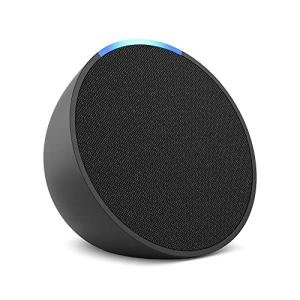
- For directional speakers like the Echo Pop, positioning the unit against a wall helps utilize the semi-hemispherical design for optimal acoustic projection.
- Users concerned about network privacy should utilize the physical hardware disconnect switches to mechanically interrupt the microphone array when voice commands are not needed.
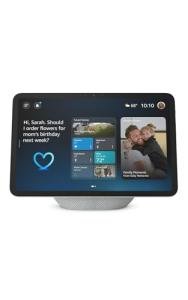
- To extend the lifespan of screen-based units, utilizing automated sleep cycles can prevent backlight fatigue on the display panel.
✅ What to Look For & ⚠️ What to Avoid
What to Prioritize
- Look for units powered by the AZ2 Neural Edge processor, such as the Echo Show 11, which reduces latency by processing voice commands locally rather than in the cloud.
- Prioritize devices that support Matter and Thread protocols if you intend to build a scalable and responsive smart home network.
- For portable audio, ensure the chassis carries a high IPX7 rating to guarantee functionality even after accidental immersion in water.
Potential Dealbreakers
- Be aware that many modern smart speakers have eliminated the 3.5mm auxiliary output, which prevents physical tethering to older stereo receivers or external speakers.
- Proprietary power connectors, such as 15W barrel jacks, limit flexibility compared to standardized USB-C power delivery systems.
- Some budget-friendly units may omit secondary hardware like ultrasound occupancy detectors, limiting their usefulness in presence-based automation routines.
🛡️ Build Quality & Performance
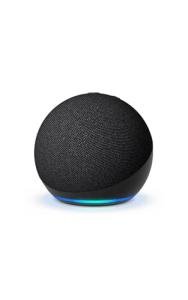
The physical construction of a smart speaker dictates both its longevity and its acoustic profile. High-fidelity units often employ a spherical or semi-hemispherical chassis to maximize internal volume for the driver, which directly correlates to bass response. Materials range from recycled plastics and mesh fabrics in home-bound units to high-impact rubberized coatings found on portable alternatives. These coatings are essential for absorbing mechanical shock and maintaining the integrity of the internal components.
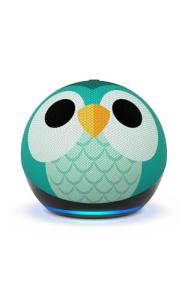
For environments prone to accidents, such as a child's playroom, standard warranties may not be sufficient. Specialized editions often include extended coverage to address this risk. For instance, the Echo Dot Kids features a specific 24-month hardware replacement agreement that covers physical damage, offering peace of mind that is not available with standard baseline models.
🏆 Top Recommendations
| Best For |
Model Name |
Key Feature |
Why It Wins |
| Smart Home Hub |
Echo Show 11 |
Zigbee/Matter Bridge |
Centralizes device control with a visual interface. |
| Outdoor/Mobile |
Anker Soundcore 2 |
IPX7 Waterproof |
Rugged design with 24-hour battery life. |
| Bedroom/General |
Echo Dot (Charcoal) |
Ultrasound Sensors |
Enables presence-based lighting automation. |
| Small Spaces |
Echo Pop |
Compact Front-Firing |
Fits in tight corners while maintaining speed. |
❓ Frequently Asked Questions
Can these speakers extend my Wi-Fi network?
Yes, specific models like the Echo Dot and Echo Pop feature eero Built-in capabilities. This allows them to act as mesh nodes, potentially adding up to 1,000 square feet of coverage and supporting speeds up to 100 Mbps, provided they are paired with a compatible network infrastructure.
Does the Anker Soundcore 2 support smart voice commands natively?
No, the Soundcore 2 is a dedicated Bluetooth speaker managed by a Realtek chipset. It does not contain Wi-Fi radios or onboard voice processing hardware, meaning it relies on a connected mobile device for any streaming content or smart assistant interaction.
What is the advantage of the AZ2 processor?
The AZ2 Neural Edge processor allows devices to process common voice triggers locally on the hardware rather than sending the audio data to the cloud. This results in a measurable reduction in command-to-execution latency, making the smart assistant feel more responsive.