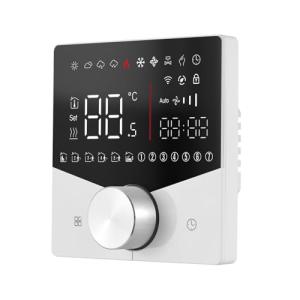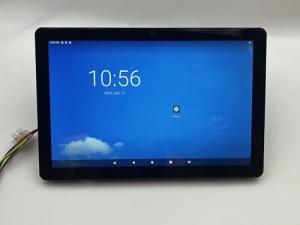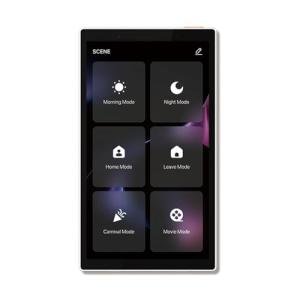

Technical specifications for the MOES interface reveal an Android-based thin client architecture housed within a dense ODM chassis, specifically the Tuya T6E or S6E series. The 480x480 resolution IPS panel provides consistent color reproduction across wide viewing angles, though the hardware exhibits measurable input latency when processing dashboards containing more than 20 active device nodes. Connectivity is maintained via a 2.4GHz radio and an integrated Zigbee 3.0 coordinator.
Physical installation requires the presence of a neutral wire and a high-volume wall box to accommodate the chassis depth. Monitoring of thermal output indicates that the internal CPU and Zigbee radio generate significant heat, suggesting that installation in non-ventilated, multi-gang configurations with high-wattage dimmers should be avoided to prevent thermal throttling or component degradation.
- Operational modes: Local Zigbee coordination, Alexa voice processing, Cloud-sync.
- Audio output: Integrated 1W speaker for functional notifications.
- Interface: Capacitive multi-touch IPS display.
Performance metrics demonstrate that while the integrated microphone is tuned for voice command recognition, the audio playback hardware is insufficient for high-fidelity acoustic reproduction. Aggregated specification data confirms that this unit functions as a localized node to reduce network reliance on mobile application dependencies, utilizing Zigbee 3.0 to facilitate faster response times for sub-devices than traditional cloud-only routes.
The MOES Smart Home Touchscreen Panel with Alexa is suggested for deployments where integrated voice assistance is required directly at the wall interface.
This hardware serves as a central point of interaction within the smart wall controllers segment of home automation infrastructure.