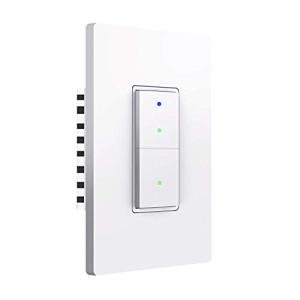

Structural analysis of the MOES 2.4GHz WiFi Smart Touch Wall Switch confirms a capacitive touch interface integrated with a 10A mechanical relay. The internal logic is driven by a Tuya-based TYWE3S or ESP8266-compatible module. Performance metrics indicate that 2.4GHz Wi-Fi connectivity is mandatory for remote operation, which may introduce latency in environments with high RF congestion. The tempered glass faceplate serves as the primary user interface, providing a scratch-resistant surface but lacking tactile haptic feedback.
Technical reliability audits have identified potential failure patterns, specifically ghost switching attributed to electromagnetic interference or moisture accumulation behind the capacitive plate. Material analysis indicates minimal isolation between the high-voltage AC and low-voltage DC circuits, which may impact touch sensitivity during voltage spikes. While the relay is rated for 1000W incandescent loads, inrush current data suggest a practical derating for LED loads to prevent terminal pitting.
Support for local control is limited by the default cloud-dependent firmware, which relies on external server availability for voice and app-based commands. The chassis dimensions are compatible with standard single-gang boxes, though the terminal design may present resistance when utilizing 12AWG wiring.
The MoesGo 4-Gang Touch Switch offers a higher load density for those requiring control over multiple circuits within the same aesthetic framework. This device is categorized among smart wall switches, where comparative analysis focuses on cloud dependency and relay durability.