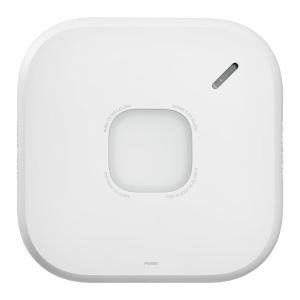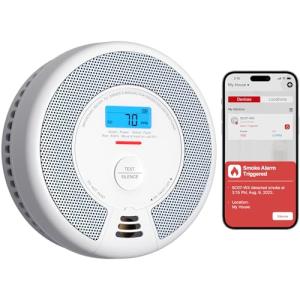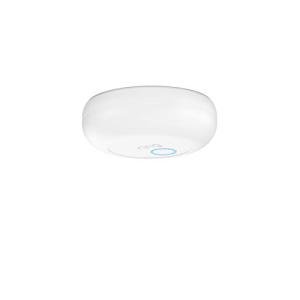


Technical specifications indicate the Kidde Smart Smoke and CO Detector utilizes the HomeSafe architecture, integrating electrochemical and photoelectric sensors into a centralized life-safety node. Communication is established via the 2.4GHz Wi-Fi band, facilitating cloud-dependent notification protocols. Material analysis of the internal chassis reveals a modular Wi-Fi chipset supported by a dedicated 10-year sealed lithium battery backup, ensuring operational continuity during primary power loss. Acoustic output is generated by a piezoelectric horn calibrated to 85dB at a range of 10 feet.
Hardware logic supports remote hushing of acoustic signals through the mobile application interface. Functional testing confirms that the interconnectivity protocol allows this unit to act as a bridge for legacy non-smart hardwired alarms, provided the primary unit maintains a physical connection to the existing household circuit. Data indicates the chassis dimensions are expanded relative to traditional non-smart units to accommodate the integrated radio and dual-sensor arrays.
Operational stability is contingent upon network configuration, specifically requiring a dedicated 2.4GHz SSID to mitigate handshake failures associated with band-steering in modern mesh systems. Battery longevity is subject to fluctuation based on signal strength; frequent connection attempts in low-coverage environments may impact the projected 10-year service life of the sealed power cell.
System status monitoring and sensor diagnostics are performed via the Kidde Cloud service, which manages remote alerts and health reporting.
The Kidde Smart Smoke and CO Detector is suggested as an alternative for installations requiring a bridge between modern cloud alerts and legacy hardwired alarm infrastructures.
This hardware unit is categorized within the broader repository of smart smoke and CO alarms, serving as a primary node for residential safety monitoring.