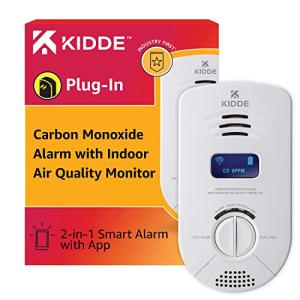
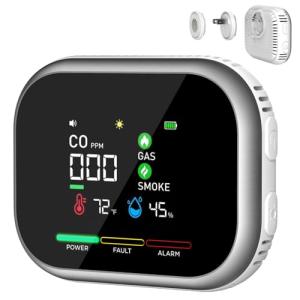
2. 🔌 Choosing Your System: Key Features and Compatibility
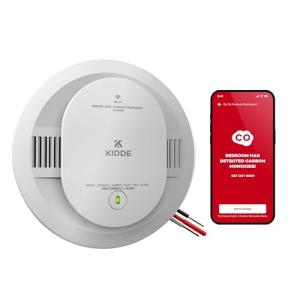
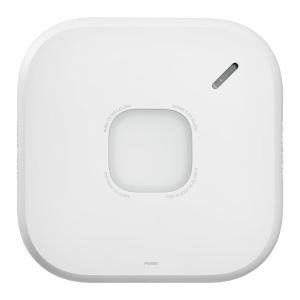
When selecting your Smart Smoke/Co Alarms , you must choose between hardwired and battery-only power, determine the required sensing technology, and ensure compatibility with your preferred smart home ecosystem.
Essential Variations and Power Methods
Smart Smoke/Co Alarms primarily come in hardwired or battery-only versions, dictated by the existing wiring in your US home:
-
Hardwired with Battery Backup (Maximum Reliability):
-
Pros: These alarms are connected to your home's electrical wiring (typically 120V AC), guaranteeing continuous power for the smart features, Wi-Fi radio, and 24/7 Monitoring . They include a battery backup (usually 10-year lithium) to ensure operation during power outages. They are required by code in most new US construction.
-
Cons: Installation is complex and often requires an electrician to connect to the existing wiring circuit. They must be compatible with existing interconnections (the ability for all alarms to sound simultaneously).
-
US Lifestyle Context: Ideal for replacing older, hardwired alarms in a contemporary family home in Texas, ensuring high-reliability, always-on protection for every floor.
-
Battery-Only (Maximum Flexibility):
-
Pros: These Smart Smoke/Co Alarms run entirely on sealed, long-life (usually 10-year) lithium batteries. Installation is simple, requiring no wiring whatsoever, making them perfect for renters or owners of older homes without existing hardwired alarms.
-
Cons: Rely entirely on the internal battery. If the battery fails prematurely, the unit is offline until replaced, compromising 24/7 Monitoring .
-
US Lifestyle Context: The preferred solution for apartments or older houses in New England where structural modifications are difficult, providing a quick, easy safety upgrade and ensuring seamless Remote Access .
-
Combination Sensing (Dual Protection):
-
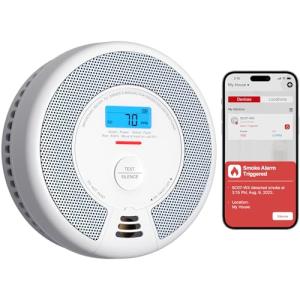
Pros: Most modern Smart Smoke/Co Alarms combine photo-electric smoke sensing (better for smoldering fires) and electrochemical CO sensing. Some premium models add ionization sensors (better for fast-flaming fires) or heat sensors. Combination sensing provides the most comprehensive, layered threat detection.
-
Cons: Combination units are generally more expensive than single-purpose alarms.
Compatibility Protocols
Reliable communication is life-saving in this category. Your Smart Smoke/Co Alarms must utilize a robust protocol for instant, guaranteed transmission of alerts.
-
Wi-Fi Connectivity: Many popular Smart Smoke/Co Alarms use Wi-Fi to send alerts to the cloud and your phone. Wi-Fi alarms should have strong signal reliability, as any lag can delay crucial notifications.
-
Z-Wave and Zigbee: These low-power mesh protocols are common in models integrated with security systems. They are extremely Energy Efficiency and prioritize local communication with the hub, providing redundancy to Wi-Fi and ensuring fast alarm activation and reliable battery status reporting.
-
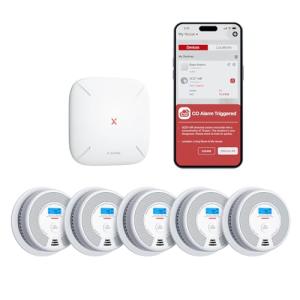
Interconnectivity: Crucial for safety. Whether wired or wireless, all Smart Smoke/Co Alarms in your home must be able to communicate so that if one alarm detects smoke, all alarms sound simultaneously. This is a non-negotiable feature for code compliance and safety.
-
Remote Access: The ability to receive notifications and check the status of your Smart Smoke/Co Alarms while away via an app is paramount. This enables you to contact emergency services if an event occurs while you are traveling.
3. 🛠️ Installation and Setup Walkthrough
Installing Smart Smoke/Co Alarms involves either a simple mounting plate swap (battery) or a quick wiring connection (hardwired). The app setup is crucial for linking the alarm to your 24/7 Monitoring and Remote Access .
Pre-Installation Preparations
-
Code Compliance: Check your local US building codes regarding alarm placement (e.g., one on every floor, one in every bedroom, and one outside the sleeping area). Plan the location of all Smart Smoke/Co Alarms accordingly.
-
Test Wi-Fi/Interconnect: Ensure the Wi-Fi signal is strong at every installation location. If you are replacing hardwired alarms, verify the existing interconnect wiring is compatible with the new smart alarm system.
-
App Setup: Download the manufacturer's app, create your account, and set up your emergency contact preferences. This prepares the system for immediate alert transmission.
Installation Guide (Typical Hardwired Alarm)
-
Safety Off: CRITICALLY, turn off the circuit breaker controlling the existing alarm system. Use a multimeter or power indicator to confirm the power is off.
-
Remove Old Unit: Disconnect the old alarm's plug from the wiring harness and remove the old mounting plate.
-
Install New Plate & Harness: Install the new smart alarm mounting plate. If the old wiring harness is not compatible, connect the new smart alarm's harness to the house wiring (Black to Black, White to White, Red/Orange to Red/Orange for interconnect) and secure with wire nuts.
-
Connect and Mount: Plug the new alarm into the harness and mount it to the ceiling plate. Restore power.
-
Digital Setup: Follow the app instructions to connect the first alarm to Wi-Fi. Then, pair all subsequent Smart Smoke/Co Alarms to the first one, verifying the interconnect feature works (pressing the test button on one alarm should make all alarms sound) and confirming Remote Access .
Troubleshooting Common Issues
-
Issue 1: Frequent Chirping (Not Low Battery).
-
Issue 2: Remote Access Notifications Are Delayed.
-
Issue 3: New Alarm Fails to Interconnect with Old Alarms.
4. Advanced Automation and Maximizing Value
The integration capabilities of Smart Smoke/Co Alarms allow them to trigger critical life-safety automations that go far beyond a simple siren, leveraging the power of Remote Access .
Powerful Automation Scenarios
-
Emergency Light Path and Lock Control: A Smart Smoke/Co Alarms detects smoke in the kitchen. An automation instantly unlocks all Smart Keyless Locks on the exterior doors to facilitate rapid exit and turns on all internal smart lights (via Smart Wall Switches ) to 100% brightness, illuminating the evacuation path. This is a critical life-safety response enabled by 24/7 Monitoring .
-
HVAC Shutdown for Fire Safety: When a smoke alarm is triggered, an automation immediately shuts off the smart thermostat's HVAC system. This prevents smoke and carbon monoxide from being rapidly circulated throughout the entire US home, mitigating damage and improving the safety of occupants. This safety measure also provides Energy Efficiency by shutting down a powerful appliance.
-
Remote Verification and Dispatch: You receive an alert via Remote Access that the CO alarm in the basement has triggered. You immediately check the feed from a paired Indoor Security Camera to confirm no one is in the house, allowing you to instantly call the fire department and inform them of the precise danger and location, saving critical response time.
Longevity & Maintenance
Smart Smoke/Co Alarms have a fixed lifespan (7–10 years) due to the chemical degradation of the internal sensors. You must adhere to this replacement schedule. The smart features aid in maintenance by sending low-battery alerts directly to your app (via 24/7 Monitoring ), eliminating the guesswork of battery replacement and supporting Energy Efficiency . Perform a manual test (press the test button) every month and regularly clean the exterior vents with a vacuum cleaner nozzle to prevent dust buildup, which is the leading cause of false alarms.
5. COMPLEMENTARY CATEGORY RECOMMENDATIONS
| Recommended Categories |
Why This Category Is Useful Specifically for This Product |
Short Usage Scenario |
| Alarm Systems |
The alarms integrate directly into the base alarm system, which coordinates the siren and professional monitoring response. |
A smoke alarm triggers the main alarm hub, which then contacts emergency services. |
| Smart Lighting |
Alarms trigger smart lights and dimmers to turn on to 100% brightness, illuminating exit paths during an emergency. |
The CO alarm triggers all smart lights in the hallway to flash rapidly for warning. |
| Thermostats |
Alarms trigger an automation to shut down the HVAC system via the smart thermostat to prevent smoke and CO circulation. |
A smoke alert is received, and the smart thermostat shuts off the central air system immediately. |
| Smart Locks |
Alarms trigger an automation to unlock all exterior smart locks, facilitating easy evacuation via Remote Access and local control. |
The CO alarm automatically unlocks the Smart Keyless Locks on the front and back doors. |
| Indoor Security Cams Ptz Static |
Cameras provide crucial visual confirmation of the fire/smoke location before emergency services arrive. |
A smoke alarm alert triggers the nearest indoor camera to record the affected area for 24/7 Monitoring . |
| Central Hubs |
The hub acts as the central coordinator, linking the alarm trigger with devices using different protocols (e.g., Z-Wave smart plugs). |
The hub receives the smoke alert and executes the routine to turn off all non-essential smart plugs. |
| Voice Assistants |
Smart speakers (voice assistants) announce the type and location of the emergency, supplementing the loud alarm horn. |
The voice assistant announces, "Warning! Carbon Monoxide detected in the basement!" |
| Smart Circuit Breakers |
Used to shut down power to specific high-risk circuits (like the laundry room or furnace) upon an alarm trigger. |
The CO alarm triggers the Smart Circuit Breakers to cut power to the furnace circuit. |
Smart Smoke/Co Alarms are the ultimate life-safety devices, upgrading passive protection to intelligent, interconnected 24/7 Monitoring . They provide crucial, immediate notifications via Remote Access , enabling rapid response whether you are home or away, and integrate seamlessly with your smart home for coordinated emergency actions. By choosing modern smart alarms, you ensure reliable, code-compliant safety and benefit from enhanced Energy Efficiency management. Secure your family and your property—install Smart Smoke/Co Alarms today.