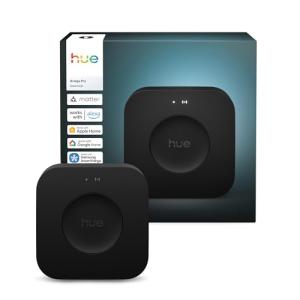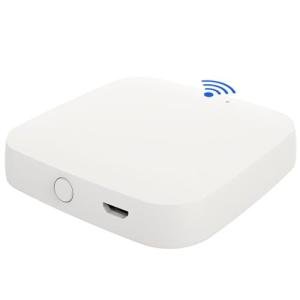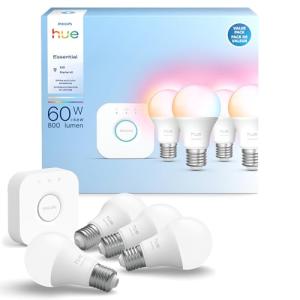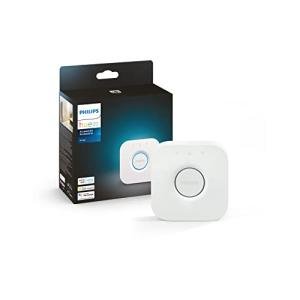

Technical specifications indicate the Homey Bridge serves as a multi-protocol signal translator, housing radio arrays for Zigbee, Z-Wave Plus, Bluetooth, Infrared, and 433MHz frequencies. Aggregated specification data confirms the absence of local processing, categorizing the unit as a cloud-dependent thin client where all automation logic is executed via remote servers. Material analysis of the circular chassis reveals a highly integrated PCB with optimized antenna positioning designed to minimize cross-talk between the 2.4GHz and Sub-GHz bands.
Performance metrics demonstrate a reliance on 2.4GHz Wi-Fi for network backhaul due to the lack of an integrated Ethernet port. Operational data confirms that connectivity is maintained via a Micro-USB power input, and hardware utility is restricted by a subscription-based model for installations exceeding five connected devices. Standardized testing protocols show that the Infrared blaster and automated routines cease operation during periods of internet connectivity loss.
System configurations include a minimalist LED status ring and support for the Homey Flow interface, though users requiring offline reliability may experience latency compared to local-execution controllers.
The Homey Pro offers a significant architectural alternative for environments requiring 100% local execution and superior processing power within this hardware ecosystem.
This unit occupies a specific niche within the broader smart bridge devices classification, serving as a versatile but cloud-reliant protocol bridge.