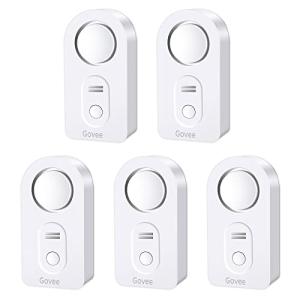

Aggregated specification data for the GoveeLife H5058 identifies it as a proprietary RF-based detection system operating on the 433.92MHz frequency. This architectural choice provides enhanced signal range and lower power consumption than 2.4GHz Wi-Fi alternatives. The sensors utilize a dual-probe configuration designed to detect both pooling moisture on the floor and vertical dripping from overhead sources.
Material analysis confirms an IP66 rating for the sensor chassis, indicating resistance to water splashes. The internal PCB is unique to Shenzhen Qianyan Technology and utilizes a proprietary handshake protocol, which limits interoperability with non-Govee RF bridges. Power is provided by AAA batteries, with an estimated functional lifespan of 12 to 24 months depending on environmental conditions.
Functional operation requires a gateway that bridges the 433MHz signals to a 2.4GHz Wi-Fi network. While the gateway includes a 100dB local siren that functions as an audible fail-safe, remote app notifications are dependent on cloud server availability. Standardized testing suggests that initial pairing may require the temporary isolation of 2.4GHz bands on multi-band routers to establish the handshake.
Maximum system capacity is limited to 10 sensors per gateway node. For installations requiring more than 10 detection points, additional hubs are necessary for horizontal scaling. Users should also consider that prolonged exposure to high mineral content water may induce probe oxidation over several years of use.
The Tapo T300 offers a similar hub-based sub-GHz architecture but utilizes a 90dB local alarm and standard AAA battery power. TP-Link Tapo Smart Water Leak Detector with Alarm
This system is categorized within water leak detectors as an entry-level networked solution.