
PRODUCT REVIEW: Google Nest Power Connector - C Wire Adapter for Smart Thermostats
In-Depth U.S. Market Review
The Google Nest Power Connector is a small but mighty accessory that plays a critical role in the U.S. smart home ecosystem, specifically for owners of Google Nest smart thermostats. Its niche is solving the common "C-wire problem," a technical hurdle encountered in many older American homes. The "C-wire" (Common wire) provides continuous power needed for Wi-Fi connectivity and display brightness on modern smart thermostats.
Many older HVAC systems in the U.S. have only four wires, lacking the necessary C-wire connection. The Nest Power Connector is a clever, simple way to C Wire Adapter for Smart Thermostats that lets you power your Nest Thermostat reliably without running new wire through your walls, saving you from a costly and invasive installation.
Compared to battery-only operation or solutions that "steal" power, this C-wire adapter provides a constant, stable 24V AC source, preventing battery drain issues and Wi-Fi dropouts. While some competitors offer C-wire alternatives that involve installing a transformer near the furnace, the 3.98in Accessory, Snow is designed for a much easier installation directly on the furnace control board, making it faster and less intrusive. This makes it the essential, official power solution for a reliable Nest experience.
Technical Analysis
| Specification | Detail & U.S. Context | Analysis |
| Function | Provides a continuous 24V AC power source (C-wire equivalent) to the smart thermostat. | Essential for stable Wi-Fi and display operation, eliminating the need for the thermostat to periodically "steal" power, which can stress the HVAC system. |
| Compatibility | Exclusively designed for Google Nest Thermostats (all generations, including the Nest Learning Thermostat). | Ensures perfect handshake and power delivery, as it's an official accessory built for the entire Nest ecosystem. |
| Installation | Requires connection directly at the HVAC control board (furnace or air handler). | Installation is simple and safe for a competent DIYer but is slightly more involved than a simple wall plate replacement. |
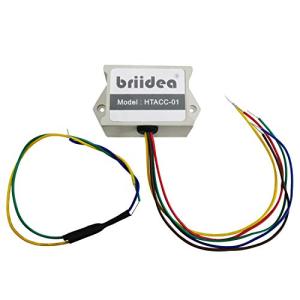
| Form Factor | Small, discreet box, easily mounted near the furnace control panel. 3.98in Accessory size. | Its compact size makes it easy to install in confined furnace closets or utility areas common in U.S. homes. |
| Wiring | Uses the existing wires running between the thermostat and the HVAC unit to deliver the power signal. | Avoids the massive cost and effort of running a new 5-wire cable through finished walls. |
| Voltage | Operates with the standard U.S. 24V AC low-voltage HVAC system. | Ensures perfect compatibility with virtually all modern residential HVAC systems in the U.S. |
1. Power Provisioning and Signal Integrity
The Google Nest Power Connector works by intelligently re-purposing one of the existing wires (typically the Fan wire) in your four-wire setup to carry the common power signal. It acts as a multiplexer, sending both the control signal (e.g., "turn on the fan") and the power signal over that same wire.
This provides the necessary constant 24V AC power to the Nest thermostat, resolving the issues of battery degradation and intermittent disconnections. For a smart thermostat that relies heavily on Wi-Fi for features like weather reports and remote access, a stable power source is non-negotiable for a good user experience.
2. Installation Process and DIY Context
Installation is designed to be a simple, non-electrical-expert DIY process, provided you follow the included, clear instructions. The device connects to your furnace or air handler's control board. You typically disconnect the existing four low-voltage wires and connect them to the Power Connector, then connect the Power Connector's output back to the control board.
This process is far less intimidating and expensive than trying to snake a new five-wire cable through finished walls and ceilings in an existing home. It’s a clean and permanent solution that maintains the integrity of your home's structure.
3. Reliability vs. Power Stealing Methods
Many smart thermostats, when lacking a C-wire, resort to "power stealing," drawing micro-charges during HVAC idle times. While often functional, this method can lead to issues like "phantom cycling" on some sensitive HVAC systems or cause the smart thermostat to briefly lose Wi-Fi signal when its internal battery dips too low.
The C Wire Adapter for Smart Thermostats completely bypasses these reliability issues. It offers a dedicated, continuous power feed, ensuring your Nest Thermostat's screen is always bright, Wi-Fi is always connected, and your HVAC control signals are always clean and reliable.
User Profiles
1. The Older Home Renovator
You recently moved into a charming 1970s home with a perfectly functional but older HVAC system that only has four low-voltage wires running to the thermostat.
-
Use Case: You bought a premium Nest Learning Thermostat and discovered it's constantly losing Wi-Fi, showing a low battery warning, or causing your heat pump to behave strangely. You need a permanent fix without tearing up the plaster walls.
-
The Fit: The Nest Power Connector is the perfect, non-invasive solution. You install the adapter at the furnace control board, and suddenly your Nest is getting the reliable power it needs. It turns your old wiring into smart wiring, fully enabling your Nest's advanced features.
2. The Tech-Savvy Renter
You rent a house with an older thermostat but want the convenience of a smart thermostat you can install and take with you when you leave.
-
Use Case: You need to install a Nest thermostat for better efficiency and remote control, but you can't run new permanent wiring. You need a temporary, easily reversible solution.
-
The Fit: Since the adapter is installed at the control panel, it’s relatively easy to remove and return the original wiring when your lease ends. This gives you the full, reliable Nest experience while you live there, without causing any permanent damage or requiring the landlord's permission for a major wiring job.
3. The Busy DIYer
You have limited time for home projects and want the fastest, most reliable path to a fully operational smart thermostat without calling an electrician or HVAC tech.
-
Use Case: You are ready to switch from a traditional dial thermostat to a Nest but don't want a complicated installation that drags on for hours.
-
The Fit: The official Google instructions and the simplicity of the Power Connector's design make it a quick, high-impact project. You'll spend less time troubleshooting power issues and more time enjoying the comfort and efficiency of your new smart thermostat.
"Complementary HomeTechCorner Category Recommendations"
| Recommended Products | Why This Category Is Useful Specifically for This Product | Short Usage Scenario |
| Smart Thermostats | This product is a crucial dependency for the reliable operation of the main smart thermostat itself. | You're installing your new Nest Thermostat and realize you don't have a C-wire; this connector is the immediate next thing you buy to complete the installation. |
| Open Source Hubs E G Home Assistant Kits | Ensures the highly reliable control signals for advanced HVAC automation setups. | You're using an open-source hub to create complex heating schedules, and the stable power from this adapter ensures your Nest never loses connection during a critical heating transition. |
| Programmable Wi Fi Thermostats | It enables the Wi-Fi functionality, which is the "smart" part of a programmable thermostat. | You rely on the remote smartphone app to adjust the temperature on your way home, and the Power Connector ensures the Wi-Fi is always on to receive your command. |
| Uninterruptible Power Supplies Ups | To protect the low-voltage transformer and control board of the HVAC system where this connector is installed. | A power surge hits during a summer storm; the UPS protects your furnace control board and the Power Connector, ensuring your smart home stays smart. |