🔍 The Deep Dive: Understanding Your Diy Smart Home Hubs
If you are a technologically inclined US consumer seeking total control, privacy, and limitless compatibility, the existing commercial smart hubs often feel restrictive. The core problem with off-the-shelf hubs is vendor lock-in, limited local processing, and mandatory cloud dependency for advanced features. Diy Smart Home Hubs solve this by empowering you with open-source software running on dedicated, locally controlled hardware. They offer unparalleled customization, guaranteeing privacy and providing a future-proof platform where you, the user, define the limits of your smart home.
Core Functionality
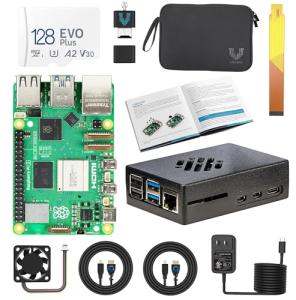
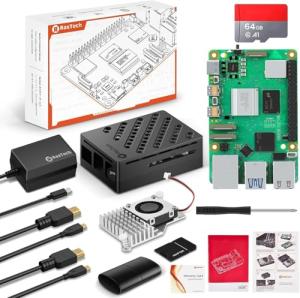
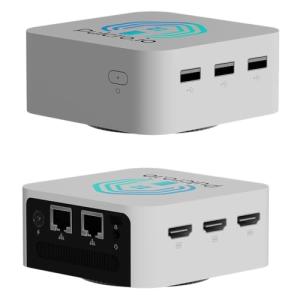
The essential functionality of Diy Smart Home Hubs is centered on unconstrained integration and local execution. Unlike commercial hubs, a Diy solution (often built on platforms like Home Assistant, openHAB, or Hubitat) runs on hardware you own (like a Raspberry Pi or dedicated mini-PC). This gives you the freedom to choose your operating system and automation engine.
The system's core power lies in its ability to integrate virtually every protocol—including Z-Wave, Zigbee, Thread , and Matter —by simply adding USB radio dongles. This open approach provides comprehensive Remote Access via secure, self-hosted dashboards and mobile apps. For security, Diy systems offer superior local 24/7 Monitoring . Since the automation logic runs entirely on your local hardware, security alerts and camera triggers are near-instantaneous, without relying on external servers. Furthermore, the granular control over scheduling and device status is unmatched, enabling peak Energy Efficiency through custom, data-driven routines.
Comparison to Commercial Hubs
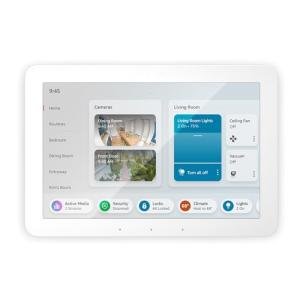
Diy Smart Home Hubs are in a class by themselves when compared to pre-packaged Central Hubs. Commercial hubs are defined by what the manufacturer allows you to do; they use proprietary code and frequently rely on their company's cloud servers, meaning if the company goes offline or changes services, your automation can fail.
A Diy hub is defined by what you, the owner, can imagine . It requires a higher initial level of technical engagement but delivers complete ownership over your data and automation logic. This local processing means lightning-fast command execution, which is vital for time-sensitive security or lighting scenes. For example, a homeowner in a high-wind area of Oklahoma can create a highly customized routine to automatically close smart windows only if the wind speed exceeds 30 mph AND precipitation is detected, integrating data sources that commercial hubs ignore. This level of precise, data-driven Energy Efficiency is the hallmark of Diy Smart Home Hubs .