💡 Practical Usage Tips
- Calculating the total wattage of all connected devices is essential to prevent overloading the Battery Management System (BMS), which can lead to immediate shutdowns.
- Placement of the backup unit plays a critical role in longevity, as open-air environments help mitigate thermal throttling caused by passive cooling designs.
- Users should verify that the output voltage of the UPS matches the device requirements exactly, as sending 12V into a 5V device will cause permanent hardware damage.
- Regularly checking the status indicators ensures that the battery health has not degraded significantly over time due to constant charging cycles.
✅ What to Look For & ⚠️ What to Avoid
MUST-HAVES
- Zero-Latency Switching: A true online UPS topology ensures that sensitive routers and modems do not reboot during the transition from grid power to battery.
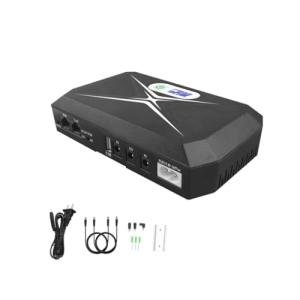
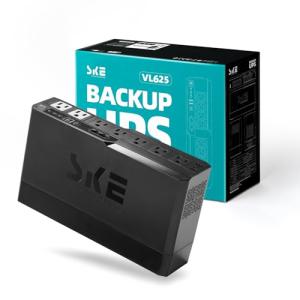
- Power over Ethernet (PoE) Support: Advanced units like the Ske 20000mAh model allow for single-cable power and data transmission to security cameras.
- DC-to-DC Architecture: Avoiding the conversion to AC power significantly improves efficiency and reduces energy loss compared to traditional lead-acid systems.
RED FLAGS
- Lack of Isolation: Some budget circuits allow signal noise to bleed between the 5V and 12V rails, which can cause instability in connected mesh nodes.
- Insufficient Cooling: Units relying solely on a sealed plastic chassis without vents are prone to overheating when the load approaches the 30W threshold.
- Proprietary Connections: Devices that do not use standard 5.5x2.1mm DC barrel jacks can make it difficult to find compatible cables for your specific router or modem.
🛡️ Build Quality & Performance
The physical construction of these power backup solutions often dictates their reliability under load. Most consumer-grade units utilize a flame-retardant ABS chassis to house the lithium-ion cells. While this material is durable, it acts as a thermal insulator, meaning that high-amperage discharge cycles can raise internal temperatures quickly. Higher-end models incorporate better spacing between the cells and the PCB to facilitate heat dissipation.
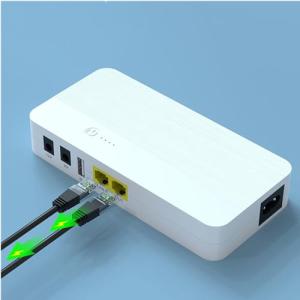
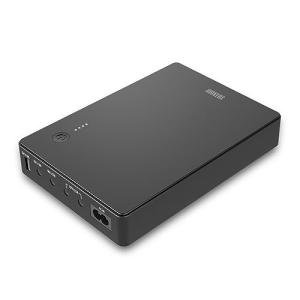
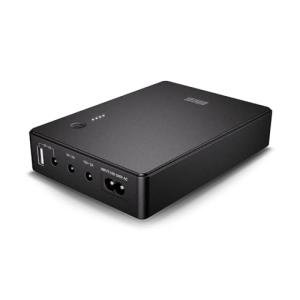
Performance consistency varies largely based on the internal circuitry. Premium units maintain a clean DC output with minimal ripple, ensuring that the connected router receives a steady signal. In contrast, budget options might struggle when multiple ports are used simultaneously, leading to voltage drops. For users needing a robust solution that can handle higher thermal loads, the Hilitand Mini UPS offers a solid balance of capacity and build quality, provided it is placed in a well-ventilated area.
🏆 Top Recommendations
| Best For |
Model Name |
Key Feature |
Why It Wins |
| Heavy Duty / PoE |
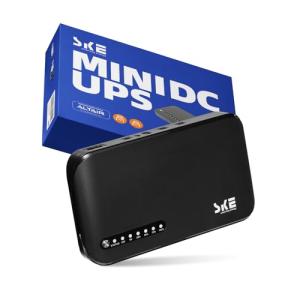
Ske 20000mAh Smart Key |
74Wh Energy Density |
It supports multiple voltages and PoE simultaneously, making it ideal for complex setups. |
| Security Alarms |
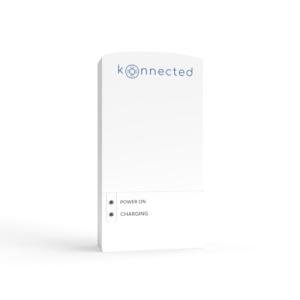
Konnected 12V Backup |
Inline Pass-through |
This unit fits easily into wiring cabinets and provides specialized 12V power for alarm panels. |
| Basic Networking |
Mini UPS 8000mAh |
Compact Footprint |
It offers a simple, cost-effective solution for keeping a single router online during short outages. |
| Automation Logic |
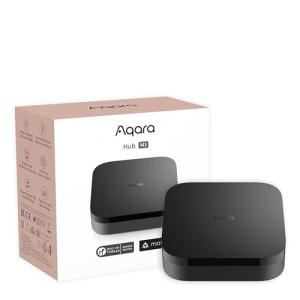
Aqara M3 Hub |
PoE & Local Storage |
While not a battery, it ensures automation logic survives internet failures when powered via PoE. |
❓ Frequently Asked Questions
What is the difference between a Mini UPS and a standard AC UPS?
A standard AC UPS converts battery power into 110V/220V AC, which is great for computers but inefficient for small devices. A Mini UPS outputs DC power directly (like 12V or 9V), which is much more efficient and provides longer runtimes for routers.
Can I use these devices for my Starlink setup?
Most standard Mini UPS units lack the high wattage required for Starlink dishes. You would need a specialized unit or a larger portable power station that can handle the specific power draw of satellite equipment.
How long will a 10000mAh battery power my router?
This depends on the router's power consumption. Generally, a standard 12W router can run for approximately 4 to 6 hours on a 10400mAh battery. Higher loads will drain the battery significantly faster.
Do these units support pass-through charging?
Yes, all the models listed in this guide support pass-through charging. This allows them to stay plugged in permanently, charging the battery while simultaneously powering your device, and instantly switching to battery power if the grid fails.