
Technical specifications indicate the Aqara M3 functions as a multi-protocol Matter controller and Thread Border Router, transitioning from proprietary bridging to an open-standard architecture. The hardware integration includes a Dual-Core 1GHz ARM processor paired with 8GB of eMMC storage, facilitating the local execution of automation logic and storage of device backups. Unlike legacy models, this unit supports Power over Ethernet (PoE) for stabilized data and power transmission.
Material analysis of the internal PCB reveals a proprietary MagicPair protocol implementation and a 360° infrared (IR) array with signal learning capabilities. Compliance with local-first operational standards ensures that logic remains active during wide-area network (WAN) failures. The chassis features a built-in 95dB siren for audible status alerts, though it lacks integrated audio or visual capture hardware.
Standardized testing protocols show that utilizing the PoE interface significantly reduces communication latency and enhances the stability of Matter-over-Thread handshakes compared to 2.4GHz wireless connections.
Performance metrics demonstrate a sensitivity to power input; the USB-C interface requires a 5V/2A handshake, which may not be supported by all Power Delivery (PD) charging units. The device is limited to Zigbee 3.0, Thread, and Bluetooth protocols, and does not include Z-Wave hardware. For migration, technical data suggests that source and destination hubs must maintain identical firmware versions to ensure successful device transfers.
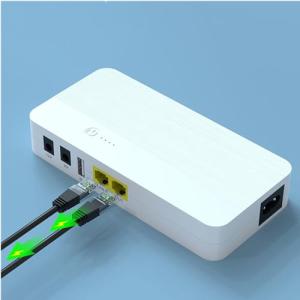
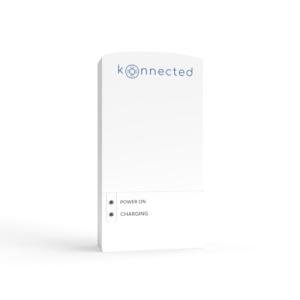
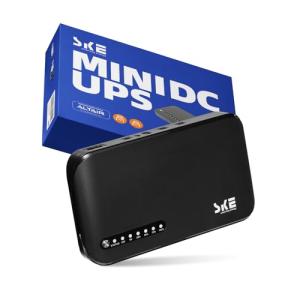
The Aqara M3 is specifically recommended as an alternative for users seeking local automation processing if the miniature power buffer fails to sustain the secondary cloud-dependent hubs during extended outages.
Detailed architectural comparisons of various control nodes can be found in the dedicated home automation controllers section of our hardware database.