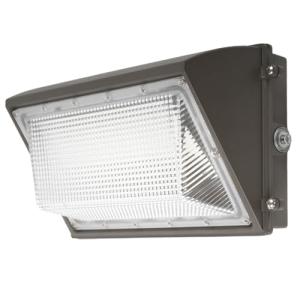


Technical reliability analysis of the Karjoefar 100W barn light identifies vulnerabilities in photocell longevity and thermal dissipation. The 100W power draw within a compact die-cast aluminum housing results in high junction temperatures, which may trigger thermal throttling or driver failure in high-ambient environments. Luminous efficacy is rated at approximately 100lm/W, generating a 10,000LM output through an SMD 2835 LED array.
Aggregated specification data confirms a standard capacitive photocell for "Dusk to Dawn" operation. This sensor lacks adjustable sensitivity and is prone to "optical feedback" loops if mounted near reflective surfaces, which can lead to rapid oscillation or "strobe" failures. While the IP65 rating provides protection against moisture, seal integrity at the wire entry point is noted as a common failure vector during heavy precipitation events.
Technical Note: The fixture operates on an analog architecture with a 100-277V driver range. There is no internal bypass switch for manual override, meaning the unit is strictly dependent on the photocell trigger unless modified by an external smart relay.
Material science evaluation of the powder coating indicates variance in thickness by batch, which may affect long-term corrosion resistance in coastal environments. The absence of active cooling makes the die-cast housing the sole thermal management component for the high-density LED chips.
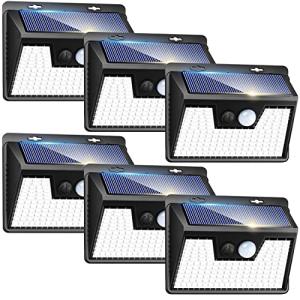
For applications where excessive brightness is a liability and precise motion detection is preferred, the Peasur Motion Sensor 6-Pack provides a lower-intensity, targeted illumination alternative.
This high-output device is a commercial-grade entry in the perimeter lighting field.