
PRODUCT REVIEW
In-Depth U.S. Market Review
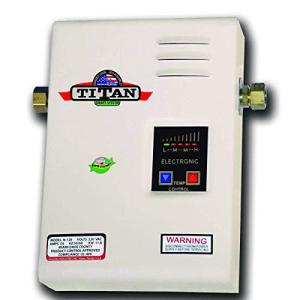
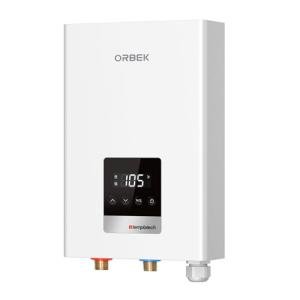
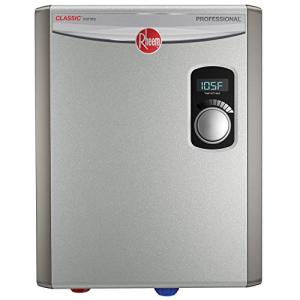
The Compact Electric Tankless Water Heater for Instant Hot Water is positioned squarely in the niche market for point-of-use heating solutions in the U.S. This isn't a whole-house unit; instead, it's designed to provide instant hot water, primarily for a single sink or a low-flow application like a hand-washing station. It’s an ideal product for supplemental heating in remote areas of your home, like a garage sink or a half-bath that's far from the main hot water source.
Its key competitive edge is its small footprint and ability to eliminate the "cold water sandwich" effect common in traditional systems. For U.S. consumers focused on energy efficiency and space-saving, this compact electric tankless water heater offers a viable alternative to small-capacity mini-tanks. Compared to larger, whole-house electric tankless alternatives, this compact unit is much less demanding on your home's electrical panel, often needing only a single dedicated circuit, making installation simpler for a dedicated point-of-use water heater .
Technical Analysis
| Specification | Detail & U.S. Context | Analysis |
| Heating Capacity (kW) | Likely low power (e.g., 3-5 kW), focused on single-fixture use. Requires dedicated 120V or 240V circuit. | Suitable for low-flow applications only; ideal flow rates will be under 0.5 GPM, critical for U.S. sink faucets. |
| Temperature Range | Typically 86°F to 131°F (30°C to 55°C) with an LCD display for precise setting. | Gives you control over the exact temperature, an important safety and comfort feature compared to traditional fixed-temp tank heaters. |
| Flow Rate (GPM) | Very low requirement, likely 0.5-1.0 GPM maximum effective heating. | Essential to understand: it can only deliver truly hot water at very low flow; don't expect shower performance. |
| Physical Dimensions | Extremely compact and typically wall-mounted; designed to fit under a sink or in a small cabinet. | Crucial for saving space in tight U.S. kitchen or bathroom vanity installations where a mini-tank won't fit. |
| Heating Element | Copper or stainless steel core; aims for rapid thermal transfer. | A high-quality element material increases efficiency and longevity, which is a key long-term cost factor for electric heating. |
| Safety Features | Overheat protection and pressure relief valve (PRV) integration. | Standard and necessary safety measures, ensuring the unit complies with U.S. household plumbing codes. |
1. Heating Power and Flow Rate Dynamics
The core technical consideration for this Compact Electric Tankless Water Heater for Instant Hot Water is its heating power relative to your incoming water temperature. In colder Northern U.S. climates, where the incoming water might be 40°F, this unit will experience a much lower effective flow rate to achieve a comfortable temperature than in warmer Southern states.
The low kilowatt rating means it's designed for a low temperature rise at a very low flow rate . You must manage your expectations; this product excels at providing endless hot water for washing hands or rinsing dishes slowly , but it cannot handle multiple fixtures or typical shower flow rates. It’s perfect for ensuring the hot water reaches the faucet quickly, reducing water waste.
2. Compact Design and Installation Accessibility
Its compact, minimalist design is a major selling point. The unit is specifically engineered to be a discreet, point-of-use solution, easily mounted directly on the wall beneath a vanity or sink. This design eliminates the bulky storage of a mini-tank, freeing up valuable under-sink real estate in smaller U.S. bathrooms and kitchens.
Installation generally requires connection to a cold water line and a dedicated electrical circuit. The small size makes the physical mounting easy, but you should confirm if it needs a 120V or 240V connection, as the required wiring gauge and breaker size will vary significantly and may require a professional electrician for a safe setup.
3. Temperature Control and Safety Integration
The inclusion of an LED digital display allows for precise, user-set temperature control, a significant usability feature. You can dial in the exact hot water temperature you need, which is great for both comfort and safety, preventing accidental scalding for children or the elderly.
Crucially, the unit incorporates necessary safety features like automatic overheat protection and often requires a pressure relief valve (PRV) for U.S. compliance. These internal safeguards are essential to protect the electrical components and plumbing from excessive heat or pressure buildup, making the operation secure when installed correctly.
User Profiles
1. Garage Workshop Enthusiast
You have a detached garage or a workshop with a utility sink, and waiting for the hot water to travel from the main house heater is a waste of time and water.
-
Use Case: You need quick hot water at your utility sink for cleaning paintbrushes, washing hands after a messy project, or light equipment cleanup. The flow rate is low, but the water must be instantly warm.
-
The Fit: The Compact Electric Tankless Water Heater is ideal because its point-of-use design eliminates long pipe runs and the lag time. It's a supplemental, energy-efficient solution that only draws power when the hot water is running, perfectly suiting the intermittent and low-flow needs of a workshop sink.
2. Home Office Half-Bath User
Your new half-bathroom is located at the far end of the house or in the finished basement, making the trip for hot water from the central heater take well over 30 seconds.
-
Use Case: You want instant, reliably warm water for quick handwashing in a small-demand bathroom without costly re-piping or wasting gallons of water waiting for it to heat up.
-
The Fit: This unit is the perfect budget and space-saving solution to guarantee instant warm water. It fits discreetly under the small vanity and only needs a modest electrical connection, completely solving the "cold water sandwich" problem for that single, low-demand faucet.
3. Eco-Conscious Renter
You are renting an apartment or townhome and want to reduce your water and energy consumption without making permanent, large-scale changes to the building’s plumbing.
-
Use Case: You are looking for a simple, efficient way to heat the water at your kitchen sink for washing dishes and are focused on minimizing the energy used and the water volume wasted while waiting for the water to warm up.
-
The Fit: This tankless unit is an excellent energy-saver because it heats water on demand. The compact nature makes it minimally invasive to install, and its focus on low-flow, instant heating aligns perfectly with the goal of reducing utility costs and environmental impact at a specific faucet.
"Complementary HomeTechCorner Category Recommendations"
| Recommended Products | Why This Category Is Useful Specifically for This Product | Short Usage Scenario |
| Smart Power | You want to monitor the high energy draw of this appliance to track your utility costs and ensure efficient use. | You receive an alert on your phone that your garage sink heater is running an unusually long time, allowing you to check for a leaky faucet right away. |
| Water Leak Detectors | Since this unit installs under a sink, a water sensor is crucial for immediate notification of any leaks. | You get a notification to your smartphone that water is detected under your bathroom vanity, letting you shut off the water supply before a compact leak becomes a major flood. |
| In Wall Usb Smart Outlets | These outlets can provide charging convenience near the installation, which is often a utility area lacking modern ports. | You are cleaning up at your workshop sink and can conveniently plug your phone or a small tool into the integrated USB port near the heater. |
| Smart Wall Outlets | A smart outlet can be used as a failsafe to completely cut power to the unit when you are away for extended periods. | Before leaving for a two-week vacation, you use a voice command to ensure the power to the remote sink heater is completely shut off, adding peace of mind. |