2. 🔌 Choosing Your System: Key Features and Compatibility
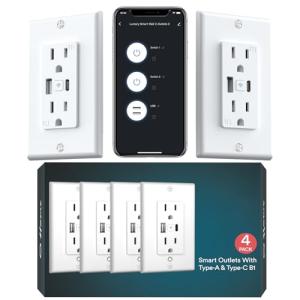
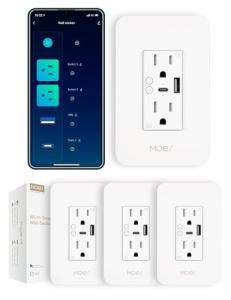
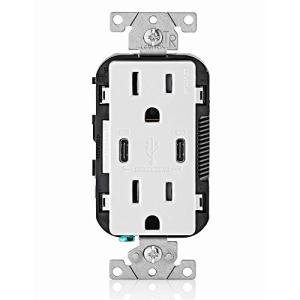
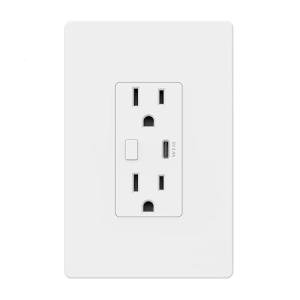
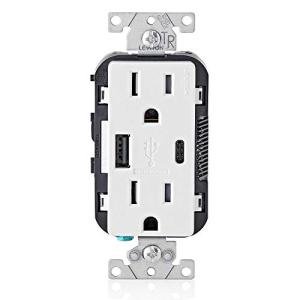
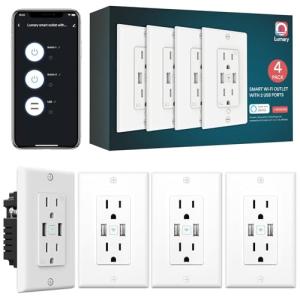
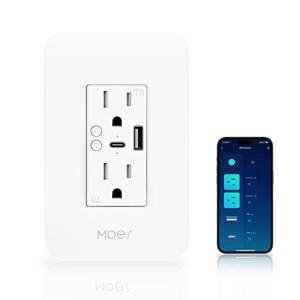
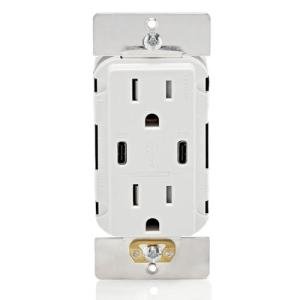
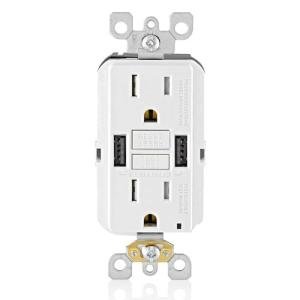
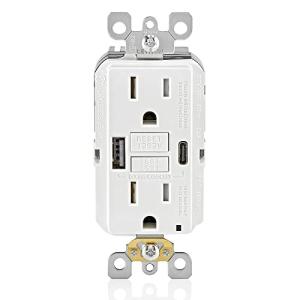
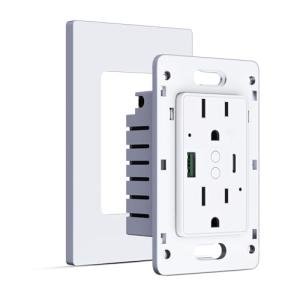
Choosing In-Wall Usb/Smart Outlets requires focusing on the electrical standard (amperage), the USB charging speed, and the required communication protocol for seamless smart integration.
Essential Variations
You’ll encounter three primary variations of In-Wall Usb/Smart Outlets :
-
Split Smart/Standard Outlets: One AC receptacle is smart-controlled, and the other remains standard (always on). Often includes 1-2 USB ports.
-
Pros: Best balance. Allows you to control a lamp via smart command while leaving a non-smart device (like a router) plugged into the always-on standard side.
-
Cons: Only half the outlet is smart-controlled.
-
Fully Smart Outlets (Dual Control): Both AC receptacles are individually smart-controlled. These may or may not include USB ports.
-
Pros: Maximum smart control from one location; excellent for managing a dual-lamp setup or separate appliances. Ideal for comprehensive Energy Efficiency management.
-
Cons: Higher hardware cost and more complex wiring during installation.
-
USB-Only Smart Outlets: The AC receptacles remain standard, but the USB ports are controlled (e.g., turning off the USB power at night to eliminate phantom charging drain).
All In-Wall Usb/Smart Outlets are Wired (Plug-in) and designed to replace a standard 120V US electrical receptacle.
Compatibility Protocols
A strong, stable network connection is vital, not only for Remote Access but also for the outlet's often-integrated function as a mesh network repeater.
-
Z-Wave and Zigbee (Mesh): These are extremely common in smart outlets. They require a compatible hub but use existing home wiring as an anchor point, making them powerful network extenders.
-
Pros: Excellent range enhancement, high reliability for 24/7 Monitoring , and low load on your Wi-Fi network. Perfect for extending mesh signals in a large, older home with plaster walls.
-
Wi-Fi: Connects directly to your router.
-
Thread and Matter: The cutting-edge choice. In-Wall Usb/Smart Outlets supporting these are the most future-proof, acting as key Thread Border Routers to enhance the stability and speed of low-power sensor networks. They guarantee universal compatibility with Matter controllers.
3. 🛠️ Installation and Setup Walkthrough
Installing In-Wall Usb/Smart Outlets requires safety precautions and a basic understanding of residential electrical wiring, making it a moderately challenging Diy task.
Pre-Installation
Safety is your absolute priority: TURN OFF THE POWER to the target circuit at your breaker box. Confirm the power is off using a voltage tester before touching any wires. Ensure your existing junction box has adequate depth; smart receptacles are bulkier than standard ones and require space. Lastly, confirm the outlet location has a good Wi-Fi or mesh signal, as this permanent installation should provide reliable Remote Access .
Installation Guide
-
Remove Old Outlet: Unscrew and carefully pull the existing receptacle out of the wall box. Note the wire connections: typically Black (Hot/Line), White (Neutral), and Green/Bare Copper (Ground).
-
Wire the Smart Outlet: Using the wiring diagrams provided, securely connect the line, neutral, and ground wires to the corresponding screws on the In-Wall Usb/Smart Outlets . Ensure connections are tight and secure, especially in a home built in the 1950s.
-
Install and Secure: Carefully fold the wires back into the junction box, seating the smart outlet flush against the wall. Screw the outlet into the box and attach the faceplate.
-
Power On and Pairing: Restore power at the breaker. The outlet will light up. Use your smart hub app (or manufacturer app) to connect the outlet to your network (Z-Wave, Zigbee, or Wi-Fi).
-
Name and Test: Name the smart outlet clearly (e.g., "Bedroom Fan Outlet"). Test the smart control via the app and voice commands, confirming proper function and stability.
Troubleshooting
4. Advanced Automation and Maximizing Value
The permanent installation and integrated power control of In-Wall Usb/Smart Outlets make them indispensable for sophisticated, reliable automation.
Automation Scenarios
-
Automated Security Illumination: For a hallway in a dark basement, install an In-Wall Usb/Smart Outlets with a motion sensor. If motion is detected between midnight and 5 AM, the outlet powers a small nightlight, providing temporary illumination. If the security system is armed (verified by 24/7 Monitoring ), the light flashes to signal a high-priority alert. This local, dependable action is crucial.
-
Bedroom Phantom Load Elimination for Energy Efficiency : Automate the smart receptacle to cut power to the bedside table lamp (which often has a built-in charger) every night at 1:00 AM. This eliminates the standby power draw of the lamp, its internal electronics, and any attached charging brick, ensuring maximum Energy Efficiency while allowing you to reactivate it quickly via Remote Access in the morning.
-
Appliance 24/7 Monitoring : Use a fully smart outlet to power a specific kitchen appliance (like an expensive blender). If the controllable outlet reports a sudden, complete loss of connectivity, the system sends an alert to your phone. This helps you monitor the status of critical kitchen devices, ensuring that they are available when needed.
Longevity & Maintenance
The longevity of In-Wall Usb/Smart Outlets is directly related to the quality of the installation and continuous firmware support. Firmware updates are mandatory; they often improve USB charging safety, optimize the mesh network repeating function, and patch vulnerabilities crucial for secure Remote Access . Since these are permanent fixtures, you don't manage battery life, but you should periodically test the GFCI-protection mechanism (if present) for continued electrical safety.
5. COMPLEMENTARY CATEGORY RECOMMENDATIONS
| Recommended Categories |
Why This Category Is Useful Specifically for This Product |
Short Usage Scenario |
| Smart Power |
The outlet is a core component of this category, providing integrated power control and charging. |
Replace all standard outlets in the office with smart versions for comprehensive Remote Access power control. |
| Switches Relays |
The outlet's permanent wiring provides an anchoring point for other wired components, strengthening the mesh. |
The smart outlet acts as a repeater, improving the Z-Wave signal to a smart dimmer located further down the hall. |
| Multi Protocol Hubs Matter Thread |
Hubs activate the outlet’s integrated Z-Wave/Zigbee/Thread radios, turning it into a powerful, fixed network repeater. |
The Thread-enabled smart outlet extends the mesh signal for a new Matter contact sensor. |
| Smart Sensors |
The outlet's physical location provides the power to act on data from nearby battery-powered sensors for automation. |
A motion sensor detects a child entering the room and automatically turns on the outlet-controlled nightlight. |
| Smart Home Control |
The smart control functions of the outlet integrate directly into the home's primary control interface. |
Use the central home app dashboard to view and toggle the power status of the kitchen appliance outlet. |
| Energy Monitoring Smart Plugs |
The outlet is the hardwired, integrated version of an energy monitoring plug, allowing for precise Energy Efficiency tracking. |
Monitor the consumption of the outlet-controlled lamp to track daily power use. |
| Home Security |
The integrated nature of the outlet provides a fixed, reliable power source for small cameras or lights used in 24/7 Monitoring . |
Plug a small security camera into the smart outlet for reliable, switchable power in the hallway. |
| Voice Assistants |
Voice control allows for hands-free Remote Access to turn devices connected to the outlet on or off instantly. |
Command the voice assistant to "Turn off the toaster outlet" when leaving the room. |
6. CONCLUSION
Choosing In-Wall Usb/Smart Outlets is the ultimate upgrade for aesthetic, functional power control. You now possess the practical authority on their wiring requirements, the power of their integrated mesh repeating functions, and the seamless Remote Access they provide for maximizing Energy Efficiency and supporting 24/7 Monitoring . Stop cluttering your counters with bulky plugs—integrate smart power control into your walls today for a cleaner, smarter, and more reliable home.