
Technical specifications for the Aeotec Smart Home Hub indicate it serves as a successor to the Samsung SmartThings v3 hardware, functioning as a primary interface for Zigbee 3.0 and Z-Wave Plus V2 protocols. Hardware analysis confirms the integration of a Realtek RTL8197FS System on a Chip (SoC) operating at a 1GHz clock speed, supported by 256MB of RAM. Material analysis of the PCB layout, as documented in FCC ID 2AOBCHOEASYSYS3, reveals a shielded architecture designed to minimize inter-protocol interference between the dedicated 2.4GHz Wi-Fi, Zigbee, and Z-Wave internal antennas.
Operational Parameters and Hardware Architecture
The device utilizes a 5V/2A Micro-USB power input, which lacks internal battery backup, making the system dependent on external power stability for continuous operation. Connectivity metrics demonstrate that while wireless backhaul is supported, the integrated Ethernet port provides a stabilized path for command-acknowledgment cycles within high-density meshes. Recent firmware deployments have expanded the hub's functional capacity to include Matter over Bridge and Matter Controller roles, facilitating interoperability across diverse hardware ecosystems.
Standardized testing indicates that the 256MB memory ceiling may impact performance metrics when the managed environment exceeds 150 connected devices or utilizes highly complex automation logic.
Local execution capabilities are maintained through the implementation of Edge Drivers, which transition automation logic from cloud-based processing to local hardware cycles. Physical dimensions and chassis design are optimized for networking stability, though the absence of an internal power reservoir necessitates the use of secondary protection systems to maintain uptime during voltage fluctuations.
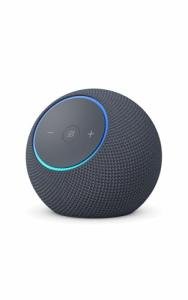
If higher audio output or integrated display capabilities are required for the primary control interface, the Amazon Echo Dot Max offers a distinct architectural approach centered on acoustic presence and localized neural processing.
This hardware is classified within the multi-protocol hubs category, serving as a centralized bridge for diverse communication standards.