
Performance metrics for the Echo Dot Max demonstrate a transition toward local-first smart home management through the integration of the AZ2 Neural Edge processor. This proprietary Amazon silicon is paired with a MediaTek MT8519 SoC, providing the necessary throughput for localized voice command processing. Thermal management is facilitated via an enlarged internal heatsink designed to dissipate energy from the neural processing unit within the chassis.
Acoustic specifications include a 2.0-inch front-firing driver utilizing a neodymium magnet assembly. Technical analysis indicates that this driver configuration provides higher flux density and improved transient response compared to standard ceramic magnet alternatives. The device functions as a Thread Border Router, supporting Matter-over-Thread protocols to establish a low-latency mesh network for compatible peripherals.
- Modes of operation: Local Voice Processing, Thread Border Routing, Wireless Streaming.
- Interface protocols: Matter-over-Thread, 2.4/5GHz Wi-Fi, Bluetooth Low Energy.
Power delivery is managed through a proprietary barrel-style jack rather than a standardized USB-C interface, and the hardware lacks a 3.5mm analog input, restricting audio ingestion to digital wireless sources. Signal integrity is maintained when the unit is positioned at a minimum distance of 3 feet from high-frequency interference sources. Standardized firmware protocols are most stable when utilized with a static IP assignment via DHCP reservation.
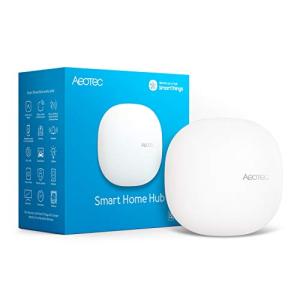
For environments requiring extensive local protocol support for legacy Z-Wave or Zigbee hardware, the Aeotec Smart Home Hub provides a dedicated radio stack that this speaker unit does not natively include.
This unit represents a specialized node within the voice assistants classification, focusing on integrated edge computing and acoustic output.