Finding the right laundry solution is more than just picking a machine; it is about matching household throughput with mechanical reliability. Modern washers and dryers offer a blend of high-tech sensors and heavy-duty engineering designed to handle everything from delicate silks to king-sized bedding. This guide breaks down the essential hardware considerations to help identify the most durable and efficient options currently available.
Laundry Appliances
Find the perfect laundry machines that make washing and drying clothes a breeze
Product List
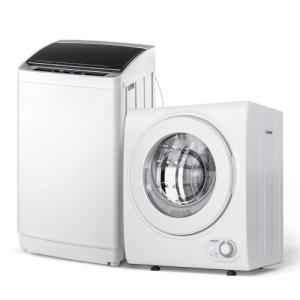
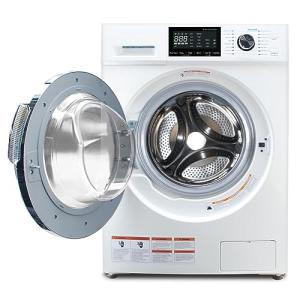
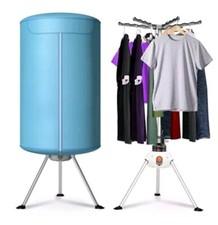
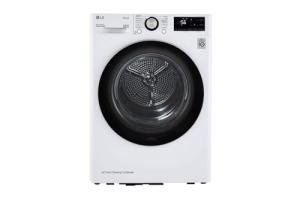
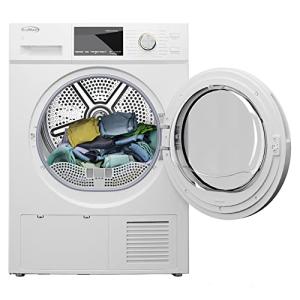
KoolMore 24" Heat Pump Dryer
Koolmore
Product Review Score
4.91 out of 5 stars
221 reviews$1,378.12
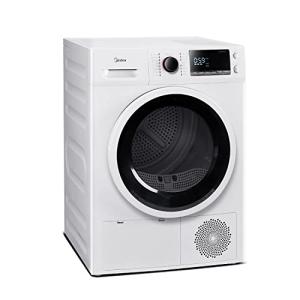
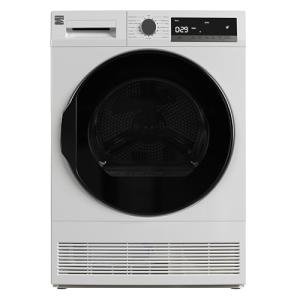
Kenmore Ventless Electric Dryer
Kenmore
Product Review Score
4.15 out of 5 stars
205 reviews$899.99
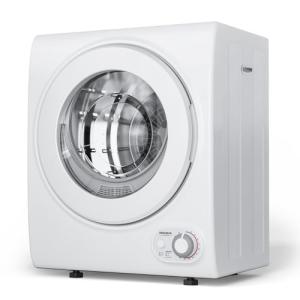
ROVSUN Portable Clothes Dryer
Rovsun
Product Review Score
4.48 out of 5 stars
124 reviews$189.99 $159.99
🔌 Choosing Your System: Key Features and Compatibility
When you decide to invest in modern Laundry Appliances , you will primarily encounter two essential variations: Integrated Systems and App-Enabled Upgrades .
-
Integrated Systems (True Smart Appliances): These units have the Wi-Fi and smart logic built directly into the core motherboard.
-
Pros in a US Home Context: They offer the deepest level of control, including load size detection, automatic detergent dosing, and advanced diagnostic 24/7 Monitoring. They are the best choice for maximizing Energy Efficiency through automated cycle optimization. They often support manufacturer-specific integrations, allowing the washer to "tell" the dryer exactly which cycle to use.
-
Cons: They are the highest upfront investment and require a strong, stable Wi-Fi connection near the installation site.
-
-
App-Enabled Upgrades (Smart Monitoring Accessories): This typically refers to smart laundry monitors or simple plugs that track the power draw of a non-smart machine to estimate when a cycle is finished, then send a notification.
-
Pros in a US Home Context: It's an excellent, budget-friendly way to get cycle completion notifications and basic Remote Access functions for older but still functional machines. The setup is simple and requires no physical modification of the appliance.
-
Cons: The "intelligence" is limited. It provides notifications but cannot adjust cycle parameters, use automated dosing, or perform advanced diagnostics like a true smart appliance.
-
To truly integrate your smart Laundry Appliances into your home, you will rely heavily on Wi-Fi . While most appliances use Wi-Fi for their primary communication (allowing for Remote Access and updates), the high-end units may also support emerging connectivity standards like Matter or Thread . Matter compatibility is rapidly becoming the gold standard, as it ensures your laundry machines can seamlessly communicate with smart speakers, smart displays, and other devices across your entire US smart home ecosystem, regardless of the brand. Always check the product specifications for open-standard support if deep cross-brand automation is your goal.
🛠️ Installation and Setup Walkthrough
Pre-Installation
Before your new Laundry Appliances arrive, the critical first step is ensuring connectivity. Due to the placement of laundry rooms, which are often in basements, garages, or utility closets with thick walls, you must confirm a strong Wi-Fi signal. If the signal is weak, consider installing a Wi-Fi extender or a mesh networking satellite unit in a nearby hallway or room. Also, verify your utility hookups. Ensure you have the correct voltage electrical outlet (usually 240 V for a modern electric dryer in the US), proper venting, and accessible water supply/drain lines. This proactive preparation will prevent installation delays and ensure your Remote Access works perfectly from day one.
Installation Guide
While professional installation is often recommended for the physical hookups, the smart setup is yours to master:
-
Physical Placement & Hookups: Once the unit is physically placed and the water, drain, and electrical lines are secured, turn the unit on.
-
Download the App: Locate the appliance manufacturer’s dedicated app (e.g., Samsung SmartThings, LG ThinQ). Create your user account.
-
App Pairing: Follow the on-screen prompts. Typically, this involves putting the appliance into a "pairing mode" (often by holding a specific button combination) and using the app to send your Wi-Fi credentials to the machine.
-
Firmware Update: Your unit will likely require an immediate firmware update. Run this update via the app to ensure you have the latest features and security patches, optimizing your machine's Energy Efficiency .
-
Enable Notifications: In the app settings, customize your notifications for cycle completion, maintenance alerts, and out-of-balance warnings. This is the heart of your new 24/7 Monitoring capability.
Troubleshooting
-
Problem: The app says the machine is "offline" or cannot connect via Remote Access .
-
Solution: The most common cause is a weak Wi-Fi signal. Try rebooting your home router and the appliance. If the issue persists, you need to relocate your mesh network satellite or install a dedicated Wi-Fi extender near your Laundry Appliances .
-
-
Problem: You are getting an unusual error code on the machine’s display.
-
Solution: Immediately check the manufacturer's app. Smart Laundry Appliances are designed for self-diagnosis. The error code on the machine is usually translated into plain English—such as "Check Drain Pump Filter" or "Out of Balance"—within the app's 24/7 Monitoring section.
-
-
Problem: Your clothes are taking longer to dry than the estimated time, impacting Energy Efficiency .
-
Solution: Check the dryer vent. A clogged vent is the single biggest cause of poor drying performance and a major fire risk. The 24/7 Monitoring feature on most smart dryers will alert you, but manually checking the vent is essential for high performance.
-
4. Advanced Automation and Maximizing Value
The true power of smart Laundry Appliances emerges when you use them in automation routines. By integrating them with other smart devices, you can optimize your time and home environment.
-
Scenario 1: Noise Reduction Automation. For US homes with an upstairs laundry room near bedrooms, noise is a huge factor. Set an automation: "If the washer/dryer cycle finishes between 8:00 PM and 7:00 AM, send a 'Cycle Complete' notification, but do not play the loud end-of-cycle chime." This simple automation provides necessary 24/7 Monitoring without disrupting your sleep.
-
Scenario 2: The Garage Light Reminder. Imagine you’re unloading groceries and realize you forgot to transfer the wash. Set a powerful reminder routine: "When the washing machine cycle completes, AND my car (via a garage door sensor) is detected leaving the property, flash the garage light strip blue for 10 minutes." This leverages Remote Access and visual cues to ensure you never leave a damp load to mildew.
-
Scenario 3: Leveraging Off-Peak Rates. Many US power companies offer cheaper rates during off-peak hours (e.g., 11 PM–5 AM). Set your automation to maximize Energy Efficiency : "Only allow the washing machine to start a cycle AND the dryer to run between 11:30 PM and 5:30 AM." You load the machine after dinner, use Remote Access to queue the cycle, and the smart appliance handles the rest, ensuring cost savings and high performance. The detailed energy reporting in the app’s 24/7 Monitoring section will track these savings for you.
Longevity & Maintenance
To ensure your investment in smart Laundry Appliances lasts, a proactive maintenance schedule is essential. Always accept firmware updates—they often contain efficiency tweaks and new features that enhance Remote Access or Energy Efficiency . For washers, periodically run a tub-clean or sanitize cycle, especially if you use cold water cycles frequently. For dryers, manually inspect the lint filter before every use and clean the exhaust vent at least once per year. The integrated 24/7 Monitoring features will alert you to filter clogs, but regular cleaning is key to long-term reliability and fire prevention.
5. COMPLEMENTARY CATEGORY RECOMMENDATIONS
| Recommended Categories | Why This Category Is Useful Specifically for This Product | Short Usage Scenario |
| Smart Power | Allows you to monitor the real-time energy consumption of your Laundry Appliances to track and maximize their Energy Efficiency . | Use a smart plug on a non-smart machine to see exactly how much power a cycle consumes and estimate future cost savings. |
| Central Hubs | A central hub with Matter/Thread support ensures your Laundry Appliances can reliably communicate with devices across all brands in your smart home. | Use the central hub to create an automation that pauses the washer when a water leak detector goes off. |
| Smart Sensors | Water leak detectors are critical for appliances using water, providing an essential layer of safety beyond the appliance's built-in 24/7 Monitoring. | Place a water leak detector under the washer. If a leak is detected, you receive an immediate alert on your phone via Remote Access . |
| Networking Gear | Strong Wi-Fi coverage is non-negotiable for Remote Access and diagnostics in the often-secluded utility room. | Install a mesh Wi-Fi node near the laundry room to guarantee the signal is strong enough for reliable 24/7 Monitoring and updates. |
| Smart Displays | Provides a quick visual way to check the cycle status without opening a phone app or walking to the utility room. | Glance at your smart display in the kitchen to see "Washer: 12 Minutes Remaining," instead of constantly checking your phone. |
| Voice Assistants | Allows you to check cycle status and start/stop certain features using simple voice commands when your hands are full. | Say, "Hey Assistant, is the laundry done?" to check the 24/7 Monitoring status while you are folding clothes in the next room. |
| Automation Tools | Wireless buttons allow for instant physical control and simple automation triggers outside the app. | Place a wireless button next to the laundry basket: press it to pause the dryer remotely when you are heading upstairs to check the load. |
| Smart Washers Dryers | These are the specific, high-tech units within the broader Laundry Appliances category and offer the deepest integration features. | Use the pairing features of the washer to automatically select the optimal drying cycle for maximum Energy Efficiency and fabric care. |
6. CONCLUSION
Adopting smart Laundry Appliances is one of the most practical and high-value upgrades you can make to your home. By mastering features like Remote Access , utilizing detailed 24/7 Monitoring, and leaning into the inherent Energy Efficiency of these machines, you are not just buying a new washer and dryer; you are regaining control of your time and optimizing your utility spend. You now have the authoritative knowledge to compare the options, set up the system flawlessly, and automate your chores away. Take the next step confidently, knowing that your new laundry machines will seamlessly integrate into your modern, connected lifestyle.