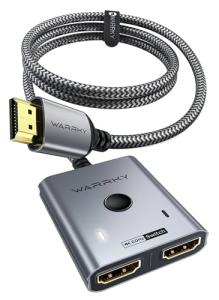
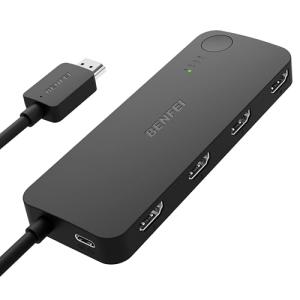
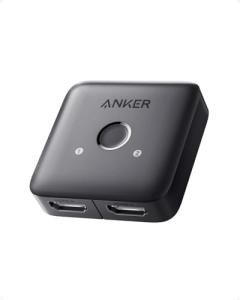
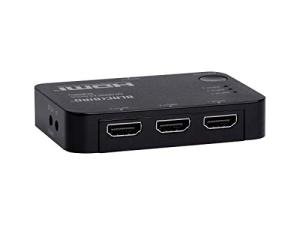
🔍 The Deep Dive: Understanding Your Smart HDMI Switches
You have invested in a high-end 4K or even 8K television, a premium soundbar or AV receiver, and a host of entertainment devices—from your PlayStation 5 and Xbox Series X to your Apple TV and Ultra HD Blu-ray player. The core problem this technology solves is the dilemma of limited HDMI ports . When your TV has only two inputs, but you have four sources, the hassle of constantly swapping cables and risking damage to your TV's expensive ports is the exact frustration a Smart HDMI Switch eliminates.
Core Functionality
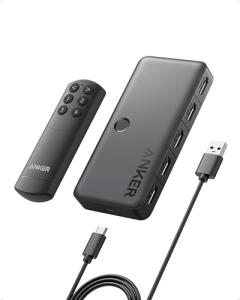
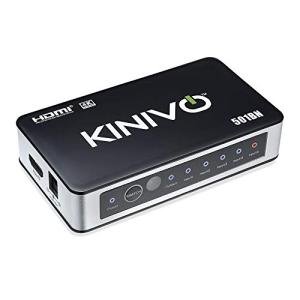
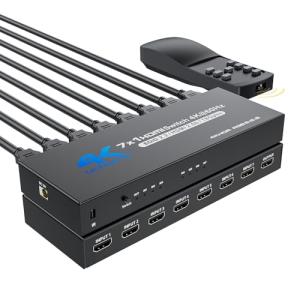
A Smart HDMI Switch acts as an intelligent digital traffic cop. It connects multiple source devices (e.g., your gaming consoles and streaming box) to a single HDMI input on your display or AV receiver. The essential features go far beyond simple port expansion: you must look for switches that support the latest video standards, including HDMI 2.1, 4K resolution at 120 Hz , and 8 K at 60 Hz . Modern units ensure full passthrough of premium formats like Dolby Vision and HDR10+.
Crucially, the "smart" in Smart HDMI Switches refers to their advanced control and automation capabilities. This includes Automatic Switching , which detects when a connected device powers on and immediately switches to that input, offering a seamless user experience. Many also feature IR or CEC support, allowing you to manage the switching with your existing universal remote or even a simple voice command through your smart speaker ecosystem.
Comparison: Smart vs. Traditional Switches
A traditional, non-smart HDMI switch is a manual device. It requires you to physically press a button on the box, or use a small, separate IR remote, to change the input source. This method works, but it breaks the flow of your modern, integrated living room.
Smart HDMI Switches , conversely, integrate into your digital life. They often support HDMI-CEC (Consumer Electronics Control), allowing the components in your entertainment system to "talk" to each other. For example, when you turn on your Xbox, the console sends a signal that can trigger the switch, the AV receiver, and the TV all to power on and select the correct input automatically. This is the difference between a functional product and a truly integrated smart living experience.