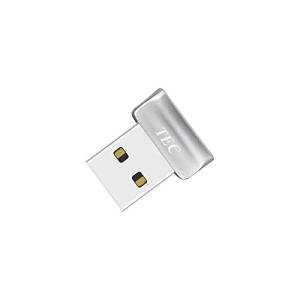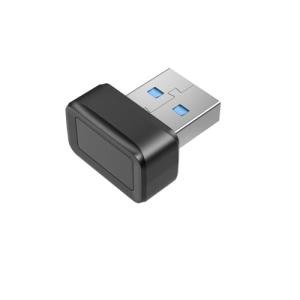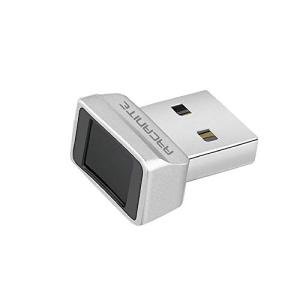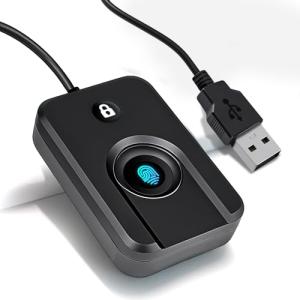

Material analysis of the TEC TE-FPA3-MC reveals a compact "plug-and-forget" form factor housing a high-density capacitive sensor array. Throughput data demonstrates a 0.05s matching speed, which is the theoretical limit for USB 2.0 latency. This node is designed specifically for Windows Hello, utilizing hardware-level AES256 encryption to obfuscate the biometric handshake with the host environment.
The 360° sensor architecture eliminates the requirement for specific directional swipes, though the small aperture necessitates precise initial mapping to maintain accuracy. The device is a client-side peripheral that relies entirely on the host operating system for credential management and template storage.
Technical audits identify this unit as having updated driver certificates specifically optimized for the Windows 11 security kernel.
Specification data indicates that the device is USB-A native, requiring external adapters for USB-C only workstations. Environmental factors, such as the accumulation of skin oils on the sensor surface, may lead to increased rejection rates over time.
For professional environments requiring cross-protocol support for web-based authentication, the Kensington VeriMark Gen2 includes FIDO2 and WebAuthn capabilities not present in this model.
This device serves as a specialized biometric component within the usb fingerprint readers classification, targeting low-latency OS access.