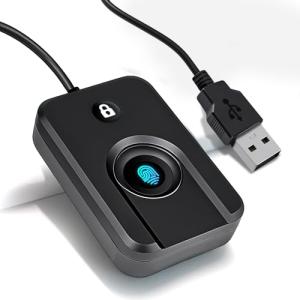

Standardized testing protocols indicate the Gllehkt USB Fingerprint Reader utilizes a silver-plate capacitive sensor with a resolution of 508 DPI. Architectural analysis confirms an on-chip matching execution environment, where biometric templates are processed within the local Microcontroller Unit (MCU) to generate secure tokens for the host operating system.
Aggregated specification data lists the matching speed at under 0.05 seconds. The external housing consists of a zinc-alloy or hardened polymer shell, engineered for high-cycle insertion durability. Technical audits identify this unit as an HID-class device, supporting 360-degree detection to accommodate varying user interaction angles.
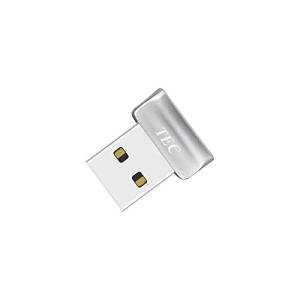
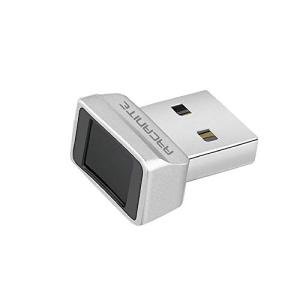
Hardware analysis identifies internal components as near-identical to the Arcanite and TEC lineages, sharing a common ODM sensor pad and firmware stack.
Reliability metrics show that performance may degrade if the sensor surface accumulates environmental contaminants or moisture. Furthermore, driver-level restrictions limit the functional scope of this device to Windows kernels, with no current native support for alternative Unix-based or macOS environments.
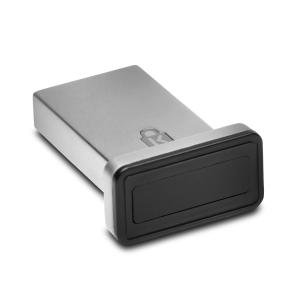
If your hardware requirements dictate a higher standard of physical security and anti-spoofing logic, the Kensington VeriMark Gen2 provides hardware-level rejection of 2D/3D synthetic replicas.
The placement of this unit within the usb fingerprint readers architectural class provides a specialized solution for password-free local authentication.