
PRODUCT REVIEW
In-Depth U.S. Market Review
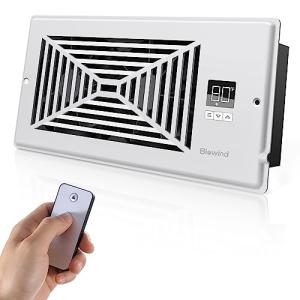
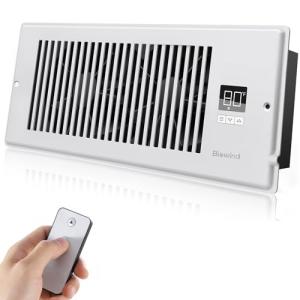
The MOTCTQVD Register Booster Fan is an essential product for the U.S. market, specifically targeting the highly common issue of poor airflow and uneven temperatures in ducted homes. Positioned as a direct, affordable solution, this fan acts as a localized air pump, drawing more conditioned air from your ductwork into a specific room. Its niche is providing immediate, noticeable improvement in comfort for a single hot or cold spot without the complexity or cost of a full smart vent system. It’s an excellent budget-friendly air duct fan solution.
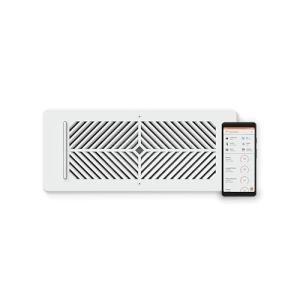
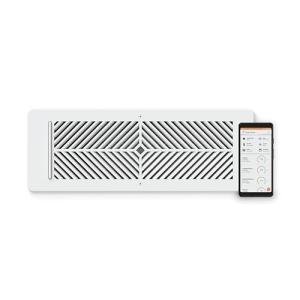
This booster fan differentiates itself with a clear, user-focused feature set: a generous 10-Speed Quiet fan and dedicated remote/thermostat control. Compared to complex smart vent systems like Flair, you’re not managing a whole-home network; you’re simply giving a single, troublesome vent a powerful boost. It's an ideal choice for the homeowner who needs a quick fix for a chilly home office or a warm upstairs bedroom, offering high performance in a simple, drop-in format.
Technical Analysis
| Specification | Detail & U.S. Context | Analysis |
| Size/Fit | Designed for 4" x 10" register holes (standard floor/wall vent size in U.S. homes). | High compatibility with the most common rectangular duct size, ensuring a simple, hassle-free drop-in installation for most U.S. residential users. |
| Airflow Control | 10 fan speed settings. | The fine-grained control allows users to easily balance the need for more airflow against the noise level, optimizing for both comfort and a quiet register vent booster . |
| Control Interface | Integrated thermostat control and wireless remote control. | Offers easy local adjustment and automation based on temperature without requiring a Wi-Fi connection or smartphone app, appealing to the general consumer. |
| Thermostat Range | Built-in sensor allows for a customizable temperature set point for automatic fan activation. | Crucial for efficiency; the fan only runs when the air coming through the duct is genuinely hot or cold, preventing wasted energy or blowing unconditioned air. |
| Acoustics | Advertised as a Quiet Register Vent Booster Fan . | A major feature for use in bedrooms and main living areas, as excess fan noise is the primary complaint about older booster fans. |
| Power | Standard 110V AC wall plug power. | Requires a nearby power outlet. This plug-and-play setup is simple but a necessary design consideration when choosing the installation location. |
| Design | Clean white finish with a compact design profile. | Minimalist aesthetic ensures it blends discreetly into the room, whether used on the floor or a wall. |
1. Performance and Multi-Speed Airflow
The MOTCTQVD fan employs a high-efficiency dual-fan design to aggressively pull conditioned air through the vent. The key is the 10-Speed control, which is significantly more versatile than a simple low/medium/high setting.
This large range allows for the perfect balance. You can run the fan at a low speed for continuous, barely audible air movement in a bedroom setting . Conversely, a high speed can quickly equalize the temperature in a cold room being used for home office use .
This focus on precise airflow adjustment is crucial for the U.S. consumer, ensuring the booster fan is an aid to comfort, not a source of noise pollution.
2. Thermostatic and Remote Operation
The integrated thermostat control is what makes this a "smart" booster fan. Instead of running whenever the air handler is on, you set a temperature threshold (e.g., "Start fan when air is 75°F or warmer").
This automatic control prevents the fan from running unnecessarily and blowing stale air. It ensures targeted, efficient air delivery. The wireless remote control further enhances usability, letting you quickly change the speed or the set point without bending down to the vent.
The combination of automation via the thermostat and simple manual override via the remote makes for a highly convenient and user-friendly experience.
3. Installation Simplicity and Power Requirement
Designed for standard 4" x 10" register holes , the physical installation of the booster fan is incredibly simple—it’s essentially a drop-in replacement. The fan is housed in a sleek register frame, minimizing the complexity.
However, like most active booster fans, it requires a power outlet. It plugs into a standard 110V AC outlet using a small power brick. This plug-and-play design means you need to assess the location of your vent relative to a wall outlet before purchase.
This requirement is a standard constraint for this category of product, but the trade-off is superior, active airflow compared to passive, non-powered solutions.
User Profiles
1. The Basement Gym Enthusiast
You have a finished basement space that is perfect for a home gym, but the lack of strong airflow makes it stuffy and uncomfortable during workouts, especially in the summer.
-
Use Case: You drop the Register Booster Fan into the basement vent. When you start your workout, you use the remote to set it to a high speed, immediately boosting the cool air to keep your workout space comfortable and well-ventilated.
-
The Fit: This fan provides the powerful, targeted blast of air needed to overcome the environmental challenges of a basement. The high-speed setting is perfect for high-activity times when noise is less of a concern.
2. The Upstairs Apartment Renter
You rent a small apartment where the heat rises, leaving the top-floor bedroom consistently too warm, and your landlord won't upgrade the central AC system. You need a non-permanent, non-intrusive solution.
-
Use Case: You install the fan in your bedroom floor vent. You set the thermostat to automatically kick in when the room gets too warm. Its Quiet operation at lower speeds ensures you get a gentle, steady flow of cool air to aid in sleeping without excess noise.
-
The Fit: The fan's ease of installation (no permanent changes) and its focus on quiet operation at lower speeds make it the perfect solution for a renter seeking comfort without violating a lease agreement.
3. The Digital Nomad with a Home Office
Your dedicated home office use space is the furthest room from the furnace, making winter months chilly and impacting your productivity. You need reliable, consistent warmth.
-
Use Case: You set the fan to activate when the air from the duct is above 80°F (indicating the furnace is running). The fan boosts the heated air directly into your office, creating a comfortable work bubble, and the remote is used for quick fine-tuning as needed.
-
The Fit: The fan's active boosting capability ensures the heated air gets to your room before dissipating in the ductwork. It provides the necessary spot heating to maintain a comfortable, focused work environment .
"Complementary HomeTechCorner Category Recommendations"
| Recommended Products | Why This Category Is Useful Specifically for This Product | Short Usage Scenario |
| Environmental Sensors Temp Humidity | To get a more accurate reading of the actual room temperature, ensuring the fan's operation is based on the room's true climate, not just the vent's. | You place an external temperature sensor on your desk so you can verify that the booster fan is maintaining your desired home office temperature of 70°F. |
| Smart Power Strips | To consolidate the power source and provide surge protection, especially when installing the fan in a basement or garage with less-reliable outlets. | You plug the fan into a smart power strip that also holds your lamp and phone charger, ensuring all devices are protected from power spikes. |
| Display Mounts | If the fan is placed in a high wall vent, a remote control mount would keep the controller accessible. | You place the fan in a high wall register and use a small mount next to the light switch to keep the remote control easily reachable upon entering the room. |
| Portable Power Stations | For scenarios like a garage or shed where a temporary power boost might be needed without running an extension cord. | You use a small, portable power station to run the booster fan on a deck or in a detached workshop where running an AC cord would be impractical. |