Achieving the perfect temperature in every room can be a challenge, especially when standard HVAC systems leave some areas too hot or too cold. Smart vent systems offer a modern solution by actively boosting airflow or redirecting it to where it is needed most. These devices transform standard registers into intelligent climate controllers that respond to real-time temperature changes.
Smart Vent Systems
Optimize your home's airflow and comfort with these innovative smart vent solutions
Product List
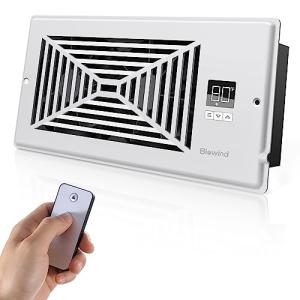
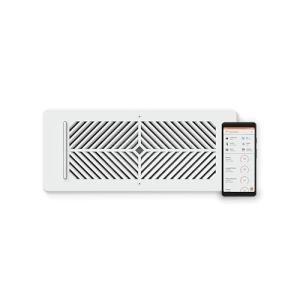

Remote Control Booster Fan
Motctqvd
Product Review Score
4.32 out of 5 stars
94 reviews$39.99 $28.49
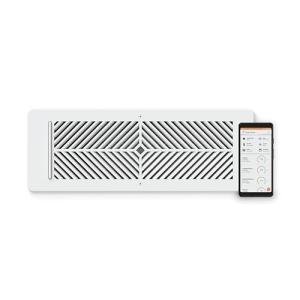

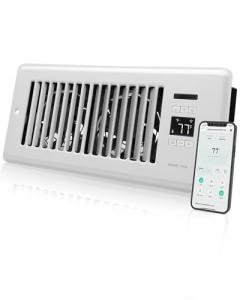
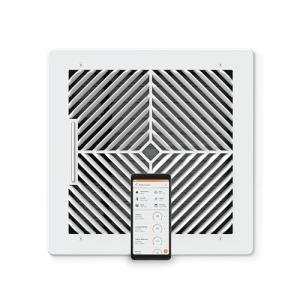
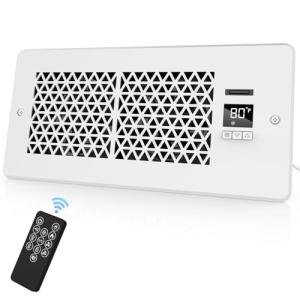

VELLEE Quiet 10-Speed Booster Fan
Vellee
Product Review Score
4.54 out of 5 stars
232 reviews$49.97
💡 Practical Usage Tips
- Placing the temperature probe as close to the incoming air source as possible ensures that the fan triggers accurately when the furnace or AC turns on.
- For floor-mounted units, selecting a model with a steel faceplate provides the necessary strength to support the weight of people walking over it.
- Setting the fan speed to a middle range often provides a great balance between increasing airflow and keeping the room quiet enough for sleeping.
- Checking the proximity of a wall outlet is essential before installation because most active booster fans require a constant corded power supply to operate.
✅ What to Look For & ⚠️ What to Avoid
Must-Have Features:
- Look for units with PWM motor control, which allows for smooth speed transitions and much quieter operation at lower levels.
- Models like the Flair Smart Vent offer pressure-sensing technology that protects the main HVAC system from strain when vents are closed.
- A built-in memory chip is a vital feature because it saves all of the custom temperature settings even if the power goes out.
Red Flags to Watch Out For:
- Be cautious of booster fans that only offer a few speed settings, as these often lack the fine-tuning needed to eliminate annoying humming sounds.
- Avoid battery-only models if the vent is located in a high-traffic area where the motorized louvers will be moving constantly throughout the day.
- Watch out for units that rely solely on infrared remotes if the goal is to control the temperature from another room or via a smartphone.
🛡️ Build Quality & Performance
The physical construction of a smart vent determines how well it will hold up over years of exposure to hot and cold air. High-end models often utilize CNC-machined aluminum or powder-coated steel, which feels substantial and resists the warping that can happen with cheaper plastic alternatives. This structural integrity is especially important for the Biowind Booster Fan, which uses its metal faceplate to help dampen the vibrations caused by its high-speed internal motors.
Performance is not just about moving air; it is about how intelligently that air is managed. Some systems act as passive dampers that open and close to balance the house, while others use dual-fan arrays to physically pull more air into a stubborn room. A well-built unit will feature dual ball bearings in the motors, which significantly extends the life of the fan and ensures that the rotation remains smooth and whisper-quiet even after months of continuous use.
🏆 Top Recommendations
| Best For | Model Name | Key Feature | Why It Wins |
|---|---|---|---|
| Whole-Home Logic | Flair Smart Vent | Sub-GHz Radio | Connects with Nest/Ecobee for total zone control. |
| Maximum Airflow | Biowind 4x12 | 160 CFM Output | Dual motors provide a massive boost to weak vents. |
| App Control | Howeall Smart Fan | Wi-Fi Integration | Allows for easy scheduling directly from a phone. |
❓ Frequently Asked Questions
Do smart vents replace the need for a central thermostat?
No, these devices are designed to work alongside the main thermostat by fine-tuning the temperature in specific rooms where the central system might be failing to reach.
Will installing these fans increase the electric bill significantly?
Most of these units use high-efficiency DC motors that draw very little power, typically costing only a few cents per month to operate even with frequent use.
Can a smart vent be used in a bathroom or kitchen?
As long as the vent size matches the opening, they can be used in any room; however, it is important to ensure the unit is kept away from direct water splashes.
Would you like me to help you compare the dimensions of these vents with your current duct openings?