PRODUCT REVIEW
In-Depth U.S. Market Review
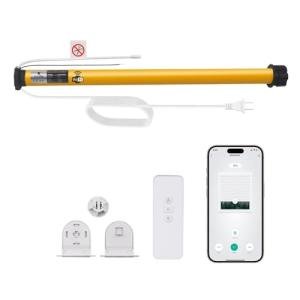
The Rechargeable Motor for Roller Blinds and Curtains is a versatile, foundational component designed for the American homeowner who prioritizes flexibility and a clean, wire-free installation. Unlike motors dedicated solely to roller shades or curtains, this unit is marketed as compatible with both, indicating a high degree of adaptability in its mounting and power-transfer mechanisms. Its niche is the cost-effective, non-permanent motorization of existing window treatments, making it a compelling option for those looking for a budget monitor choice in home automation.
Its rechargeable nature is a key feature, making it a popular choice for renters or in older U.S. homes where running wires is not feasible. The product generally focuses on mechanical movement, meaning the "Smart" functionality (App Control, Voice) is typically achieved via a separate, proprietary RF bridge/hub—a detail crucial for U.S. market buyers. Compared to fully integrated systems, you get significantly lower initial hardware costs and the freedom to use your existing drapes, but you must factor in the potential need for an ecosystem hub for full smart integration.
Technical Analysis
| Specification | Detail & U.S. Context | Analysis |
| Compatibility | Dual-use: Roller Blinds (inside tube) and Curtains (hook/clip mechanism). | High versatility is a major selling point, allowing users to motorize various window treatments throughout the home with the same product. |
| Power Source | High-Capacity Rechargeable Battery. | The wire-free design is the main benefit, allowing for extremely simple installation without any electrical work, ideal for renters. |
| Control Method | RF Remote Control (Native) and potential Smart App/Voice via an RF-to-Wi-Fi Bridge. | The remote provides reliable, immediate local control, while the bridge unlocks the full smart home potential desired by remote work power user s. |
| Installation | Requires mechanical installation (fitting into a tube or clipping onto a rod/track). | DIY-friendly, but precision is needed for roller shades. The curtain application is typically faster and simpler. |
| Battery Life | Long life is expected, often 3-6 months on a charge, depending on curtain/shade weight and usage frequency. | Excellent longevity reduces maintenance hassle, making the "recharging" aspect less of a burden. |
| Limit Setting | Electronic (or sometimes mechanical) setting of upper and lower travel limits. | Ensures repeatable, precise, and synchronized movement, which is critical for a high-quality user experience. |
| Motor Torque | Must be sufficient for both the weight of a heavy curtain and the rotational resistance of a roller shade. | Versatility requires a robust motor, a crucial specification for users with heavy blackout drapes common in the U.S. |
1. Versatile Installation and Power
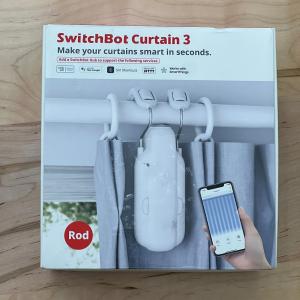
The dual compatibility—fitting into roller shade tubes and attaching to curtain tracks/rods—is highly valuable. This means you can standardize on one type of motor across a variety of window coverings in your home. This is efficient for both purchasing and learning the system.
The core design choice of a rechargeable battery emphasizes user-friendliness and non-permanence. This wire-free operation makes the motor easy to install on any wall or window, regardless of outlet access. This is particularly appealing in older U.S. homes where running new wires can be costly and difficult.
2. Control Method and Ecosystem Integration
The native control is almost always a physical Radio Frequency (RF) remote. This remote is the most reliable way to operate the device, as it’s independent of your home Wi-Fi network. This simple, immediate control is highly valued by consumers.
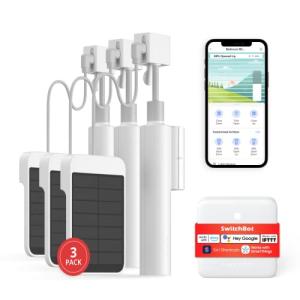
However, to achieve the sought-after smart home automation features like scheduling, scenes, and voice control (e.g., "Alexa, open the blinds"), a separate RF bridge or hub is often required. The user must be aware that this bridge is the gateway to integrating the motor into their main smart ecosystem.
3. Precision and Maintenance
Whether on a curtain rod or in a roller tube, the motor requires the user to set its maximum travel limits. This process, often done via the remote or app, ensures the window covering always stops exactly where it should—fully closed, fully open, or at a set intermediate percentage. This precision is essential for a clean aesthetic.
While the battery life is excellent, the maintenance of periodic recharging is a reality. The process is typically straightforward, using a standard USB cable, but it is a task that must be planned for every few months, unlike wired systems.
User Profiles
1. The Multi-Type Decorator
You have a mix of window coverings in your home—roller shades in the kitchen and heavy drapes in the living room—and you want to use a single type of motor for simplicity and consistency.
-
Use Case: You use this motor to motorize the blackout roller shades in the home office for glare control and also use the same product, with a different attachment, to automate the heavy velvet drapes in the media room for a grand reveal during movie time. You control both types of coverings from the same proprietary app/remote.
-
The Fit: The product's dual-compatibility is the main draw, allowing you to learn one system and one charging routine for all your window treatments. This simplifies your overall home office use and entertainment automation system maintenance.
2. The Budget-Conscious Renter
You are a tenant who wants to automate your windows for comfort and privacy but must not alter the property. Your priority is non-invasive, reversible installation.
-
Use Case: You install the curtain clips on your existing apartment curtain rods and set a schedule to open them at 7 AM. When your lease ends, you simply unclip the motors, pack them, and leave the rods untouched.
-
The Fit: The rechargeable, wire-free, and clip-on/retrofit design for both curtains and blinds is perfectly suited to a rental scenario. It provides maximum automation benefits with zero risk of damage or permanent alteration, making it an excellent best portable monitor for travel accessory you can take to your next place.
3. The Energy Saver
Your primary goal is to use automation to reduce your cooling and heating costs by intelligently managing solar heat gain and retention.
-
Use Case: You pair the motor with an environmental sensor or use a scheduling app to automatically close your south-facing curtains and blinds during the hottest part of the summer day. You schedule them to open in the winter mornings to maximize passive solar heating.
-
The Fit: The ability to precisely schedule or automate the motor's movement based on time or weather conditions (via a smart hub) transforms your window treatments into an active component of your home's climate control, providing an elegant good for gaming and utility solution.
"Complementary HomeTechCorner Category Recommendations"
| Recommended Products | Why This Category Is Useful Specifically for This Product | Short Usage Scenario |
| Multi Protocol Hubs Matter Thread | This is the essential bridge to connect the motor's RF signal to Wi-Fi, enabling integration with Alexa, Google Home, and Matter for full automation scenes. | You tell your central Matter hub, "It's movie time," and the hub simultaneously turns on the TV, dims the lights, and sends the closing command to the curtains via the RF bridge. |
| Wireless Programmable Buttons | A wireless button allows you to control the curtains/blinds instantly from anywhere in the room without relying on the phone app or voice commands. | You are reading a book and quickly tap a button on the side table to partially close the blinds, adjusting the glare without getting up. |
| Environmental Sensors Temp Humidity | The sensors provide the data needed to trigger the motor's operation based on actual environmental conditions, like excessive sun or heat. | The humidity sensor in the bathroom detects steam after a shower, prompting the curtain to automatically open halfway to air out the room. |
| Smart Displays | A smart display provides a visual, centralized control panel where you can group and adjust all the motors in the house with simple taps. | You see on your Smart Display that the blinds in the kids' room are open, and you tap the screen to close them while you finish your morning coffee. |
| Smart Power Strips | Useful for managing the charging of multiple rechargeable motors, ensuring you are charging efficiently and consistently. | You plug all your motor chargers into a smart power strip that is scheduled to turn on once a month, reminding you to charge all the units simultaneously. |