
The Philips HF3520 utilizes a local-only architecture that operates independently of cloud-based protocols or network connectivity. The primary illumination source is a 16.5W halogen lamp capable of reaching 300 lux, providing a continuous light spectrum that avoids the flicker associated with budget LED pulse-width modulation. The sunrise simulation logic is executed via an internal microcontroller that manages a 20-stage dimming curve over a user-defined duration.
Physical dimensions include a large footprint required to house the UV-free light-guide optics and the FM radio tuner. The device is powered by a dedicated DC adapter; however, the lack of an internal capacitor or battery backup results in the volatile memory clearing during power interruptions. The interface consists of physical touch-buttons, which eliminates software-based obsolescence.
Technical auditing confirms that the halogen bulb is a user-replaceable component, preventing total system failure upon filament expiration.
This appliance functions as a standalone node for circadian rhythm regulation. It lacks integration with external motion sensors or multi-device automation routines. For stability during power surges, the use of a secondary uninterruptible power supply is required to maintain clock synchronization.
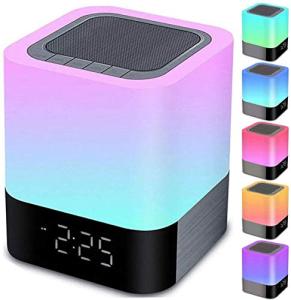
Users seeking a more compact, multi-functional device that includes Bluetooth audio streaming should evaluate the Swarmir Lighting Speaker as a space-saving alternative.
This device is a benchmark in the safety monitors and wellness lighting classification.