
Structural analysis of the OontZ Angle 3 identifies a proprietary triangular chassis designed to increase cabinet rigidity and reduce harmonic rattle. Technical specifications list dual precision acoustic drivers and a downward-facing passive bass radiator, collectively powered by a 10W Class-D amplifier. The hardware provides an IPX5 liquid resistance rating, achieved through a sealed silicone gasket protecting the I/O ports and control buttons.
The power supply consists of a 2500mAh lithium-ion cell, though documentation indicates the absence of a trickle-charge management system. Connectivity is facilitated via Bluetooth protocols or a low-latency 3.5mm analog auxiliary input. Signal processing is managed at the source device, as the unit lacks internal software-based equalization or app-driven configuration options.
Operational note: The 2.4GHz signal stability is contingent upon local environmental interference, as the hardware does not support the advanced frequency hopping found in 5.3+ standards.
Aggregated data confirms that this specific hardware revision does not support True Wireless Stereo (TWS) pairing for multi-unit synchronization. Long-term reliability metrics for the Micro-USB variants indicate potential solder fatigue at the charging interface under high-frequency usage cycles.
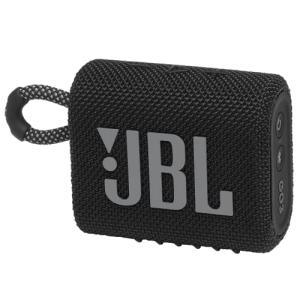
The JBL Go 3 offers an alternative for users who require higher ingress protection (IP67) and a more modern Bluetooth 5.1 stack in a significantly smaller form factor. These devices are tracked within the compact acoustic peripheral index for technical auditing purposes.