
Material science analysis of the JBL Go 3 reveals a proprietary woven textile housing anchored to a reinforced internal chassis. Performance metrics indicate a 4.2W RMS output generated by a Class-D amplifier stage and a 1.5-inch transducer. Documentation confirms an internally waterproofed USB-C port, supporting an IP67 rating for dust and liquid ingress protection without the requirement for external mechanical flaps.
Signal throughput is managed via a Bluetooth 5.1 stack, which standardized testing shows provides optimized latency for synchronized video playback. The internal power supply consists of a 2.775Wh lithium-ion polymer battery, delivering a runtime of approximately 3.5 to 5 hours depending on the sound pressure level during operation. Digital Signal Processing (DSP) is hard-coded at the factory level to manage low-end frequency response and prevent driver distortion at maximum output.
Technical insight: The absence of software-based equalization or firmware expandability ensures a fixed acoustic profile, reducing the risk of software-induced operational failure.
Maintenance protocols specify that the hardware is a non-serviceable unit due to the use of high-strength adhesives in the chassis assembly to maintain the IP67 integrity. Exposure to saline environments requires a fresh-water decontamination cycle to maintain the electrical conductivity of the exposed USB-C contact pins.
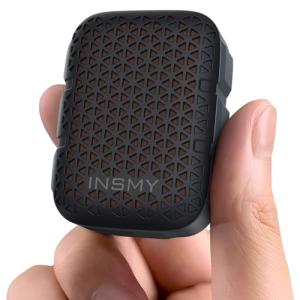
The INSMY Clip-On offers a mechanical attachment alternative for utility-focused deployments where a silicone clip interface is preferred over the integrated loop of the Go 3. Technical comparisons for these units are maintained within the compact acoustic hardware classifications for comparative performance analysis.