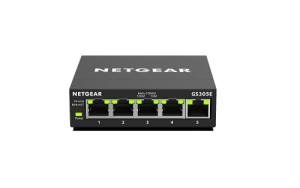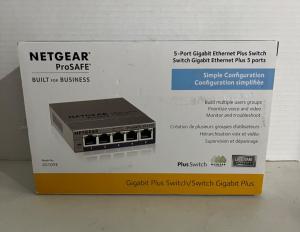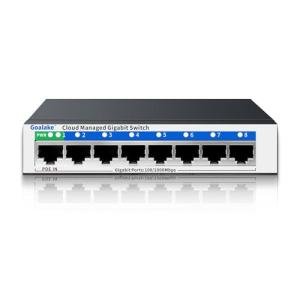

Technical specifications indicate the GS108PP is an unmanaged plus network bridge utilizing Broadcom BCM531xx series silicon, engineered for high thermal tolerance in fanless environments. The structural analysis confirms a rugged metal housing designed for passive heat dissipation, protecting internal PoE controllers that serve as critical points in the architecture. Aggregated specification data lists a total Power over Ethernet budget of 123W, facilitating simultaneous power delivery to eight Class 3 devices.
Performance metrics demonstrate Layer 2 traffic management capabilities, including support for 802.1Q VLAN tagging and Quality of Service protocols via a web-based graphical user interface. Physical dimensions necessitate space for an external power transformer of significant mass relative to the 8-port chassis. Standardized testing protocols show that while the unit operates silently, internal MOSFET temperatures increase when the cumulative power draw exceeds 80W, necessitating placement in a ventilated environment to maintain port stability.
Material analysis confirms the absence of mechanical cooling components, relying instead on the zinc-alloy casing to maintain operational temperatures for 802.3af/at compliant devices.
Functional feature highlights include:
- Silent Operation mode via fanless thermal management.
- High-Density Power Delivery supporting 123W across all ports.
- Network Segmentation via integrated VLAN support.
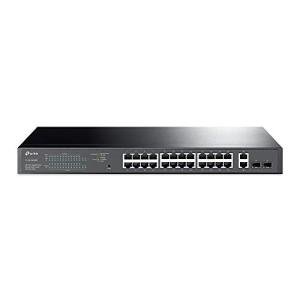
The Netgear GS108PP provides a higher PoE budget of 123W compared to the 64W limit found in its TP-Link hardware counterpart, justifying its use in high-draw surveillance deployments.
This hardware is classified within the smart ethernet switches sector, serving as a high-density power and data distribution node for professional local area networks.