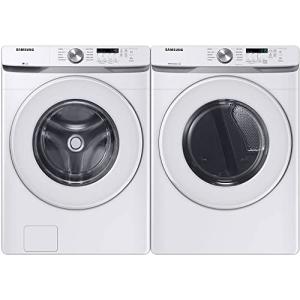


PRODUCT REVIEW: Midea 24 Inch All-in-One Washer Dryer Combo
In-Depth U.S. Market Review
The Midea 24 Inch All-in-One Washer Dryer Combo is a specialist product uniquely suited for the micro-space segment of the U.S. market, specifically urban high-rise apartments, condos, and smaller homes where appliance size is the primary constraint. This single-unit solution performs both the washing and condensing drying functions without the need for an external vent.
The core value proposition is space-saving: it requires only half the footprint of a traditional side-by-side or stacked unit. For many American homeowners and renters in dense urban areas, the ability to have in-unit laundry where it was previously impossible—such as in a small hall closet—is a game-changer and justifies the higher cost and longer cycle times typical of a combo unit.
Compared to a traditional washer and dryer, you sacrifice speed for space, as the drying process (condensing) is slower. However, versus compact stackable units, you only need one set of hookups, simplifying installation. It stands out as the best all-in-one washer dryer combo for those who absolutely cannot accommodate separate machines.
Technical Analysis
| Specification | Detail & U.S. Context | Analysis |
| Form Factor | 24-inch Width All-in-One | Standard compact size for European/Asian imports, making it perfect for small U.S. apartment closets and tight utility spaces. |
| Dryer Type | Ventless Condensing Drying | Does not require an external vent, collecting moisture as water. This is essential for apartments and historical homes with no venting option. |
| Capacity | Approximately 2.3–2.5 cu. ft. (Wash) | Suitable for single-person or couple loads; you must run smaller loads than a full-sized washer to achieve effective drying. |
| Cycles | Specialized Combo Cycles | Includes programs designed to seamlessly transition from wash to dry, often with specific settings for different fabrics. |
| Installation | Single Cold Water Inlet | Requires only a standard cold water line and a drain, simplifying the necessary plumbing hookups. |
| Motor | Inverter Motor (Likely) | Provides quieter operation and is more energy-efficient than traditional motors, a plus for apartment neighbors. |
| Control | Digital Display and Program Dial | Modern and easy-to-read interface that provides precise control and feedback on the long combo cycle times. |
DYNAMIC HEADING RULE: You MUST create 3 distinct and highly relevant sub-headings under Technical Analysis, after the table. These headings MUST accurately reflect the product type and its core features. For example, use "Power Monitoring and Safety" for a Smart Plug, "Locking Mechanism and Biometrics" for a Smart Lock, or "Display and Panel Technology" for a Monitor.
1. Ventless Drying Technology
The Midea's use of ventless condensing drying is its defining feature. Instead of expelling hot, moist air outside through a vent, it draws in cool room air to condense the moisture inside the drum, which is then pumped out with the wash water. For you, this means you can install the machine in any closet, even interior ones, without structural modifications.
This technology is slower than vented drying, so a wash-to-dry cycle can take several hours. The key trade-off is time for the sheer convenience of having in-unit laundry in a previously unworkable space. Be aware that clothes may also feel slightly damper than a traditional vented dryer.
2. Compact Dimensions and Footprint
The 24-inch width is the standard size for this class of appliance, allowing it to fit through narrow doorways and into small utility closets common in older or high-density housing. The ability to stack two appliances into a single unit is the ultimate space-saver, instantly doubling the utility of a very small footprint.
For installation, you only need a drain and a standard 120V outlet (electric model), eliminating the need for a 240V hookup and ductwork. This simplicity is a huge benefit for renters or condo owners trying to add laundry facilities with minimal hassle.
3. Operational Workflow and Capacity Management
This all-in-one format requires a shift in how you manage your laundry. To get fully dry clothes, you should only load the machine to about half the weight capacity of a typical wash load. If you run a full wash load, you must manually remove half of the clothes before starting the drying cycle.
The digital display is vital for managing the long cycle times. You can set a full wash-and-dry combo to run overnight, allowing you to wake up to a completely finished load. This "set it and forget it" overnight operation is the most efficient way to utilize the combo unit.
User Profiles
1. Urban Condo Owner
You own a small, upscale condo in a major U.S. city where space is at a premium, and you need a discrete, functional laundry solution that doesn't compromise aesthetics.
-
Use Case: Installing a fully functional, quiet laundry machine in a compact hall or kitchen closet, where venting a traditional dryer is prohibited or structurally impossible.
-
The Fit: The 24-inch size and ventless technology make it the only practical solution for a tiny, unvented space. The quiet inverter motor is also critical to prevent noise complaints in a high-density building.
2. Young Professional Renter
You are a single person or a couple renting an older apartment that lacks in-unit laundry, and you want to install a full-featured machine without violating the lease with major renovations.
-
Use Case: Avoiding the public laundromat by placing a compact, non-vented unit in a bathroom or spare corner that can be easily removed upon moving out.
-
The Fit: The Midea’s simplicity in installation (just water and power, no vent) means you can install it yourself with minimal effort. This gives you the huge lifestyle upgrade of in-unit laundry without making permanent modifications to the rental unit.
3. Eco-Conscious Small Homeowner
You live in a smaller, environmentally friendly home and prioritize energy efficiency and low resource use over speed and large capacity.
-
Use Case: Running a medium-sized load of organic cotton clothes, valuing the water and energy savings of an HE machine and the condenser dryer's lower heat setting.
-
The Fit: The inverter motor and the HE wash function are inherently more energy-efficient than older appliances. While the cycle is long, the reduced energy footprint of the condenser drying aligns with your environmental priorities.
"Complementary HomeTechCorner Category Recommendations"
| Recommended Products | Why This Category Is Useful Specifically for This Product | Short Usage Scenario |
| Smart Plug Devices | To track the extensive power usage during the long, multi-hour wash and dry cycle for energy optimization. | You are curious how much power the condenser drying process uses, so you track the consumption of a full cycle to find the cheapest time to run it. |
| Environmental Sensors Temp Humidity | To monitor the temperature and humidity increase in the small, unvented closet where the machine is operating. | You are concerned about heat and moisture buildup after an 8-hour cycle, so you place a sensor to ensure the closet environment remains stable. |
| Water Leak Detectors | To guard against a slow leak from the drain or water inlet, which could be catastrophic in a small apartment space. | You start a long wash-dry cycle and leave for the day, and a sensor alerts you to a minor leak, allowing you to ask a neighbor to shut off the water. |
| Smart Fans | To rapidly ventilate the area immediately outside the closet after the long, heat-producing drying cycle. | The Midea finishes a four-hour drying cycle, and an automation turns on a nearby smart fan to dissipate the residual heat and moisture into the room. |