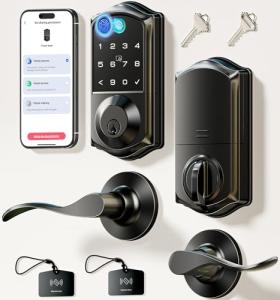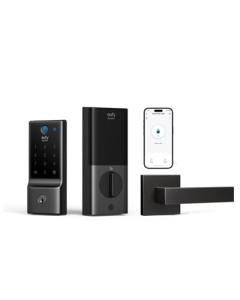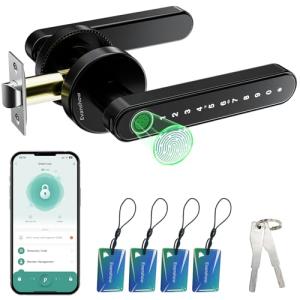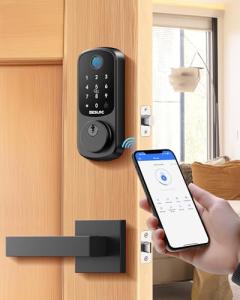

Technical specifications confirm a BHMA Grade 2 certification, indicating the chassis is rated for 100,000 operational cycles and possesses significant physical impact resistance. The internal assembly utilizes a high-torque DC motor designed to actuate the deadbolt, though performance metrics suggest battery depletion rates increase by 30-40% if the motor encounters friction from door misalignment. The integrated chipset facilitates native 802.11 b/g/n Wi-Fi connectivity at 2.4GHz, eliminating the requirement for an external bridge but maintaining a higher idle power draw than alternative low-energy protocols.
Hardware Architecture & Security Protocols
Material analysis identifies the chassis as a zinc-alloy construction with an IPX3 weather-resistance rating, suitable for covered residential entryways. Data security is managed via proprietary AES-128 encryption for local storage of access credentials within the Eufy Security ecosystem. Unlike generic ODM hardware, this unit utilizes a custom PCB layout that supports direct synchronization with external monitoring arrays to trigger recording events upon lock engagement.
- Modes of Access: Biometric (via ecosystem), PIN Code, Remote App, Physical Key.
- Network Compatibility: 2.4GHz Wi-Fi (Required), HomeBase 3 (Optional).
Aggregated specification data lists the exclusion of 5GHz network support and a lack of Matter or Thread protocol compatibility, necessitating 2.4GHz signal optimization for stable remote telemetry.
The Eufy Smart Lock C30 is technically recommended as an alternative for users seeking a Wi-Fi-native deadbolt that prioritizes BHMA Grade 2 physical security over multi-protocol support.
This hardware unit is classified within the broader smart lever locks architectural category, serving as a primary entry point controller for residential security grids.