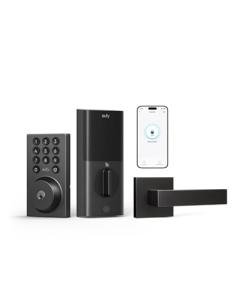
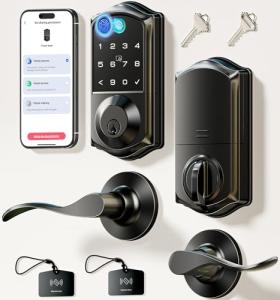
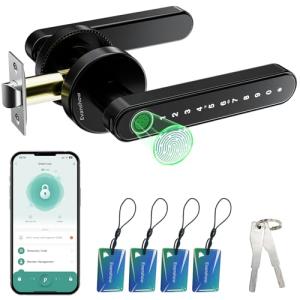
💡 Practical Usage Tips
- Ensuring the door frame and strike plate are perfectly aligned helps prevent motor strain and extends the lifespan of the internal actuator.
- High-quality alkaline batteries are generally preferred over rechargeable NiMH cells because they maintain the specific voltage curve required for reliable low-battery alerts.
- For devices lacking native Wi-Fi, utilizing a dedicated gateway or bridge can significantly improve the range and reliability of remote notifications.
- Regularly cleaning the biometric sensor with a dry cloth prevents oil buildup that often leads to false rejection errors during entry.
✅ What to Look For & ⚠️ What to Avoid
Must-Have Features
- A physical mechanical key override or USB-C emergency port is essential to prevent lockouts during battery failure.
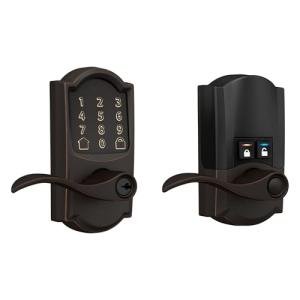
- Hardware with a confirmed BHMA Grade 2 or Grade 1 rating ensures the chassis can withstand thousands of operational cycles, as seen in the Schlage WiFi Smart Lock.
- Look for AES-128 encryption on local storage to ensure that sensitive credential data remains secure on the device rather than the cloud.
Red Flags to Avoid
- Avoid units that rely exclusively on cloud connectivity for basic operation, as network outages can render smart features useless.
- Be cautious of locks with plastic internal gears, as they often create excessive noise and are prone to stripping under high torque.
- Smart locks lacking a proper IP rating should not be installed on exterior doors where rain or high humidity could damage the electronics.
🛡️ Build Quality & Performance
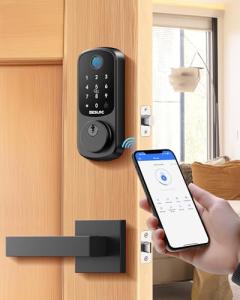
The longevity of a smart lever lock is largely determined by the materials used in its chassis construction. Premium units typically feature a heavy-duty zinc alloy body which provides substantial resistance against physical impact and weathering. While plastic composites are common in budget-friendly models, they often lack the structural integrity required for high-traffic entry points. A robust metal casing not only protects the internal circuitry but also offers a tactile sense of security that lightweight alternatives fail to provide.
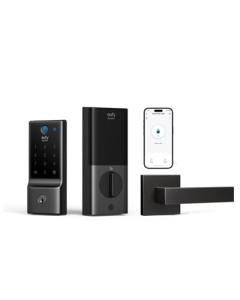
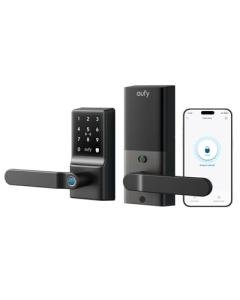
Performance is also dictated by the efficiency of the internal motor and radio components. Devices that support newer protocols like Z-Wave Plus or optimized Wi-Fi chipsets generally offer better battery life and faster response times. For example, the eufy Smart Lock C33 utilizes a proprietary setup to balance always-on connectivity with power conservation. Ultimately, selecting a lock with a high-torque motor ensures that the bolt can overcome minor door misalignments without stalling or draining the batteries prematurely.
🏆 Top Recommendations
| Best For |
Model Name |
Key Feature |
Why It Wins |
| Maximum Security |
Schlage WiFi Smart Lever |
ANSI Grade 1 Rating |
Offers the highest level of residential physical security resistance. |
| Smart Home Pros |
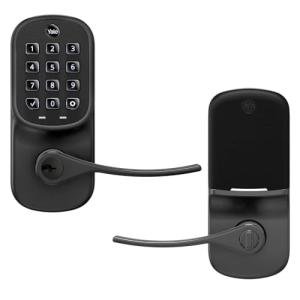
Yale Assure Lever Z-Wave |
Modular Radio Slot |
Ideal for local automation hubs without cloud dependency. |
| Offline Utility |
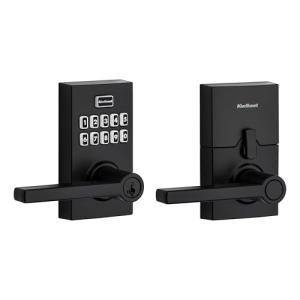
Kwikset SmartCode 917 |
SmartKey Re-keying |
Perfect for storage rooms or offices requiring no internet access. |
| Biometric Entry |
eufy Smart Lock C33 |
Sub-0.3s Fingerprint |
Combines fast entry with solid ecosystem features. |
❓ Frequently Asked Questions
How long do batteries typically last in smart lever locks?
Battery life varies significantly based on the connection protocol. Locks using Z-Wave or Zigbee often last between 9 to 12 months, while units with native 2.4GHz Wi-Fi may deplete batteries in 3 to 6 months due to higher power consumption.
What happens if the batteries die while I am outside?
Most models include a physical key override or an external emergency power port, usually USB-C or a 9V battery terminal. This allows external power to be applied temporarily to operate the keypad or biometric sensor for entry.
Can I use rechargeable batteries?
While physically possible, it is not recommended for most units. Rechargeable batteries often have a lower nominal voltage (1.2V) compared to alkaline (1.5V), which can cause the lock to trigger false low-battery alarms or fail to drive the high-torque DC motor effectively.