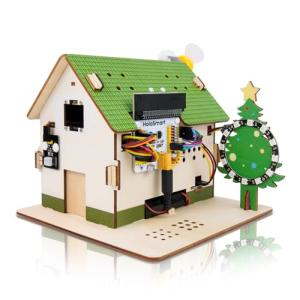

Technical analysis identifies the ESP32-WROOM-32E chipset as the primary processing unit for this prototyping platform. The dual-core 240MHz architecture supports local control protocols such as MQTT with TLS encryption, ensuring secure data throughput for local network integration. Modular connectivity is achieved through standard JST-type connectors, which reduce mechanical fatigue on copper wiring compared to traditional breadboard jumper configurations.
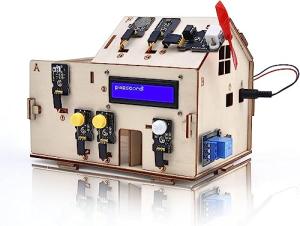
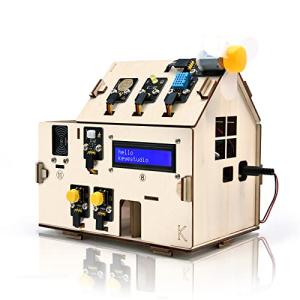
Structural dimensions and material analysis indicate the use of laser-cut wood for the chassis; this organic material is subject to hygroscopic expansion and potential warping if exposed to relative humidity levels exceeding standard indoor metrics. Sensor analysis lists a DHT11 humidity and temperature sensor with a calibrated accuracy range between 20% and 90% RH, alongside PIR and soil moisture detection modules.
System analysis confirms that the ESP32 chipset enables the execution of open-source firmware like ESPHome or Tasmota, facilitating a 100% local control architecture without dependency on external cloud servers.
Operational reliability is maintained via:
- Local Web Server Hosting
- Bluetooth Low Energy (BLE) Signaling
- Modular Sensor Shielding
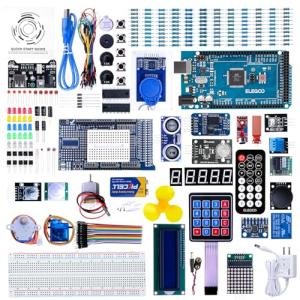
If the application requires a more extensive array of physical I/O pins for complex hardware control, the Elegoo Mega R3 Ultimate Arduino Starter Kit provides a larger 54-pin interface.
The device is situated within the entry-level automation kits classification, emphasizing its role in teaching open-protocol IoT integration.