
PRODUCT REVIEW
In-Depth U.S. Market Review
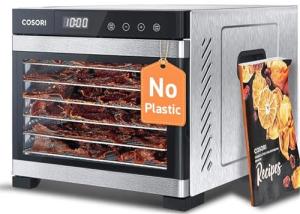
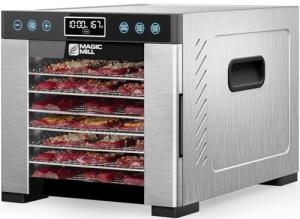
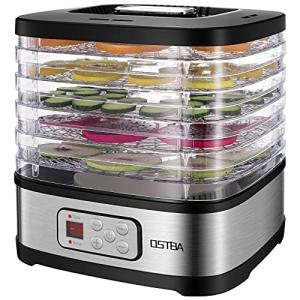
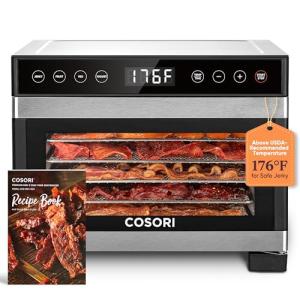
The Elite Gourmet Food Dehydrator with Stainless Steel Trays occupies an important segment in the U.S. market: the affordable step-up from entry-level plastic models. It targets consumers who appreciate the benefits of hygienic, easy-to-clean stainless steel trays but may not need or want the high cost and bulk of a full, commercial-style stainless steel enclosure. This model is a pragmatic, cost-effective blend of premium materials and a familiar, mid-range form factor.
Its core appeal is the inclusion of metal trays, which offer a significant advantage over plastic in terms of durability and flavor non-retention. Compared to all-plastic models, you get a much more robust and cleaner food-contact surface. While it retains the vertical-flow nature common to this price point (requiring tray rotation), the metal trays elevate the unit's value and performance perception, making it an excellent "best value dehydrator" choice for the regular user.
Technical Analysis
| Specification | Detail & U.S. Context | Analysis |
| Trays Material | Stainless Steel Trays (Often 5 or more) | A key upgrade over plastic, offering superior hygiene, no risk of BPA, and preventing the absorption of odors from jerky or spices. |
| Housing Material | External Plastic or Composite Body | Keeps the overall cost and weight down while focusing the premium material (stainless steel) where it matters most: food contact. |
| Drying System | Vertical Airflow | Standard for this tower-style design. Air rises from the base, necessitating manual tray rotation for perfectly even drying. |
| Controls | Digital Control Panel with Timer | A major functional benefit. Offers precise temperature setting and an automatic timer (often up to 48 hours) for safe, unattended operation. |
| Capacity | Mid-Range Stackable Capacity | Suitable for regular household use, offering a balance between output and kitchen counter space. |
| Cleaning | Easy-to-Wipe Metal Trays | The stainless steel trays simplify cleanup, especially when drying sticky or oily foods like marinated meats. |
| Safety | Overheating Protection | Standard safety feature ensuring the motor and heating element shut down if temperatures exceed safe limits during a long cycle. |
1. Stainless Steel Trays: Hygiene and Durability
The core technical advantage of this Elite Gourmet unit is the use of stainless steel trays, moving beyond the limitations of plastic. This feature is highly valued in the U.S. market for its hygienic properties—it’s non-porous and won't harbor bacteria or absorb the strong flavors of items like onion or garlic powder used in jerky.
For you, this means a clean slate with every batch, without worrying about residual tastes. The metal trays are also far more durable and can withstand more rigorous cleaning and higher temperatures than plastic.
2. Digital Precision in a Stackable Design
The integration of a digital control panel with a programmable timer provides high-level control that contrasts with the simple vertical airflow design. You can precisely set your desired temperature, which is essential for safely drying meat ( 16 0 ∘ F ) or maintaining raw food standards (below 11 8 ∘ F ).
The timer is a necessity for modern use, allowing you to set a 20-hour cycle and rely on the automatic shutoff. This digital precision elevates the unit beyond basic budget models, despite retaining the vertical airflow that requires tray rotation.
3. Footprint and Practicality
The tower-style, stackable design is highly practical for typical U.S. kitchens where counter space is at a premium. The unit maximizes drying area by building vertically rather than horizontally.
While the plastic/composite housing keeps the cost manageable, it's structurally sound and designed for easy cleaning. The combination of a compact footprint and premium stainless steel trays offers a great balance of practicality, performance, and value.
User Profiles
1. The Ingredient Purity Advocate
You regularly dehydrate unique or strongly flavored ingredients (e.g., chili peppers, medicinal herbs, smoked jerky) and are deeply concerned about cross-contamination of flavors or odors. You prioritize hygienic, non-reactive surfaces.
-
Use Case: You are making a batch of intensely spicy cayenne pepper powder and don't want the chili odor to transfer to the next batch of sweet dried mango slices.
-
The Fit: The stainless steel trays are a must-have, as they are non-porous and will not retain the strong odors or colors of your ingredients, ensuring your subsequent batches remain pure.
2. The Mid-Volume Family Cook
You are an active home cook who needs to dry enough ingredients to stock your pantry throughout the year but doesn't have the space or budget for a giant, commercial-style unit. You demand reliable results for your regular use.
-
Use Case: You routinely dehydrate a mixture of items—such as citrus peels for cocktails and apple slices for snacking—and need the control to set different temperatures over multiple batches.
-
The Fit: The digital controls allow you to easily switch between the required low heat for citrus peels and the mid-range heat for apples. The stainless steel trays simplify the clean-up from different types of foods.
3. The Prepared Traveler/Hiker
You frequently go on multi-day hiking or camping trips and need to prepare lightweight, non-perishable meals like dried ground beef or vegetable soup components. Consistency and food safety are your highest concerns.
-
Use Case: You are preparing dried meat and vegetables for several backpacking meals, requiring a guaranteed long, high-heat run to ensure the food is completely stable and safe for the trail.
-
The Fit: The digital timer and precise temperature control guarantee the required sustained heat for food safety. The durable metal trays are ideal for handling the messier preparation of dried trail meals.
"Complementary HomeTechCorner Category Recommendations"
| Recommended Products | Why This Category Is Useful Specifically for This Product | Short Usage Scenario |
| Energy Monitoring Smart Plugs | Great for tracking the exact power consumption of your long drying cycles, which helps you plan your home energy use. | You monitor the energy draw during a 30-hour run of beef jerky to calculate the actual cost per batch, helping you price your home-made goods accurately. |
| Smart Power Strips | Provides surge protection for the delicate digital control panel during extended, unattended operation. | You can confidently set a 48-hour cycle for your fermentation project because the smart strip will protect the dehydrator's electronics from any power fluctuations. |
| Wireless Programmable Buttons | A simple button can be used as a remote "stop" switch when you notice your batch is done ahead of the timer. | You see your thinly sliced pears are perfectly dry two hours before the digital timer is up, so you press a nearby wireless button to immediately shut the unit down. |
| Kitchen Scales | Using a scale ensures you evenly distribute the food load across all the stackable trays, minimizing the vertical airflow's uneven drying effect. | You weigh the fruit for each tray before loading it, ensuring that the manual tray rotation is effective because the amount of food on each tray is identical. |