

PRODUCT REVIEW
In-Depth U.S. Market Review
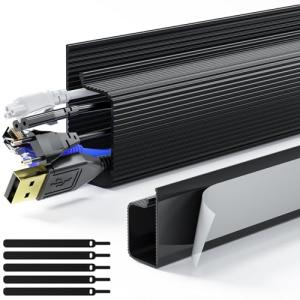
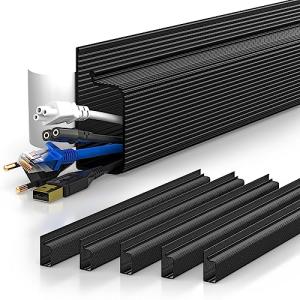
If you’re building a clean home office use setup or simply looking to eliminate the tangled mess behind your entertainment center, the Cable Management Wire Hider and Organizer Box is a key product. This type of box sits firmly in the practical organization niche, acting as a discreet housing unit for unsightly power strips, excess cable slack, and bulky adapters. It’s an essential, affordable foundation for any serious cable management project in the U.S. market.
The product's primary role is to improve aesthetics and safety, especially in high-visibility areas like living rooms or beneath standing desks. It takes the "command center" of your power setup—the surge protector or power strip—and completely hides it away. Compared to simple cord wraps or adhesive clips, this box offers a comprehensive solution for large components, preventing dust buildup and making cleaning easier. It's a foundational piece for achieving that sought-after minimalist, clean desk look.
Technical Analysis
| Specification | Detail & U.S. Context | Analysis |
| Material & Construction | High-density, fire-retardant ABS plastic, often textured matte black or white to blend with A/V gear. | Crucial safety feature; the fire-retardant rating is necessary for housing power strips that can generate heat, especially with multiple U.S. 120V devices plugged in. |
| Size & Capacity | Typically large enough to house a standard 6-10 outlet U.S. power strip (approx. 15 inches). | Sizing is critical; a box too small defeats the purpose. This size accommodates the common large surge protectors used in home and office setups. |
| Cable Entry/Exit Ports | Multiple side slots or rear-cut openings for cables to enter and exit. | Ensures flexible cable routing in any direction (e.g., power in, device cables out) and is necessary for proper ventilation. |
| Lid Design | Removable, often grooved or flat-top for placing small items like a phone or small hub. | The easy-off lid provides quick access for maintenance and plug switching, while the flat top maximizes desk or floor space utility. |
| Ventilation | Sometimes includes bottom or side slits for airflow, though often relies on open ports. | While not actively cooled, ensuring heat can escape is important, as packed power strips can raise internal temperature. |
1. Form Factor and Aesthetic Integration
The design of the Cable Management Wire Hider and Organizer Box is intentionally low-profile and utilitarian. Its rectangular shape is meant to mimic the look of a solid base or a piece of non-intrusive decor, which is vital for use in living rooms and open-plan home office use spaces. The selection of neutral colors like black or white helps it disappear against baseboards or under a dark desk.
The fire-retardant ABS plastic construction is not just about looks; it's a critical safety feature. Since you’re enclosing a device that handles significant electrical load (your power strip), using a material that can withstand high temperatures and resist ignition is mandatory. This makes it a responsible choice for housing a potential fire hazard.
2. Usability and Cable Flow Management
Ease of use hinges on the box's accessibility and port design. The removable lid is the most user-friendly feature, allowing you to quickly rearrange plugs or access the power switch without moving the entire unit. Once the main power strip is settled inside, the cables flow through the strategically placed slots on the side.
These exit slots are generally large enough for thicker power cables, HDMI connectors, and other bulky plugs. This thoughtful design ensures that you can route cables neatly to their respective devices—whether they are going to your monitor, computer, or charging station—while keeping the main power hub concealed and protected.
3. Protection and Heat Dissipation
The main protective function of the Cable Management Wire Hider and Organizer Box is to shield the power strip from dust, spills, and accidental tugs, a benefit especially for households with pets or small children. By fully enclosing the connections, you minimize access and entanglement. This is key for cord management and safety .
However, you must be aware of heat. While the open entry/exit ports allow some passive airflow, you shouldn't pack the box with high-wattage adapters that run hot. Using a quality surge protector inside and avoiding the complete obstruction of the cable ports ensures that heat doesn't build up to a dangerous level.
User Profiles
1. Home Office Minimalist
You are dedicated to a clean, uncluttered WFH setup, using either a fixed or adjustable-height desk. You can't stand seeing the "power octopus" of wires dangling down, especially with all your tech gear.
-
Use Case: You need to conceal a large 8-outlet surge protector and all the associated wires from your dual monitors, laptop dock, and lamp, right where they exit the floor beneath your standing desk.
-
The Fit: This box is perfect for you. It completely houses your most chaotic component—the power strip—and organizes the cables into a single, less-visible point of exit. It delivers the clean aesthetic you crave without complicated installation.
2. Entertainment Center Organizer
You've invested in a nice entertainment stand and a high-end 4K TV, but the back looks like a spaghetti monster of power cords, coax cables, and streaming device wires. You're tired of pulling out the vacuum and seeing a web of dust-collecting wires.
-
Use Case: You are looking to consolidate the surge protectors for your TV, soundbar, gaming console, and streaming box into one neat spot behind your media console.
-
The Fit: The large capacity and neutral color of this wire hider box make it ideal for media centers. It simplifies cleaning, adds a layer of protection from dust and pet hair, and organizes all the power connections, giving your setup a much more polished look.
3. Child/Pet Safety Conscious Parent
Safety is your top priority in the main living areas. You need to ensure that curious toddlers or chewing pets cannot easily access or play with live electrical outlets and power strips.
-
Use Case: Your toddler is starting to crawl and reach everything near the floor-level outlet in the living room where your lamp and Wi-Fi router are plugged in. You need a physical barrier.
-
The Fit: This enclosure acts as a strong physical deterrent. By securing the power strip inside the box with the cables routed tightly through the small ports, you significantly reduce the risk of accidental shock, chewing damage, or tripping hazards.
"Complementary HomeTechCorner Category Recommendations"
| Recommended Products | Why This Category Is Useful Specifically for This Product | Short Usage Scenario |
| Energy Monitoring Smart Plugs | You’ll want to know exactly how much energy those hidden devices are drawing, especially if the box is packed full. | You're tucked into bed but want to check your app to see if you remembered to turn off the power strip you’ve hidden inside the box, and monitor its overall power consumption. |
| Smart Power Strips | A smart strip housed inside the box offers individual outlet control and power monitoring, without losing the concealment benefit. | You want to keep the box permanently closed, but still be able to voice-command the power off to your non-smart TV and streaming device inside. |
| Wireless Programmable Buttons | Use a simple button to control the smart power strip inside the box, adding physical on/off access without opening the lid. | You finish your workday and press a single, small button mounted on the desk frame to turn off the hidden power strip and all connected computer peripherals at once. |
| Smart Sensors | A small temperature/humidity sensor inside the box can alert you if heat levels rise too high due to poor ventilation or a packed strip. | You receive a notification on your phone indicating the temperature inside the cable box behind your entertainment center has exceeded 90°F, prompting you to unplug a few hot-running adapters. |
| Networking Gear | Keeping network components like a modem or router on a power strip in the box needs stability, and better routing makes a difference. | You are installing a new mesh Wi-Fi system and need a stable power source for the main node, which you’ve neatly tucked away in the organizer box for a cleaner look. |
| Uninterruptible Power Supplies Ups | While the box holds a power strip, a UPS is necessary to protect critical gear like a NAS or router from surges and outages. | A storm knocks out your power, and the devices inside your cable box—your router and modem—remain on and connected because you ran their power cable to a nearby UPS unit. |