Upgrading a home entrance doesn't always require replacing the entire lock mechanism or changing keys. Smart lock conversion kits allow for the retention of existing hardware while adding modern conveniences like remote access and auto-locking. This guide explores the options available, focusing on how different connection protocols and motor types affect daily reliability and security for various household needs.
Smart Lock Conversion Kits
Easily upgrade your existing door lock to a smart lock and enjoy keyless entry and greater security
Product List
💡 Practical Usage Tips
- Ensuring precise door alignment is critical because friction on the latch can reduce battery efficiency by nearly 60 percent.
- Users should verify the current communication protocols of their smart home hub, as devices like the Kwikset 914 require a specific Zigbee coordinator to function correctly.
- For setups requiring high security without internet exposure, choosing an air-gapped system that relies on localized radio frequencies helps eliminate cloud-based vulnerabilities.
- It is advisable to check the throw length of the existing deadbolt, as standard kits are generally optimized for 1-inch throw mechanisms.
✅ What to Look For & ⚠️ What to Avoid
Must-Have Features
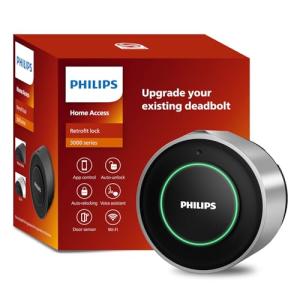
- A reliable capacitive fingerprint sensor provides quicker access than keypad codes, a feature prominent in the Philips Smart Lock 230X.
- Devices that support mesh router functionality can extend the signal range for other battery-powered sensors in the home.
- Look for high-torque DC motors that can handle slight resistance in the door frame without stalling.
Red Flags to Avoid
- Be cautious of Bluetooth LE 4.0 systems with high latency, as handshake delays can leave users waiting up to 10 seconds for the door to unlock.
- Avoid units that lack remote state-reporting capabilities, as you will not know if the door failed to lock due to weather stripping resistance.
- Systems dependent entirely on cloud-dependent application interfaces may lose functionality during internet outages compared to local RF options.
🛡️ Build Quality & Performance
The durability of a conversion kit often depends on the materials used in the chassis and the internal gear train. Many units utilize a reinforced zinc alloy housing to provide structural integrity similar to traditional lock hardware. However, the internal components vary significantly; some devices employ hybrid nylon-metal gears to dampen sound, while others use plastic components that may be less resistant to long-term wear in high-traffic environments.
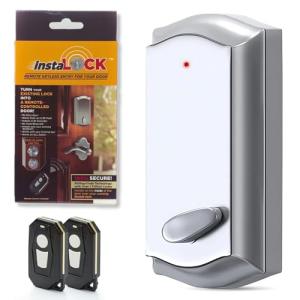
Operational noise is another factor to consider for residential installations. High-torque motors required to turn a mechanical deadbolt can generate noise levels around 55dB, which is noticeable in quiet entryways. While devices like the InstaLock Smart Remote Door Lock prioritize simple, non-invasive installation with adhesive options, this often results in a trade-off regarding the torque available to overcome stiff weather stripping.
🏆 Top Recommendations
| Best For | Model Name | Key Feature | Why It Wins |
|---|---|---|---|
| Biometric Access | Philips 230X | 0.5s Fingerprint Sensor | Offers rapid entry and integrated Wi-Fi without needing a bridge. |
| Privacy & Local Control | InstaLock Remote Lock | 433MHz RF Protocol | Completely air-gapped from the internet for maximum digital security. |
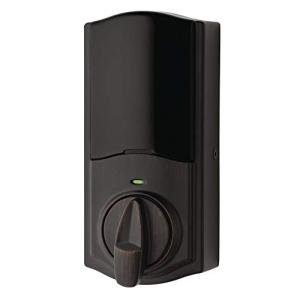
| Bluetooth Retrofit | Kwikset Kevo Convert | Touch-to-Open | Retains original exterior hardware for HOA compliance. |
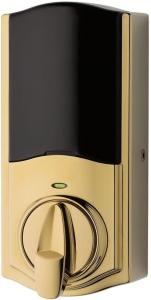
| Smart Home Mesh | Kwikset 914 Zigbee | Zigbee 2.4GHz Radio | Acts as a mesh repeater and integrates seamlessly with automation hubs. |
❓ Frequently Asked Questions
Does a conversion kit replace my keys?
No, most conversion kits are designed to replace only the interior thumb-turn mechanism. This allows the exterior cylinder to remain in place, meaning your original physical keys will still work as a manual override.
What happens if the Wi-Fi goes down?
Devices using local protocols like Zigbee or RF remain functional for local control. However, cloud-dependent Wi-Fi models may lose remote access features, though the keypad or fingerprint sensor usually continues to work offline.
How long do the batteries typically last?
Battery life varies by protocol; Zigbee units often last 6 to 12 months due to low power consumption. Conversely, Wi-Fi enabled locks may deplete their 4x AA cell array faster, especially if the signal is weak or the door alignment causes friction.