💡 Practical Usage Tips
- Installations on inward-swinging doors require checking for a minimum clearance gap of 0.125 inches to prevent the bracket from damaging the weatherstripping.
- Users employing metal anti-theft mounts should verify that their Wi-Fi router is close to the door, as steel enclosures can cause signal attenuation of 3-5 dBm.
- When stacking multiple wedge kits to achieve a sharper angle, it is often necessary to use wire extensions to prevent tension on the rear terminal screws.
- For rental properties where drilling is prohibited, selecting a mount with a compression clamp design allows for secure installation without leaving permanent marks.
✅ What to Look For & ⚠️ What to Avoid
Must-Have Features
- UV-Resistant Materials: High-density ABS polymer or polycarbonate is essential for preventing chalking and brittleness in direct sunlight.
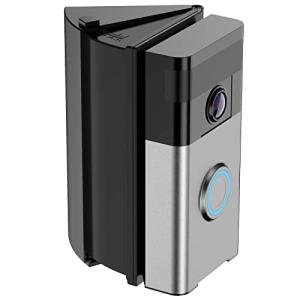
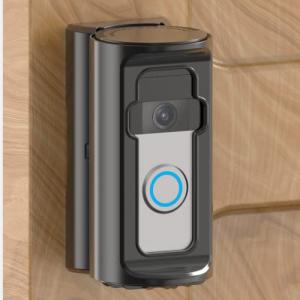
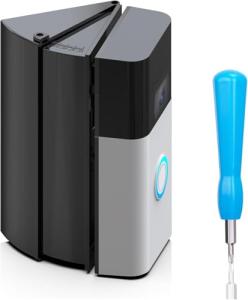
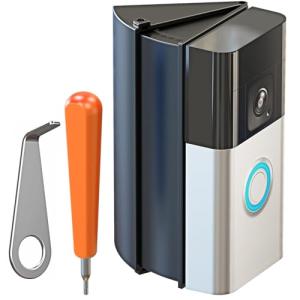
- Wide Articulation: Adjustable hinges, like those found on the RIOVO Adjustable Doorbell Angle Mount, allow the lens to be directed away from reflective walls to improve night vision.
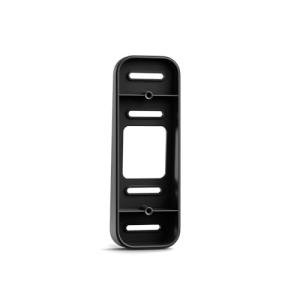
- Generation Compatibility: Mounts must explicitly match the specific hardware generation (e.g., Ring Gen 2 vs. Pro) to ensure the USB charging ports and screw holes align correctly.
Common Red Flags
- Metal Enclosures in Weak Signal Areas: Full steel housings create a Faraday cage effect that can increase video latency or cause connection drops in fringe Wi-Fi zones.
- Porous Surface Adhesion: High-bond adhesive mounts often fail on unsealed brick or stucco because the glue cannot form a proper shear bond.
- Foam Spacer Compression: Low-quality internal padding tends to compress over time, leading to a loose fit for the doorbell unit inside anti-theft boxes.
🛡️ Build Quality & Performance
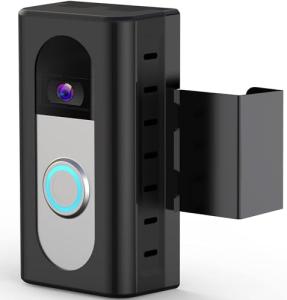
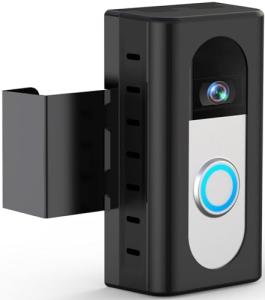
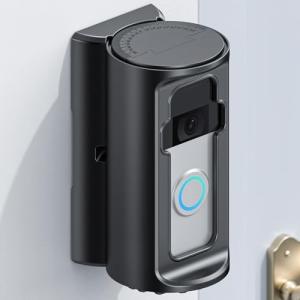
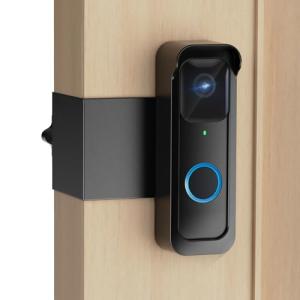
The construction quality of doorbell mounts generally falls into two categories: hardened security enclosures and lightweight optical adjusters. Security-focused models, such as the KIMILAR Adjustable Anti-Theft Video Doorbell Mount, utilize materials like carbon steel or alloy composites. While these offer superior resistance to tampering and physical impact, the density of the material inherently affects wireless performance. Engineers often counter this by recommending the use of 2.4GHz networks, which penetrate metal barriers better than 5GHz frequencies.
On the other hand, articulation mounts prioritize RF transparency and flexibility. These are typically molded from UV-stabilized plastics to withstand outdoor thermal cycles without cracking. The primary point of failure in these designs is often the pivot tension screw; if over-torqued during installation, the plastic housing may fracture, compromising stability. Therefore, high-quality adjustable mounts employ geared hinges or dual-plate systems to maintain their position against the vibration of door slams, rather than relying solely on screw friction.
🏆 Top Recommendations
| Best For |
Model Name |
Key Feature |
Why It Wins |
| Maximum Security |
KIMILAR Anti-Theft Mount |
Hardened Steel Bracket |
It encases the device to prevent removal while the door is closed. |
| Wide Angles |
Dukoyb Universal Mount |
150° Lateral Adjustment |
The massive range of motion eliminates blind spots on large porches. |
| Renter Friendly |
Ring No-Drill Mount |
VHB Adhesive Backing |
It offers a strong bond without drilling holes or blocking Wi-Fi signals. |
| Blink Cameras |
Blink Wedge Mount |
Stackable Wedges |
The geometry is specifically designed to maintain the camera's IP rating. |
❓ Frequently Asked Questions
Will a metal anti-theft mount block my Wi-Fi signal?
Yes, metal enclosures typically reduce signal strength by approximately 3 to 5 dBm. If your doorbell already has a weak connection, enclosing it in steel may cause video lag or disconnection, so a Wi-Fi extender might be necessary.
Can I use no-drill adhesive mounts on brick or stucco?
Generally, no. Adhesive mounts rely on a complete seal against a smooth, non-porous surface. Rough textures like brick prevent the tape from bonding correctly, which can result in the doorbell falling off over time.
How do I stop the night vision from washing out?
Night vision washout often occurs when the camera's infrared light reflects off a nearby wall. Using an angle mount or wedge kit to rotate the camera lens away from the wall (even just 15 degrees) usually resolves this issue by minimizing IR bounce-back.