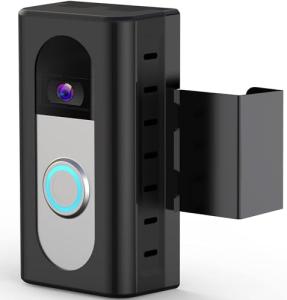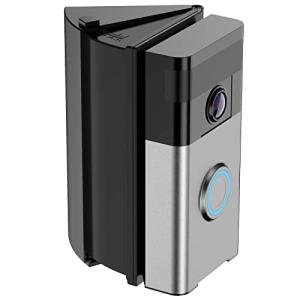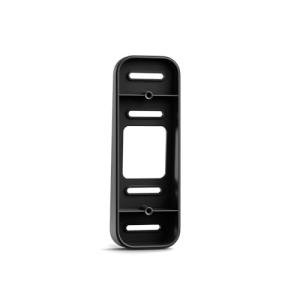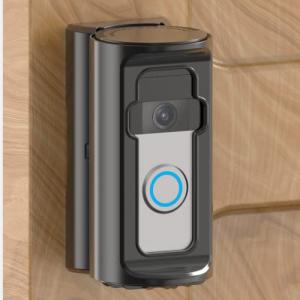

Technical specifications for this mechanical assembly describe a combination chassis of ABS plastic and powder-coated steel. The device employs a compression-style clamp designed to secure the hardware to the door edge without the use of permanent fasteners. Forensic data suggests that the steel rear-plate can result in a localized signal drop of 3-5dB in Wi-Fi RSSI depending on the proximity of the wireless access point.
Structural dimensions and material analysis confirm compatibility with Ring (1-4 and Battery Pro) and Blink ecosystems. The adjustment mechanism involves a screw-threaded interface and adhesive foam spacers to accommodate varying device depths. Technical audits note that the primary failure mode is the compression of foam padding over an 18-month cycle of high-impact door usage.
Mechanical Integrity & Constraints
This mount is specifically engineered for inward-opening doors and is not compatible with outward-swinging or storm door configurations. The enclosure provides a physical barrier that prevents immediate removal of the doorbell unit, though it adds a physical depth profile that may require consideration for screen door clearances.
Because the metal housing can impact wireless throughput, pairing this mount with a dedicated mesh node from our networking gear repository is recommended for low-latency video streaming.
Users seeking a lighter, adhesive-based solution without a metal shroud should consider the Ring No-Drill Mount to maintain maximum Wi-Fi transparency.