

PRODUCT REVIEW
In-Depth U.S. Market Review
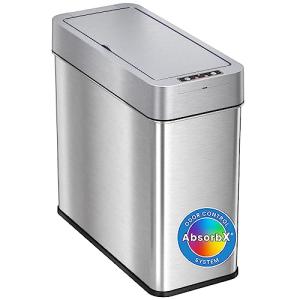
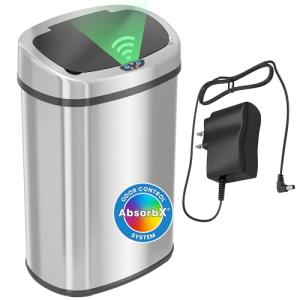
The Touch-Free 13-Gallon Stainless Steel Trash Can is designed to be the central, primary waste disposal unit for the average U.S. home kitchen. Its 13-gallon capacity is the standard size that aligns perfectly with the most commonly purchased kitchen trash bags, making it a universal and practical choice. This can squarely targets the consumer who wants to transition from a traditional, messy step-on pedal can to a more hygienic, contemporary touch-free experience.
The stainless steel construction immediately signals a premium aesthetic, allowing it to seamlessly match other modern kitchen appliances. The main competitive differentiator is the value proposition: a large, 13-gallon capacity combined with reliable motion sensor technology in a durable, attractive housing, often priced accessibly.
Compared to high-end self-sealing or voice-activated models, this Touch-Free 13-Gallon Stainless Steel Trash Can offers a focused, no-frills, high-value smart feature set. It skips the more complex, expensive tech for reliable, single-function touchless operation, making it the best budget monitor choice in the full-size kitchen trash can category for U.S. households.
Technical Analysis
| Specification | Detail & U.S. Context | Analysis |
| Capacity | 13 Gallons (approx. 49.2 Liters). | The standard, high-demand size for U.S. kitchens, ensuring perfect compatibility with all main brands of 13-gallon kitchen trash bags. |
| Activation | Infrared Motion Sensor. | Provides hands-free, hygienic opening. Sensor placement (often on the front lip of the lid) is key for minimizing accidental openings in high-traffic kitchens. |
| Material | Brushed Stainless Steel finish. | A non-negotiable aesthetic for many U.S. homes, offering a durable, professional look that is often fingerprint-resistant for reduced maintenance. |
| Liner Retention | Detachable inner ring or bag tuck band. | Secures the trash bag neatly, preventing slippage and hiding the ugly plastic overhang, contributing to the clean, polished appearance. |
| Power | Battery operated (typically 4x D or AA batteries). | Mobility is preserved; the can can be placed anywhere in the kitchen without needing an adjacent power outlet. Battery life is the main maintenance factor. |
| Lid Operation | Soft-open and soft-close mechanism. | Ensures quiet operation, preventing loud slams and adding a premium feel that is appreciated in open-concept living spaces. |
1. Sensor Reliability and Ergonomics
The sensor system of the Touch-Free 13-Gallon Stainless Steel Trash Can is designed for high-frequency, daily use. It typically uses an infrared beam that opens the lid when a hand or object hovers above it for a moment. This hands-free operation is not just a luxury; it’s a major hygienic improvement, especially when dealing with raw meat or other messy food prep in the kitchen.
The ergonomics of the can's height and the sensor's location are engineered to make disposal comfortable for the average U.S. adult. The can must be tall enough to accept large items without bending over excessively, while the sensor must be high enough to avoid accidental opening by passing pets or small children.
2. Stainless Steel Aesthetic and Durability
The use of brushed stainless steel is a key feature, driven by U.S. consumer preference for appliances that match. Beyond aesthetics, the stainless steel provides excellent durability and is easy to clean and sanitize, crucial for a kitchen environment. Many models incorporate a specific fingerprint-proof coating to combat the inevitable smudges and smears that come with kitchen use.
The material choice is a statement of quality. It provides the can with the necessary weight and stability, ensuring it doesn't slide around or tip over when a user reaches in or pulls out a full bag.
3. Power and Maintenance Simplicity
Operating on batteries simplifies placement, a significant benefit in U.S. kitchens where outlet placement can be restrictive. The motor driving the lid must be highly efficient to provide months of operation on one set of batteries. Low power consumption is a quiet technical specification that heavily influences the long-term value and user satisfaction.
Maintenance is straightforward: replacing the bag, changing the batteries periodically, and wiping down the exterior. By focusing on a single, reliable touchless feature, this can avoids the complex and potentially costly repairs associated with more feature-laden "smart" trash cans.
User Profiles
1. The Value-Conscious Homeowner
You are upgrading your kitchen from basic appliances and want the core benefits of modern home technology—primarily convenience and hygiene—without paying a steep premium for features you don't need. You value reliable, simple function.
-
Use Case: You are managing dinner preparations every night for the family. You need a large-capacity can that is easy to access quickly and can handle the volume of daily food waste without manual intervention.
-
The Fit: The 13-gallon size and standard bag compatibility are perfect for your household. The dependable touch-free sensor is the exact convenience upgrade you’re looking for, and the stainless steel offers a high-end look at a manageable price point.
2. The Cleanliness Enthusiast
You are meticulous about keeping surfaces in your home clean and germ-free. The thought of touching a trash can lid—even with a foot pedal—is unappealing, especially in the kitchen.
-
Use Case: After cutting raw chicken or wiping up a spill, you need to dispose of contaminated materials instantly and hygienically. You wave your hand over the sensor to open the can, keeping your hands away from any touch points.
-
The Fit: The pure, completely touch-free operation is the single most important feature for you, ensuring a clean transfer of waste. The stainless steel body is easy to sanitize, reinforcing your commitment to a hygienic kitchen environment.
3. The Busy Renter in a Modern Apartment
You live in a contemporary apartment with a smaller kitchen but still need the standard 13-gallon capacity. Your kitchen design features stainless steel appliances, and you need a can that complements that look but can be easily moved when you relocate.
-
Use Case: Placing the can in a high-traffic area, such as next to your dishwasher, where you need to quickly scrap plates before washing. It must look good but not be hard-wired or complex.
-
The Fit: The stainless steel seamlessly integrates with the apartment's aesthetic. The battery operation makes it fully portable and easy to position, and the standard bag size is convenient for quick, weekly emptying before you head out for the weekend.
"Complementary HomeTechCorner Category Recommendations"
| Recommended Products | Why This Category Is Useful Specifically for This Product | Short Usage Scenario |
| Smart Lighting | Can improve visibility of the can and its sensor area for accurate, nighttime use. | You enter the dark kitchen to throw away the final piece of trash before bed, and the smart ceiling light dims up to a low glow, ensuring you activate the can's sensor correctly. |
| Smart Sensors | Can monitor ambient activity in the kitchen, helping to troubleshoot or understand accidental openings. | You notice the can is opening too often and check your motion sensor logs, which confirm your cat is jumping onto the counter nearby, helping you reposition the can to prevent false sensor triggers. |
| Smart Power | If you choose to run the can via an optional AC adapter, smart power strips can provide surge protection and control. | You plug the AC adapter for your 13-gallon can into a surge-protected smart power strip to ensure the delicate sensor electronics are safe from power spikes during an electrical storm. |
| Cleaning Appliances Non Robotic | As a primary kitchen appliance, the can's cleanliness directly relates to other cleaning tools. | You are finishing up your weekly kitchen scrub-down, and you easily wipe down the fingerprint-resistant stainless steel body of the trash can with the microfiber cloth you keep with your cleaning supplies. |