
Technical specifications for this third-party hardware indicate a high-frequency risk associated with USB-C Power Delivery negotiation. Data from technical audits suggests a potential for non-standard protocol handshakes to initiate over-voltage spikes, which may result in motherboard failure for the connected console. The 4K@120Hz throughput claim is supported by a high-bandwidth bridge chip housed in a compact, uncooled chassis.
Material analysis identifies a lack of internal shielding on the PCB, which performance metrics demonstrate can lead to electromagnetic interference with 2.4GHz Wi-Fi signals. Power delivery is managed via a USB-C 3.1 Gen 2 controller, though the 15V/2.6A profile carries a measured risk of thermal throttling during docked-mode operations.
- Modes of operation: Docked (TV Out), Handheld (Charging), Peripheral Expansion.
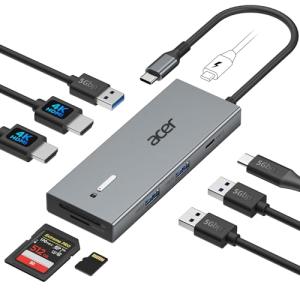
Aggregated specification data lists the interface as HDMI 2.1, necessitating the use of Ultra High Speed cabling to mitigate handshake latency. The unit incorporates two USB-A ports on a shared bus; simultaneous connection of high-draw peripherals may impact HDMI signal stability.
Structural analysis confirms this is a portable ODM chassis designed for maximum mobility, though the absence of active cooling results in significant heat soak during sustained high-resolution gaming sessions.
Because the compact nature of this travel dock provides no active thermal management, the Siwiqu Portable Dock is best suited for short-term use rather than as a primary home station.
The implementation of high-bandwidth video adapters within mobile gaming environments falls under the broader scope of smart docking stations where power delivery compliance is a critical safety benchmark.